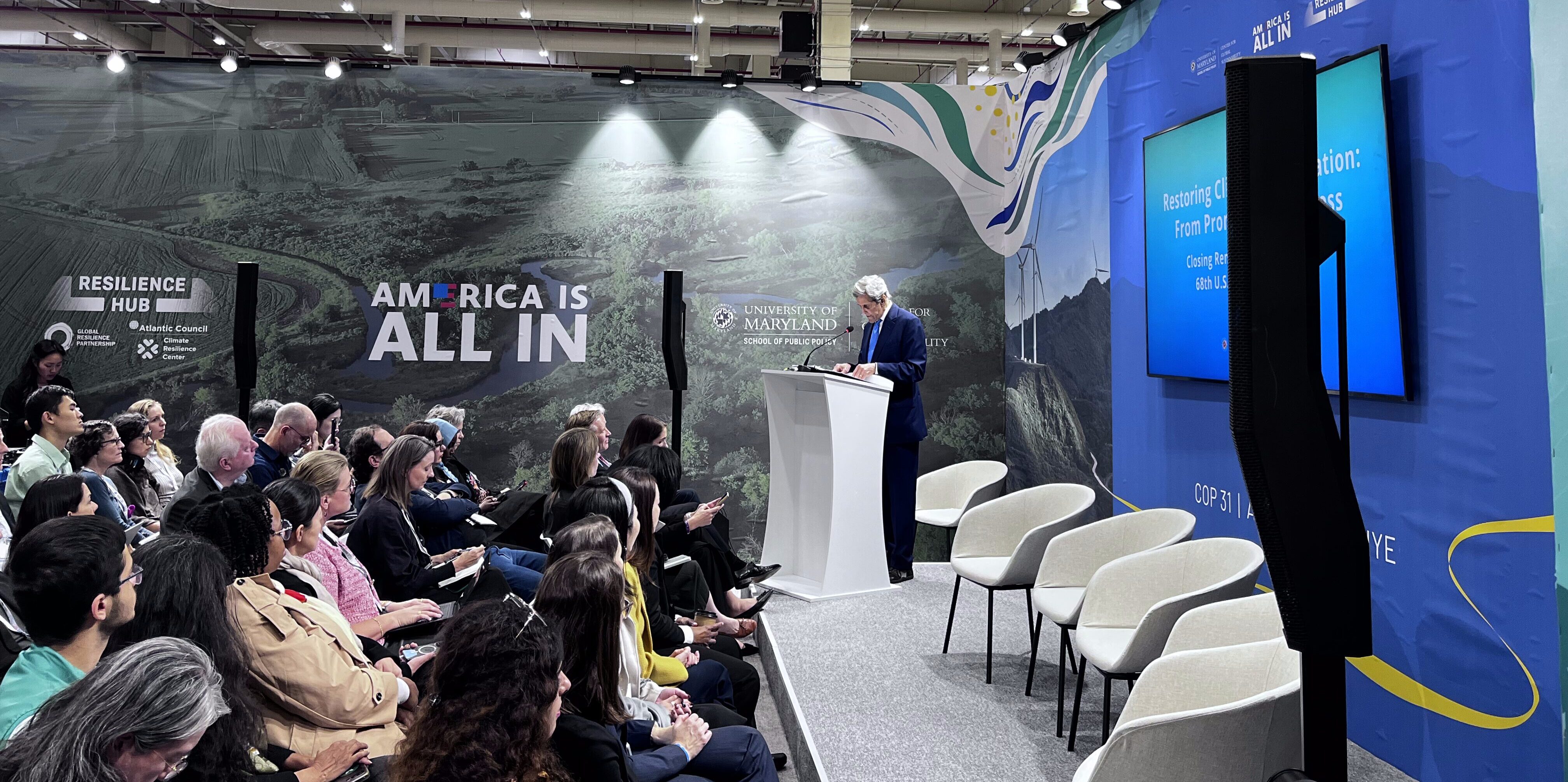
ANTALYA – In a tale of America at a crossroads, former US Secretary of State John Kerry declared at COP31 on Tuesday that the country would soon return to a leadership role in the global response to the climate crisis, as a new report found President Donald Trump’s war on Iran had inadvertently tipped global fossil fuel emissions into decline.
“After two years of pulling back from international cooperation, after attacking clean energy and weakening our climate [protections], especially the [Environmental Protection Agency], after mocking renewables and showing scorn for science,” Kerry said.
“The US election offers powerful proof that, given a choice between denial and delay on the one side and innovation and common sense on the other, Americans are committed to taking back their future, and we will build and rebuild our partnerships as we do that.”
Soaring oil prices and the closure of the Strait of Hormuz are set to push global emissions from coal, oil and gas down 0.4% this year, to 38.2 billion tonnes of carbon dioxide (CO2), according to the annual Global Carbon Budget report, compiled by more than 140 scientists and presented at COP31. It is the first drop since the COVID-19 pandemic, led by a 1.9% fall in emissions from oil.
“The price of petrol and supply chain disruptions are clearly a cause of the decrease in global fossil CO2 emissions in 2026,” said Corinne Le Quéré of the University of East Anglia, who led a companion study published in Nature Climate Change.
Adding to the irony, the war waged by the president who took the US out of the Paris Agreement is also speeding the world’s turn away from fossil fuels. With the world in its second war-driven oil shock in under five years, after Russia’s invasion of Ukraine, energy security has overtaken environmental concern as the main driver of renewables growth, the International Energy Agency (IEA) found last week.
“No country can block the sun from shining. No one can block any wind from blowing,” Kerry said. “Clean energy is not just a climate strategy; it is a national security strategy, an economic strategy, and a way to give countries much greater control over their own futures.”
The blue wave reaches Antalya
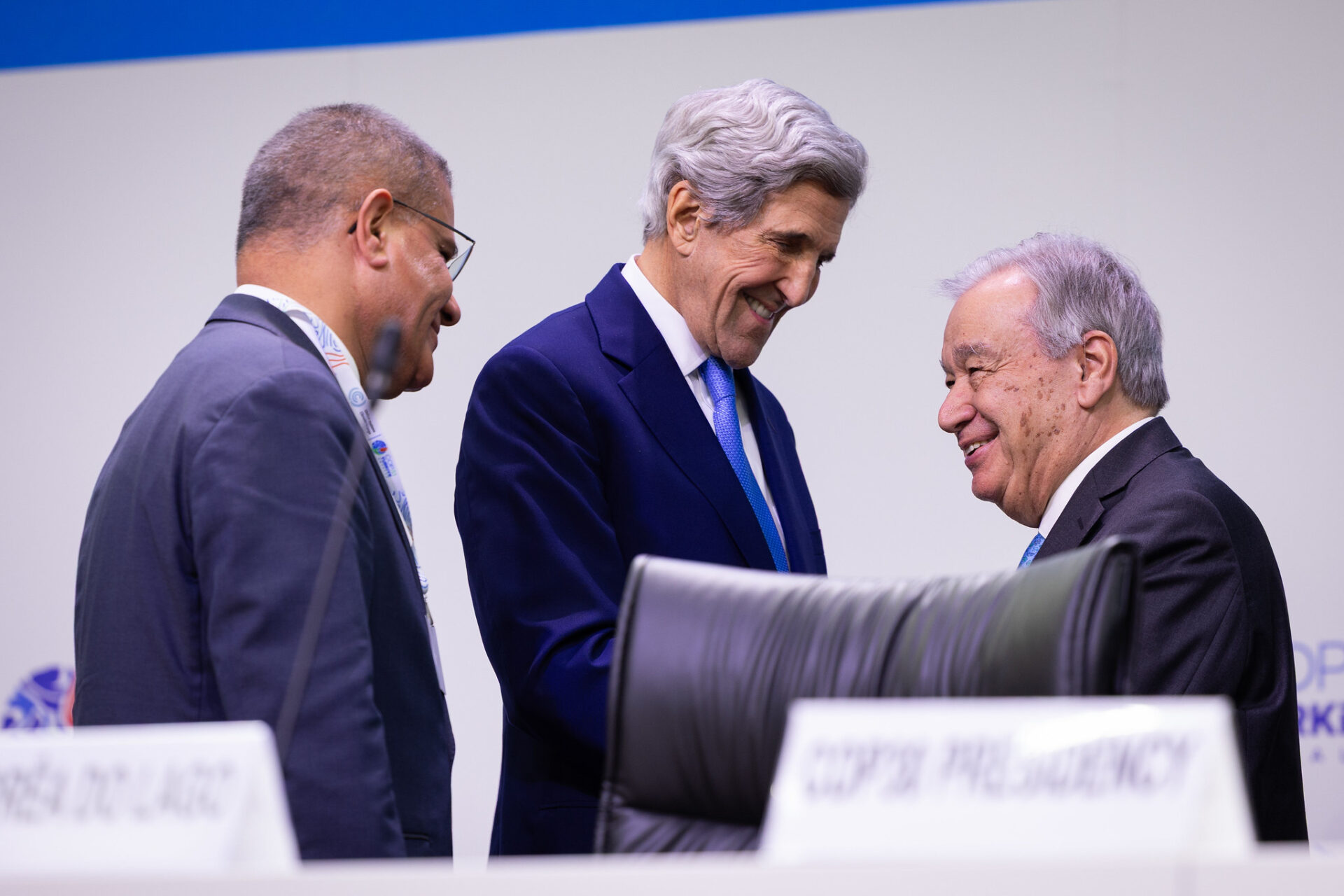
New optimism around the future political direction of the United States follows a sweeping Democratic victory in last week’s midterm elections, in which the party took both chambers of Congress and won races in long-time Republican strongholds including Texas, Kansas, Iowa and Ohio.
That same victory has inspired hope for renewed focus on health and environmental regulation gutted under the Trump administration. Democrats have pledged to restore withheld research funding, repeal deep Medicaid cuts and call in Environmental Protection Agency chief Lee Zeldin for questioning over the rollback of pollution rules, Health Policy Watch reported on Monday.
For now, the US is not in the room in Antalya. Washington formally left the Paris Agreement in January, has sent no official delegation to a COP for the second year running, and in February will become the first country ever to quit the UN climate convention itself. In 2025, Trump’s first year back in office, the US posted the largest emissions increase of any country, the UN Environment Programme found last month.
Anyone who still calls climate change a hoax, Kerry said, “should not be serving in public office.”
A dip, not a peak
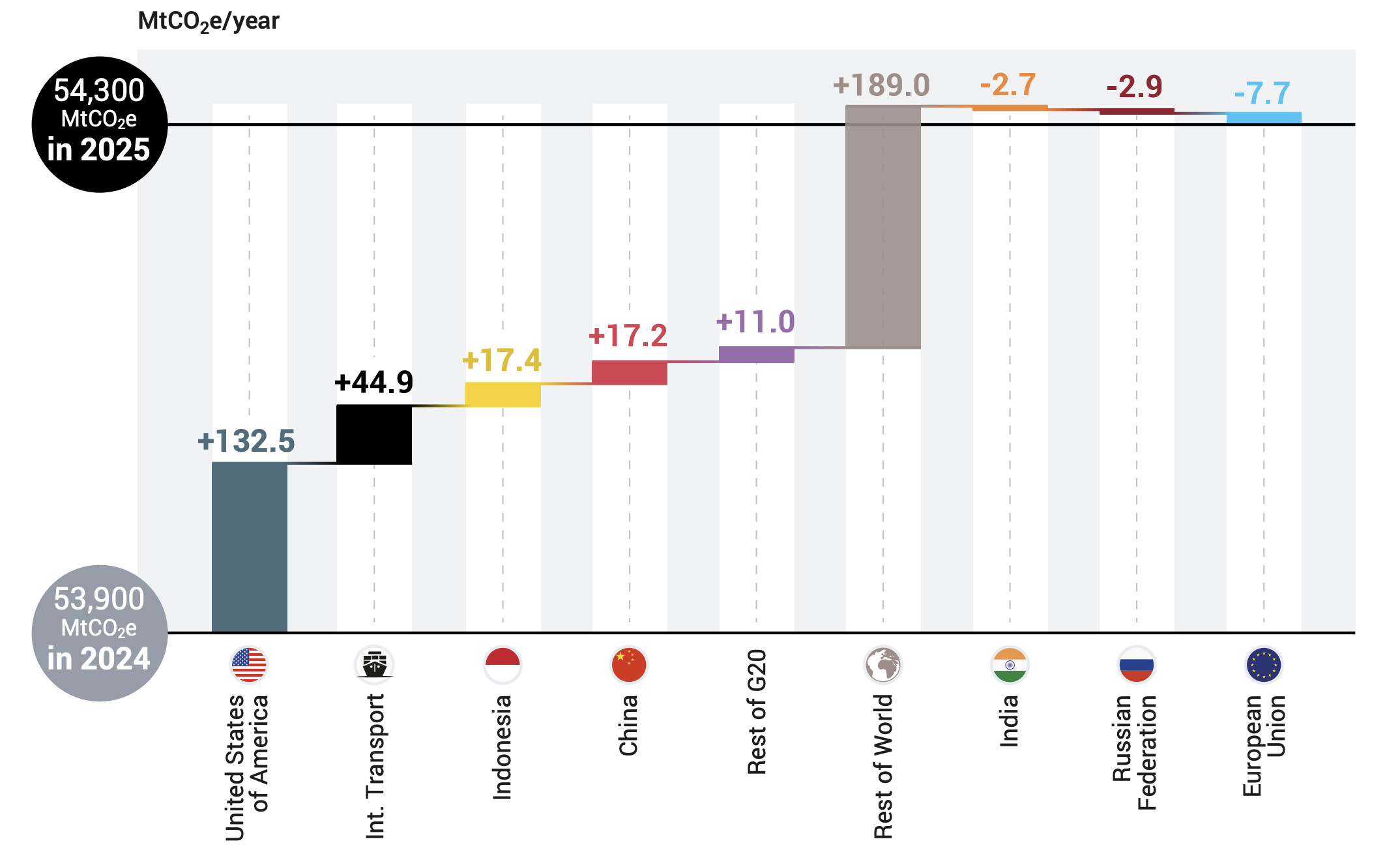
Yet the Iran war was not the only factor in dropping fossil fuel emissions, and the dip may not last, scientists behind the report warned.
Solar, wind and electric vehicles met about two-thirds of this year’s rise in energy demand, Le Quéré said, with the oil shock accounting for the rest. Total CO2 emissions still rose, from 42.8 billion to 43.3 billion tonnes, as peat fires and forest degradation in Southeast Asia drove up emissions from land use.
“A decline in fossil CO2 emissions is encouraging,” said Pierre Friedlingstein of the University of Exeter, who led the study. “But a reduction driven partly by geopolitical shocks is not a sustainable climate solution.”
The world can emit just 150 billion more tonnes of CO2 before warming passes 1.5°C, less than four years of emissions at current rates. Holding the 1.5C line would mean taking emissions to zero within a decade, Friedlingstein told reporters, “which is extremely unlikely to happen.”
Kerry, who signed the Paris Agreement as secretary of state and later served as President Joe Biden’s special envoy for climate, conceded that the world had agreed “1.5 degrees was the target, and we have not delivered.”
“This is what makes it so damn frustrating,” Kerry said. “Solving this challenge is not a mystery. We know what to do.”
‘A second round of suffering’
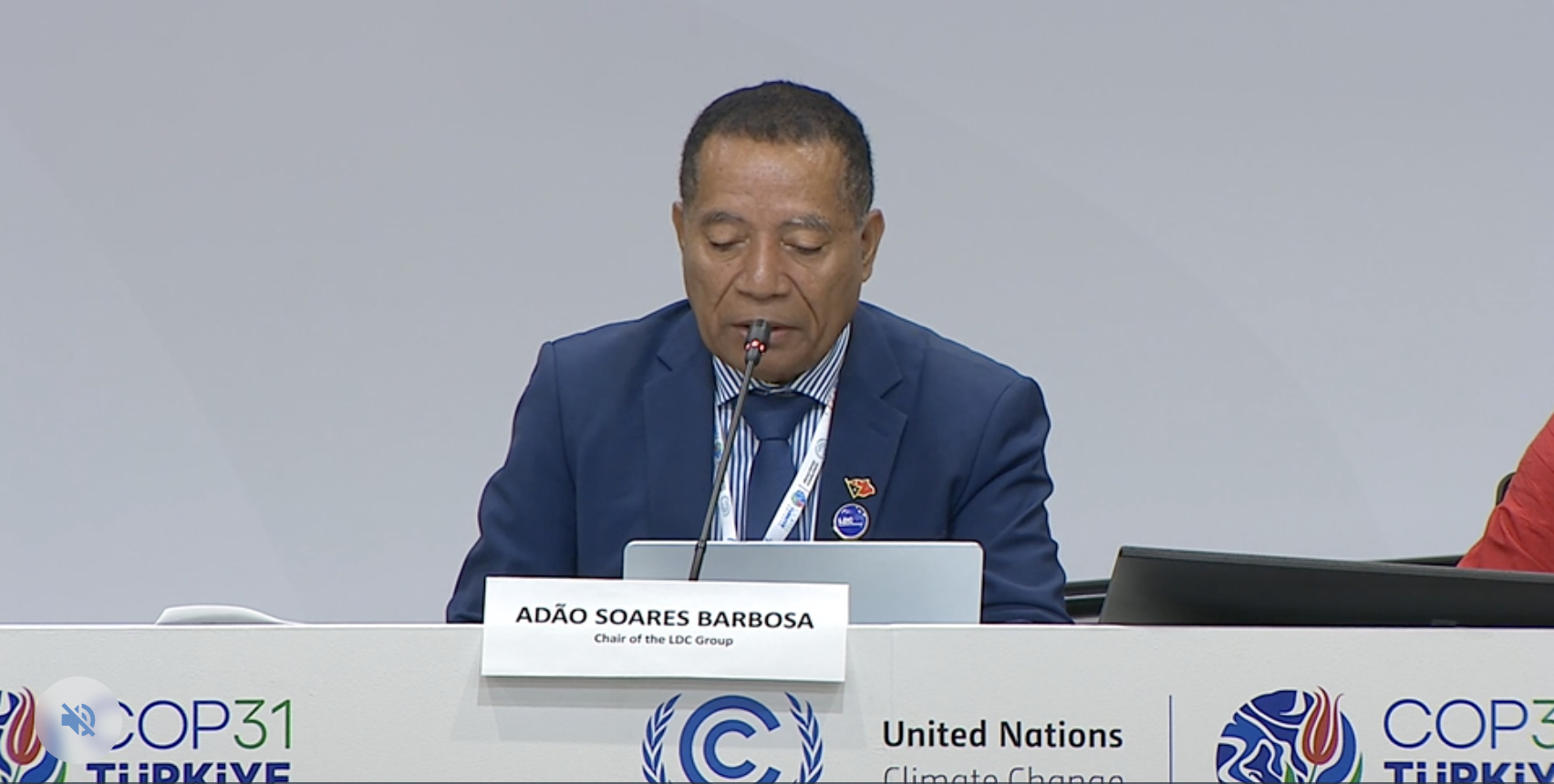
The people paying for that failure live in the 44 least developed countries (LDCs), which have done the least to cause the crisis.
“For the LDCs, 1.5 is not just a number,” Ambassador Adão Soares Barbosa of Timor-Leste, who chairs the group, told reporters in Antalya. “Every fraction increase imposes a greater threat to our people’s homes, livelihoods, food and water security, and ability to recover from disasters.”
At a press conference setting out the bloc’s demands for COP31, Barbosa said the LDCs back Türkiye’s flagship 35% electrification target by 2035 but cannot reach it without money, technology and training from developed countries.
“That target is clear,” he said. “But then, how can we move together?” The biggest emitters must move off fossil fuels first, Barbosa said, and any support for LDCs must come as grants.
Repayments on climate loans to developing countries nearly tripled between 2020 and 2024 and could overtake new lending by 2036 if lending stays at current levels, a CARE analysis found. Some 3 billion people already live in countries whose governments spend more on debt interest than on health and education combined, according to the UN.
“It’s not loans,” he told reporters. “If we have loans… we will lose something. We don’t want to have a second round of suffering.”
Fossil fuels off the COP agenda
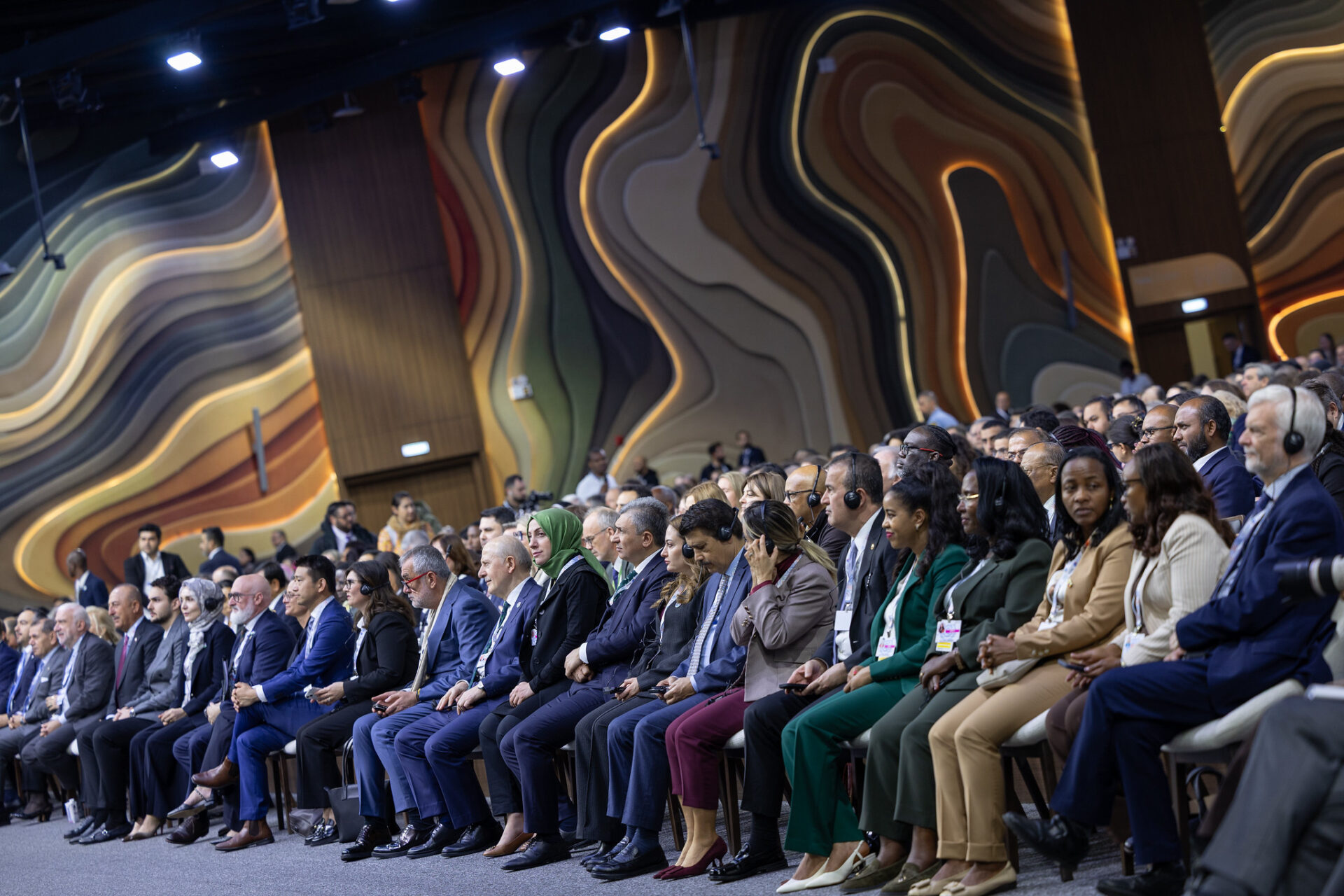
Three years after nearly 200 countries agreed in Dubai to transition away from fossil fuels, the issue is not formally on the agenda in Antalya.
Co-hosts Türkiye and Australia deliberately left it off after the fight over a fossil fuel roadmap torpedoed last year’s talks in Belém, Brazil, instead staking the summit instead on voluntary targets for electrification, waste and building efficiency.
On Tuesday, Brazil’s COP30 presidency tried to put the issue back before governments, presenting a voluntary roadmap for transitioning away from fossil fuels that it drafted after Belém ended without one.
The document is a toolkit rather than a plan, setting no deadlines or targets, leaving each country to assess its own dependence on coal, oil and gas and choose from a menu of measures. Those include scrapping fossil fuel subsidies and halting new fossil fuel power plants to cutting the flaring and venting of gas at oil and gas sites.
The transition away from fossil fuels, the roadmap concludes, is “urgent, inevitable and yet possible.”
No new backers were announced, and some fossil fuel producers are expected to resist any mention of the roadmap in the summit’s final decision.
“We have to make sure that we really do a roadmap,” Kerry said, “and we’ll find all kinds of ways to pressure and pull those CEOs to the table who are slow to move their companies.”
Host Türkiye charts path to more fossil fuels
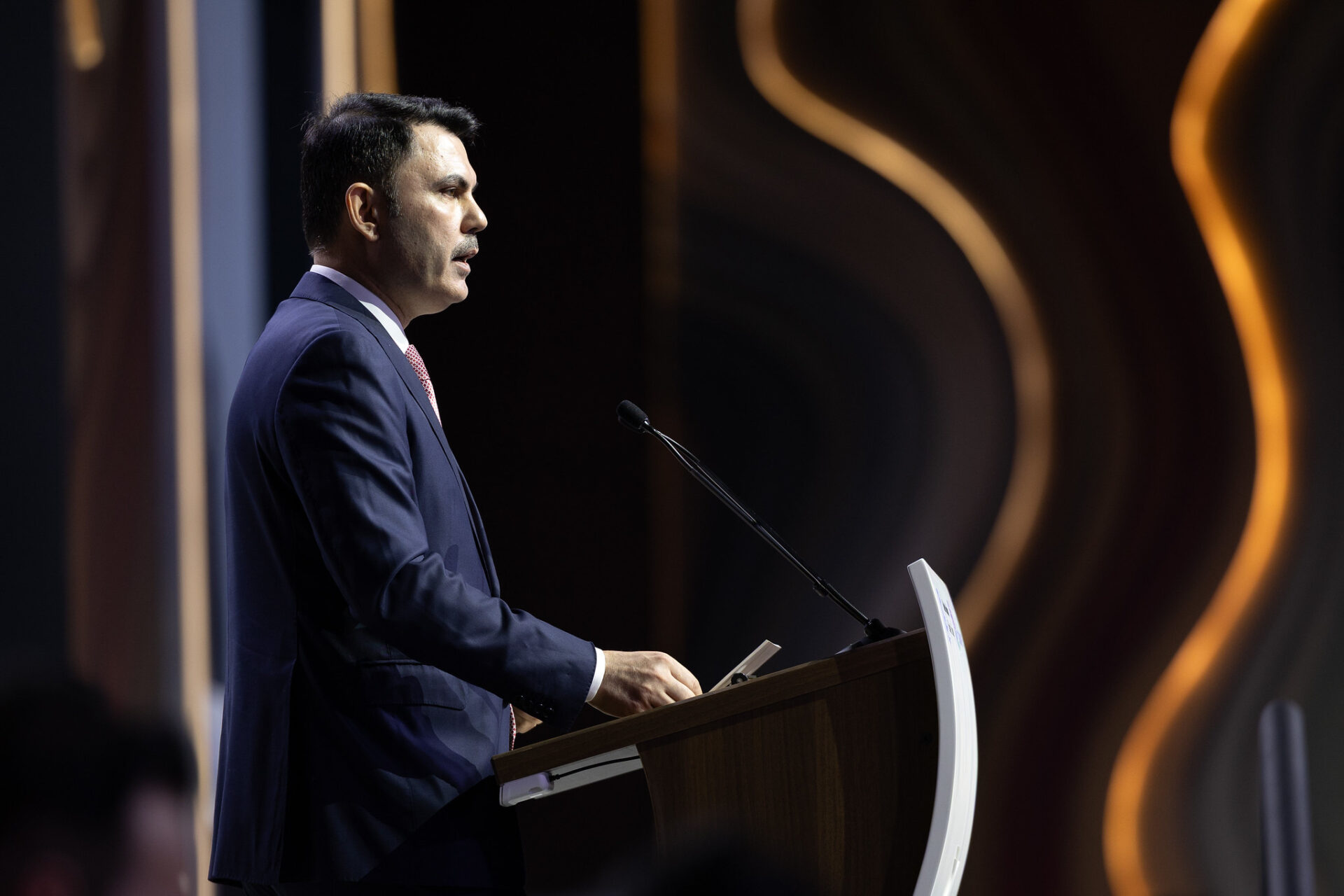
The host, meanwhile, is heading the other way. On opening day, President Recep Tayyip Erdoğan announced two new oil fields in Türkiye’s southeastern Gabar region holding an estimated 135 million barrels. State oil company TPAO is projected to nearly triple its gas output by 2035, according to a Global Witness analysis.
“The message from Türkiye could not be more contradictory,” said Jeni Miller, executive director of the Global Climate and Health Alliance, a network of more than 300 health organisations. “How can a country host the world’s most important climate conference… and on the same day announce plans to expand production of the fossil fuels driving that crisis?”
Türkiye’s flagship electrification pledge, championed by the presidency at Tuesday’s Electrification Forum, calls for lifting electricity’s share of final energy use from about 23% to 35% by 2035, but sets no requirement that the extra power be clean. Coal supplied 34% of Türkiye’s own electricity last year, according to the energy think tank Ember. Electrification “only limits overshoot if the electricity is cleanly generated,” said Samuel Guéret of Climate Analytics, a Berlin-based climate science and policy institute.
The EU, which co-hosted the first Electrification Forum on Tuesday, wants the target at the heart of the summit’s outcome but frames its own push as “clean electrification.”
“Expectations are low,” EU climate chief Wopke Hoekstra told reporters on Tuesday, pointing to a string of “underwhelming” COPs. “That’s just a reflection of reality.”
No list of backers has been published, and none is expected this week, Climate Home News reported. India has said it will not sign.
“We think this is not yet [the peak],” Le Quéré said of this year’s dip, “but the further acceleration of renewable energy and electric vehicle deployment is needed to really secure… a peak and decline afterwards.”
Image Credits: UNFCCC, UNFCCC, UNFCCC.
Combat the infodemic in health information and support health policy reporting from the global South. Our growing network of journalists in Africa, Asia, Geneva and New York connect the dots between regional realities and the big global debates, with evidence-based, open access news and analysis. To make a personal or organisational contribution click the donate button below.