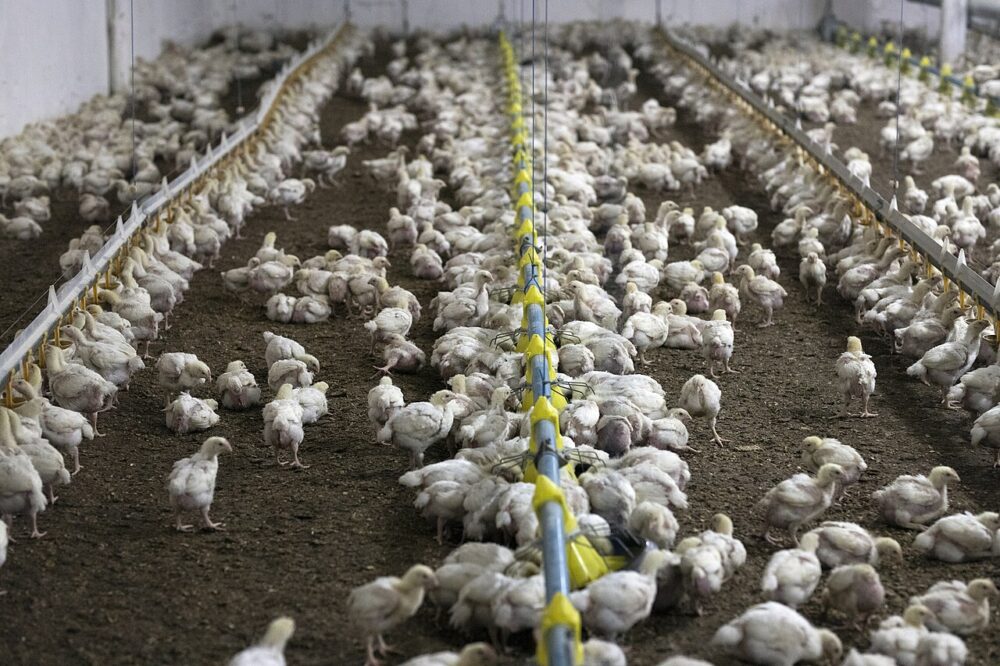
Policy fragmentation and an unresolved pandemic treaty impasse leave global health security vulnerable to emerging pathogens, experts warned at a Geneva Graduate Institute event on Thursday. Hosted by the Global Health Centre, discussions on operationalising One Health across food systems highlighted how commercial livestock pressures continue to outpace reactive safeguards.
Industrial livestock farming is driving unprecedented cross-species disease outbreaks – from avian influenza to drug-resistant bacteria – that emergency containment and veterinary vaccines cannot resolve, speakers argued. Co-hosted with the Food and Agriculture Organization (FAO), the symposium exposed a sharp divide between commercial producers and public health advocates over how to apply One Health across agrifood systems.
While poultry producers urged public co-financing and emergency vaccines, health experts warned that intensive livestock incentives remain fundamentally incompatible with disease prevention. Decades of deregulation have left global health security reliant on reactive mass culls, participants noted. Governments must now confront agricultural market forces rather than relying solely on biomedical countermeasures.
Animal diseases challenge One Health
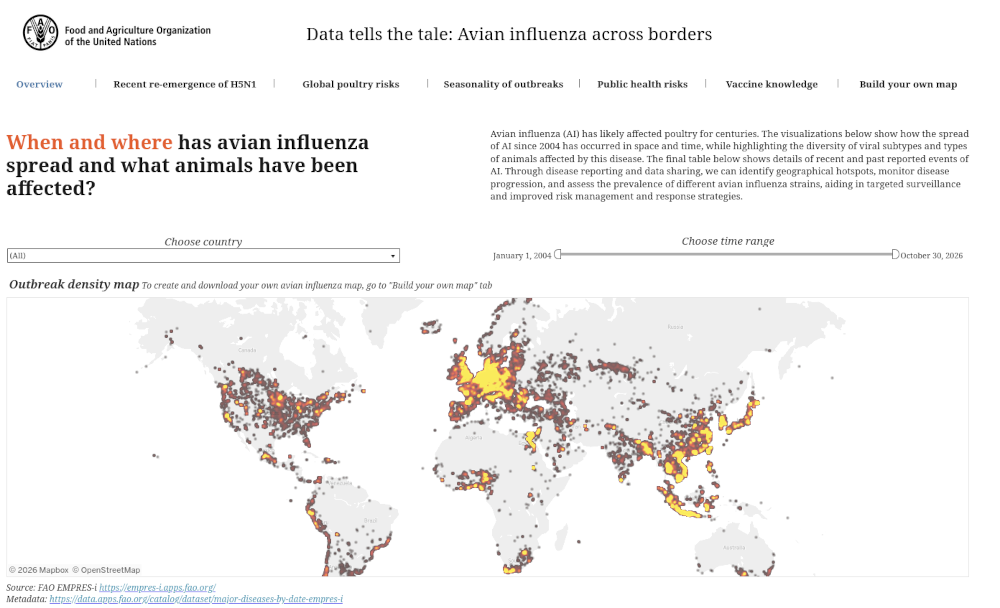
Livestock sectors currently face severe disruption from highly pathogenic avian influenza. The pathogen has crossed into dairy cattle, contaminated milk supplies, and infected agricultural workers in North America.

“In the last five years, highly pathogenic avian influenza was identified in over 500 wild bird species and 80 mammal species,” said Charles Akande, international representative of the World Egg Organisation (WEO).
The scale of cross-species spread marks a turning point. While sustained human-to-human transmission has not been detected, FAO data show that over 2,900 people have contracted avian influenza since 2004, with a 27.5% fatality rate. Dairy cattle now represent nearly 8% of domestic animal infection events recorded globally since 2020.
Whenever infections enter densely clustered facilities, containment protocols can trigger preventive culling across surrounding surveillance zones, argued Nina Jamal, head of pandemics at Four Paws International. Such reactive emergency measures impose vast economic burdens on public budgets and local communities.
Industrial farming drives ecological risks
Transforming agricultural land use remains unavoidable if governments hope to halt zoonotic spillover, experts argued. Current food production channels disproportionate land and feed resources into livestock while delivering minimal global nutrition.

“Over 70% of agricultural land serves livestock production, yet animal products supply only 17% to 18% of human calories,” said Jamal.
Existing economic incentives reward production volume while offering no financial return for resilience, animal welfare, or preventive biosecurity. Commercial markets effectively subsidise outbreak risks, she argued. Modern broiler chickens reach slaughter weight in six to eight weeks, living in cramped conditions that suppress immune responses.
Demographic projections show the global population reaching 10 billion by 2050, driving an estimated 20% increase in animal protein consumption. Expanding industrial operations to meet this demand will accelerate antimicrobial resistance, warned Julio Pinto, FAO animal health officer.
Drug overuse accelerates resistance
Most antimicrobials deployed on farms sustain confinement practices rather than treating active clinical disease. This leaves both animal populations and human healthcare vulnerable to therapeutic failure.
Drug-resistant bacterial infections are associated with 4.7 million human deaths globally each year, according to WHO data. In agrifood systems, resistant pathogens spread rapidly through contaminated animal products, agricultural run-off, and shared water supplies.
“Seventy-five percent of antimicrobials produced globally are administered in livestock farming, making it essential to phase out growth promoters,” said Pinto.
While 173 nations have adopted resistance strategies, just over one-fifth have secured the domestic financing necessary for full implementation.
Industry demands vaccines and funding parity
Maintaining rigorous biosecurity against recurring disease outbreaks imposes severe financial burdens on livestock producers, according to the WEO. Preventing catastrophic flock losses requires dedicated public financial backing, argued Akande.
“Money dedicated to agricultural safety and the environment is not always commensurate with the money dedicated to human health,” he said.
Regulatory agencies must also approve emergency avian influenza vaccines to stabilise livestock inventories and protect supply chains, he urged. Routine mass culling inflicts severe economic shocks that commercial producers cannot absorb on their own.
Flock depopulation also threatens regional food security by wiping out supplies of affordable dietary protein, Akande warned.
“Just last week, a commercial facility holding 1.4 million hens was depopulated in Florida,” he said.
Governments should establish public-private partnerships and integrated data networks to distribute containment burdens equitably.
Pushback against commercial interests
Biomedical interventions and state subsidies cannot resolve health emergencies rooted in commercial deregulation, warned Hugo López-Gatell Ramírez. Speaking in an expert capacity rather than representing Mexico’s diplomatic line, the mission’s head of health affairs argued that modern food systems prioritise corporate wealth accumulation.

These commercial frameworks encourage chemical fertiliser application, deforestation, and the aggressive marketing of ultra-processed foods, he pointed out. Corporate lobbying continually prevents state regulatory bodies from enacting protective sanitary and nutritional policies.
“Our agrifood system is the direct consequence of an economic architecture developed across three centuries, designed around wealth accumulation,” said López-Gatell Ramírez.
During negotiations over the Pandemic Agreement’s pathogen-sharing annex, “the good old days of global public goods are gone,” he pointed out, replaced by disputes over who profits from biological resources.
Multinational conglomerates exert disproportionate influence over domestic food policy, López-Gatell Ramírez stated in an interview following the session.
Commercial profitability remains fundamentally incompatible with equitable environmental preservation and disease prevention. Governments must reclaim their fundamental regulatory mandate to serve their populations rather than commercial interests, he insisted.
Institutional silos throttle preventive finance
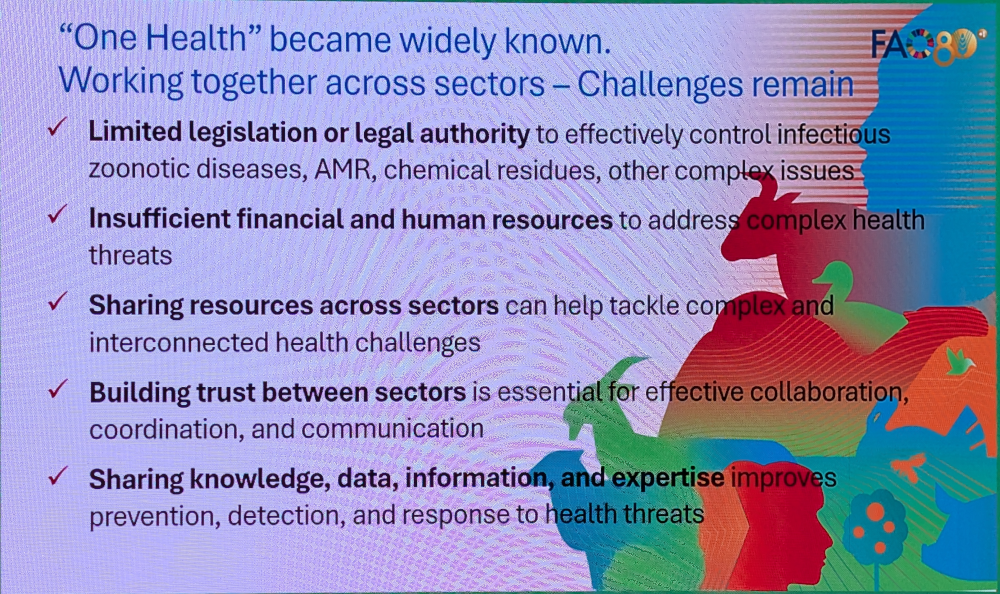
Exercising state regulatory authority is stifled by bureaucratic fragmentation across government ministries, experts warned. A One Health High-Level Expert Panel (OHHLEP) analysis of 262 implementation barriers and enablers identified structural silos across environment, agriculture, and health departments.
State budgets direct the bulk of their funding toward emergency drug stockpiles rather than upstream prevention. While multilateral mechanisms like the Pandemic Fund disburse grants, agricultural and environmental institutions receive small budgetary shares compared to health ministries.
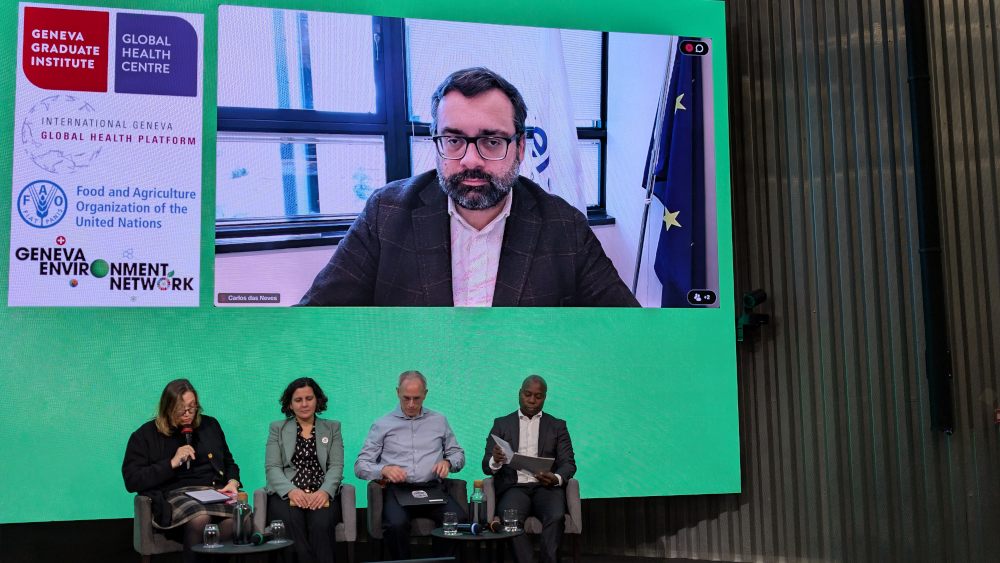
“Probably there is no better topic than food to explain why One Health makes sense,” said Carlos Gonçalo Das Neves, chief scientist at the European Food Safety Authority and OHHLEP co-chair.
“If we want ambitious climate and health outcomes, we know we must change how we produce food,” said Das Neves.
Achieving this integration does not require creating new bureaucracies, he stressed, but bridging policy silos through administrative rules and financial incentives that compel existing institutions to co-ordinate joint interventions.
Aligning global accords with agriculture
Multilateral agencies increasingly seek to align disease prevention with existing environmental accords, including the Paris climate targets and the Kunming-Montreal Global Biodiversity Framework. Yet national veterinary and agricultural departments continue to formulate farm policies in isolation from human healthcare authorities, experts warned.
“Understanding the connection is no longer enough,” said Dominique Burgeon, director of the FAO liaison office in Geneva.
Policymakers must move beyond high-level awareness to concrete implementation across agricultural value chains, Burgeon insisted.
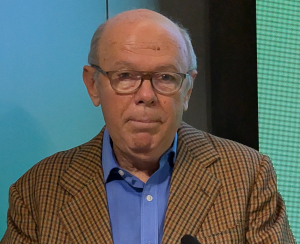
Enforceable legal mechanisms offer one potential route to overcome administrative inertia. Adopted in May 2025, the WHO Pandemic Agreement obliges ratifying states to tackle the underlying drivers of pathogen emergence at their source.
“One Health is enshrined in Article 5 of the Pandemic Agreement as an operational tool, making it a binding obligation,” said Gian Luca Burci, adjunct professor of international law and senior fellow at the Global Health Centre.
He noted that the treaty establishes enforceable statutory duties for ratifying states.
However, the accord cannot enter into force until governments resolve contentious financing and benefit-sharing disputes under the Pathogen Access and Benefit-Sharing (PABS) system. This diplomatic impasse leaves primary prevention unratified even as zoonotic outbreaks multiply globally.
With negotiations on the PABS annex scheduled to resume in Geneva at the Intergovernmental Working Group’s ninth meeting from 11-15 January 2027, delegations face mounting pressure to bridge the divide between agricultural trade and disease prevention. Whether international treaties can reshape commercial farm practices remains the central test facing multilateral health diplomacy.
Image Credits: Otwarte Klatki, FAO, Felix Sassmannshausen/HPW.
Combat the infodemic in health information and support health policy reporting from the global South. Our growing network of journalists in Africa, Asia, Geneva and New York connect the dots between regional realities and the big global debates, with evidence-based, open access news and analysis. To make a personal or organisational contribution click the donate button below.