Drug-resistant bacterial infections could cause up to 39 million deaths by 2050 without urgent action, according to the latest assessment released by the World Health Organization (WHO) on Monday.
Globally, 183 countries have a plan in place to tackle antimicrobial resistance (AMR), but only 42 countries have financed their plans. The data is from the Tracking Antimicrobial Resistance Country Self-assessment Survey (TrACSS) that countries took.
“Bacterial antimicrobial resistance was estimated to be directly responsible for over one million deaths in 2021, and it was associated with about 4.7 million deaths. And those are the statistics of 2021,” said Dr Jean Pierre Nyemazi, acting director of the WHO’s AMR department.
“At the same time, the pipeline for new treatments is not keeping pace with rising resistance; as more bacteria become resistant to existing antibiotics, we are running out of effective treatment options,” he explained.
This makes treating routine infections more expensive, longer and is toxic for the patient’s body.
A decade of AMR plans
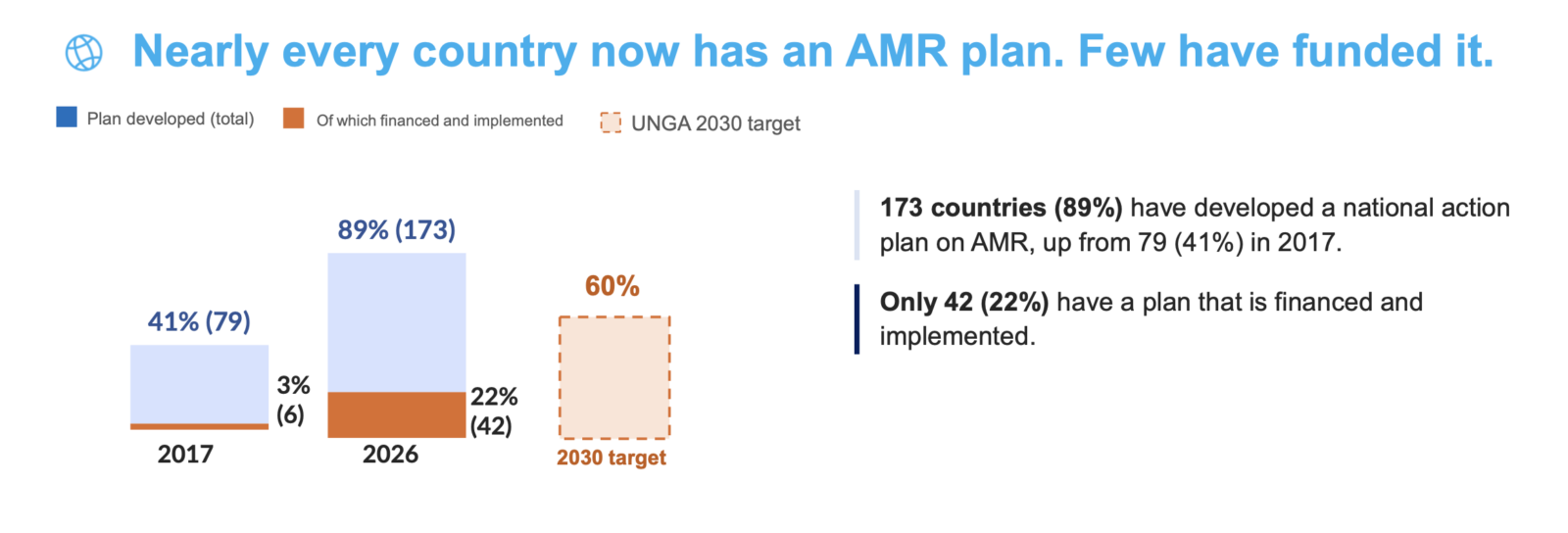
For 10 years now, countries have been implementing their national AMR action plans. About 183 of 194 countries responded to the survey in 2026. While nearly every country has an AMR plan now, only 42 (22%) of the countries have funded their plans.
“Tracks matters at two levels. At the national level, completing the survey brings ministries and sectors around a table to take stock, see where the gaps are, and then decide where to focus next,” said Pravarsha Prakash, technical officer of AMR monitoring and evaluation, WHO.
“At the global level, it’s how we track progress on national action plans and towards the targets countries agreed at the UN General Assembly in 2024,” she explained.
Apart from the indiscriminate use of antibiotics, limited access to clean water and sanitation facilities worsens AMR.
Laboratory testing still falling short
AMR occurs when bacteria, viruses, fungi and parasites do not respond to antimicrobial medicines and become nearly impossible to treat.
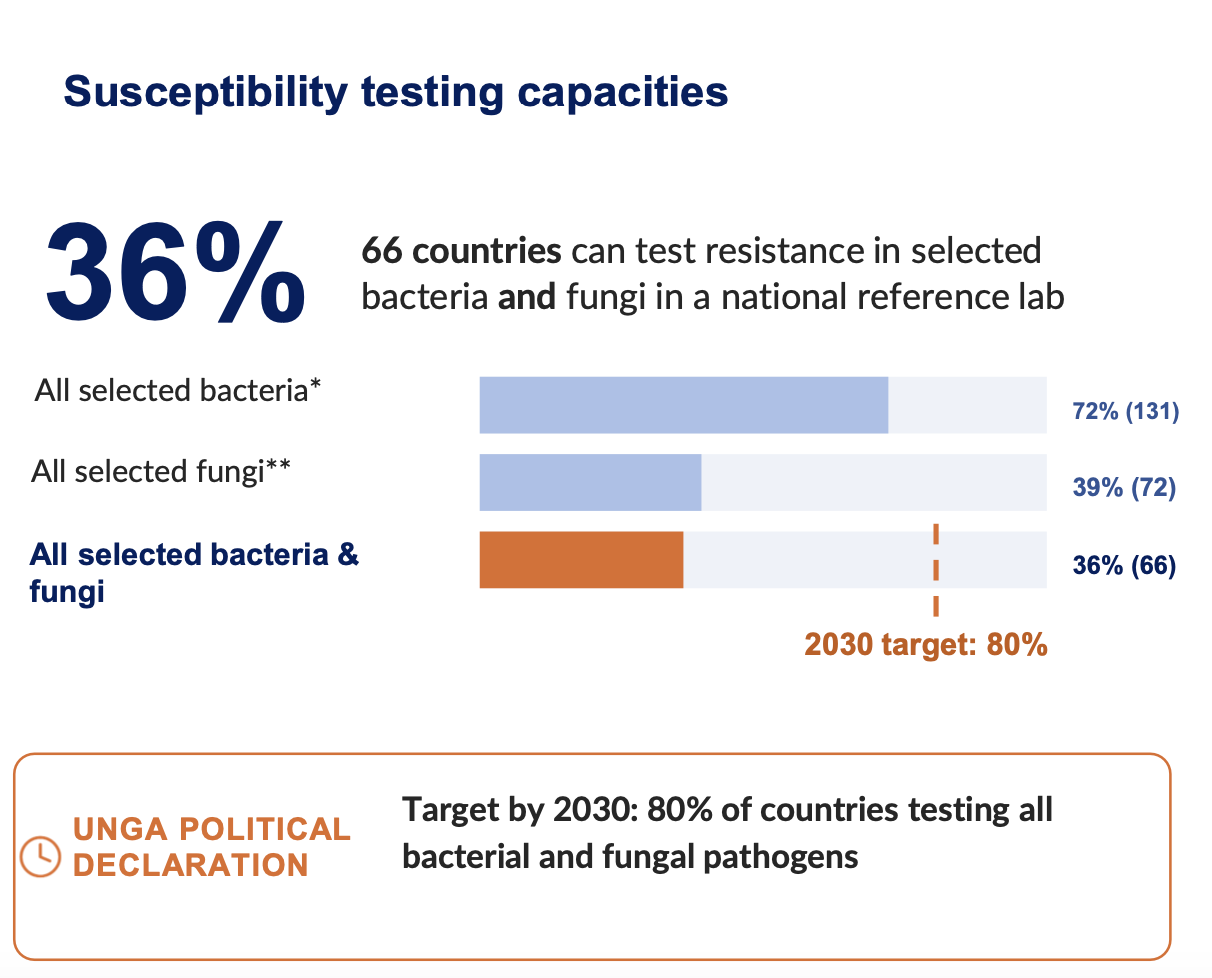
Countries have limited capacity to test for AMR as well. While 131 (72%) of the countries have the capacity to test for selected bacteria, only 72 (39%) can test for selected fungi. This is half of the target for 2030.
The target is for 80% of countries to be able to test for resistance in all bacterial and fungal pathogens monitored by WHO.
Fungal infections
While bacterial and viral infections do get attention, fungal infections do not get as much attention.
“Even in their best-equipped laboratory, typically located in the capital city, more than one in four countries cannot test for resistance in the bacteria monitored. And for fungi, the gap is even wider,” said Dr Silvia Bertagnolio, unit head, AMR surveillance and laboratory strengthening.
WHO is now also providing countries the AMR Diagnostic Initiative, with a prioritized list of the diagnostic tests needed to detect bacterial and fungal infections and AMR.
More countries are tracking antibiotic use
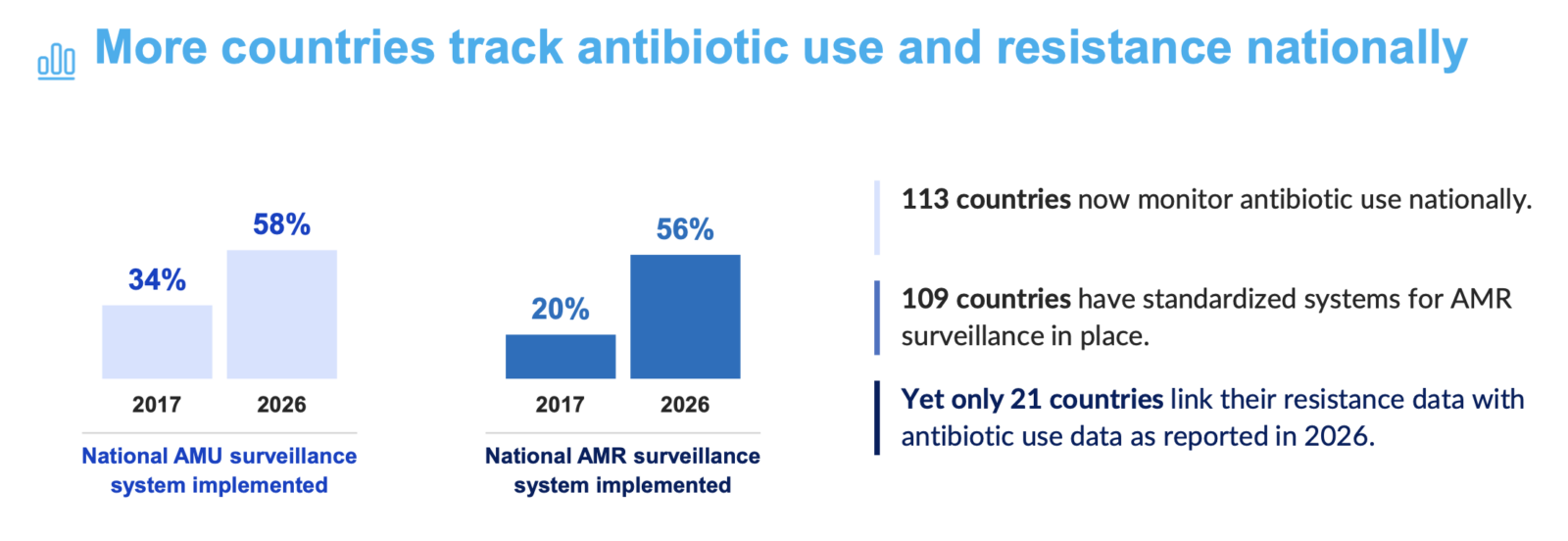
A key takeaway from the survey is that more countries are tracking the use of antibiotics. Nearly 113 countries monitor the use nationally and 109 countries have standardized systems for AMR surveillance in place.
However, while hospitals have been given guidelines to limit the use of antibiotics, there is little room for feedback.
The response to tackling AMR is investing in the social determinants of health, WHO experts said.
“We have evidence that show that investments in infection prevention and control, vaccination, water sanitation, hygiene, responsible antimicrobial use, and research and development of new medicines through the One Health approach can save lives and generate enormous economic returns,” said Nyemazi of the AMR department.
WHO is set to mark the World AMR Awareness Week 2026 from 18 November.
Image Credits: WHO/Sarah Pabst, WHO.
Combat the infodemic in health information and support health policy reporting from the global South. Our growing network of journalists in Africa, Asia, Geneva and New York connect the dots between regional realities and the big global debates, with evidence-based, open access news and analysis. To make a personal or organisational contribution click the donate button below.