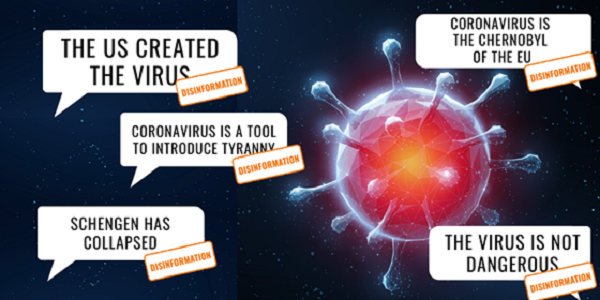
The recent hantavirus outbreak triggered a wave of disinformation along similar lines to the COVID-19 pandemic: the virus was “fake”, “deliberately engineered”, and could be “cured” by Ivermectin.
In the past week, furious community members have attacked and torched tents housing Ebola patients at Mongbwalu General Referral Hospital in the Democratic Republic of Congo (DRC) three times, motivated by misinformation and mistrust.
While anti-science propaganda is not new, AI and social media platforms have enabled deliberate distortions (disinformation) and inaccurate information (misinformation) to proliferate instantly and at enormous scale.
Health is one of the casualties of rising geopolitical division – from Russian bot farms spreading fake COVID-19 information to undermine Western governments, to Western leaders using slurs like “China virus” instead of coronavirus.
Parts of the ‘Big Wellness’ sector are also actively undermining science-based medicines to drive people to their products.
Threat to democracy
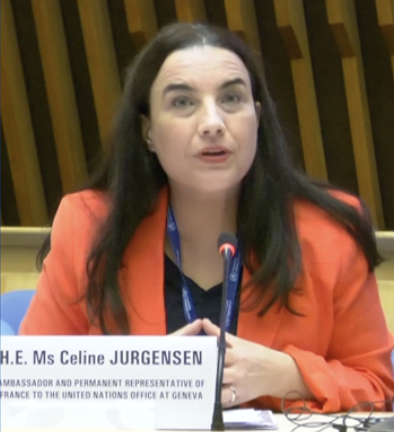
Céline Jurgensen, France’s Ambassador to Geneva, describes the rapid spread of false information and disinformation as a challenge for both “health security and democratic resilience”.
Post-COVID, there is “increased mistrust towards health authorities, questioning of vaccine policies, and weakening trust in science”, she said.
“This phenomenon has become broader. It’s become ideological, and it’s sometimes institutionalised in its orchestration,” Jurgensen told a roundtable on dis- and misinformation at last week’s World Health Assembly.
Many of the narratives are “anti-system, anti-science” aimed at “creating broad mistrust in public authorities, international organisations including the UN, and researchers”.
Helen Clark, chair of the vaccine platform Gavi and former Prime Minister of New Zealand, calls mis- and disinformation “an existential threat to public health”, representing a “crisis of trust”.
“We see less trust in institutions, science, and vaccines. We see polarisation. We see the disinformation actors who exploit and profit from what they do. We see people using AI chatbots and search engines for health information.”
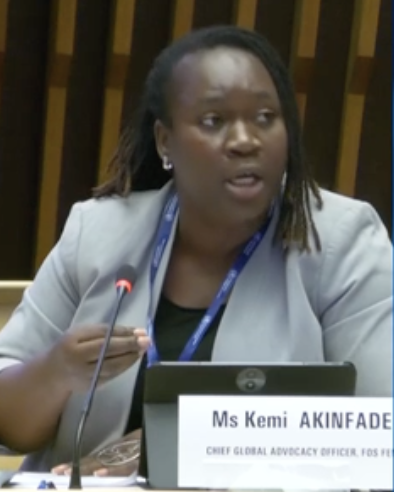
Kemi Akinfaderin, Fòs Feminista’s chief global advocacy officer, described misinformation and disinformation as “anti-system, is anti-multilateralism, and anti democratic”, requiring solutions that address all these areas, including health.
“The advances that we’ve made in sexual reproductive health and rights, maternal health, and child health have been driven primarily by evidence, and there is a concentrated effort to erode that evidence,” said Akinfaderin.
“We have seen concentrated strategic efforts by anti-rights and anti-gender actors, particularly, to undermine scientific evidence and to create distrust in the system.”
Influencing health outcomes
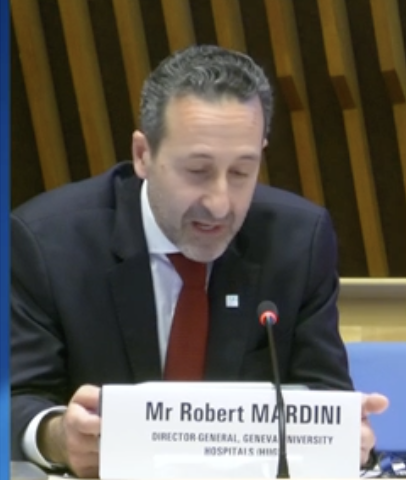
“Misinformation and disinformation are no longer sitting at the periphery of our challenges, but very much at the core, front and centre of the daily humanitarian response, but also clinical realities,” said Robert Mardini, Director General of Geneva University Hospitals and former head of the International Committee of the Red Cross.
“They influence how patients interpret their symptoms, whether they are they seek care, how they adhere to treatments, and how communities respond to public health recommendations.”
Examples of disinformation are easy to find. Last year, Pakistan introduced the HPV vaccine, which protects against cervical cancer.
“Gavi research found that vaccine-related search of videos on Facebook in Urdu returned vaccine misinformation in 27% of the top-ranked videos, compared to 17% in support of the vaccine,” said Clark.
During COVID-19, a fake letter falsely attributed to a senior physician at the Geneva University Hospital claimed that the vaccine caused infertility, said Mardini.
“In another case, national public health guidance was distorted and went global, falsely suggesting that Switzerland had declared vaccines dangerous,” he added.
Akinfaderin has been confronted with claims in Nigeria and Uganda that contraceptives are linked to infertility and cervical cancer, some even spread by women’s rights organisations.
Brazil’s Secretary of Health, Dr Mariângela Simão, said her country was still dealing with vaccine hesitancy from when Jair Bolsonaro was the president and “was a denialist right of both the pandemic and of vaccines”.
Prof Alexandra Calmy, who heads the HIV unit at the University of Geneva Hospital, said that the day after US President Donald Trump suggested a link between paracetamol and autism in pregnant women, patients at her clinic refused pain relief.
A trust problem
“Misinformation is not primarily a communication challenge. It is a trust problem,” said Mardini.
“Trust must be treated as a strategic public asset,” said Dr Sopon Iamsirithaworn, Deputy Secretary of Thailand’s Ministry of Public Health.
“People don’t follow health measures just because they receive information. What really matters is whether they trust the system and believe in the message they hear.”
But, he added, in Thailand “trust doesn’t come from the centre alone. It is built at the community level with trusted people on the ground, including our village health volunteers who live in the community”.
Health authorities and governments are no match for the speed and scale at which chatbots and generative AI can generate fake information. But there are tools to dismantle some fake news.
Regulating tech platforms
Clark stresses increased access to “quality health information”, a “much better understanding of the real impact of mis- and disinformation on health incomes”, and holding tech platforms accountable for their role in purveying misinformation.
“What might regulators insist that they do to clean up their act and stop being the purveyors of the kind of mis and disinformation that is going to cost people’s lives and health?” she asks.
France has a national strategy for combating disinformation in health, which could inspire some other countries, says Jergensen.
The European Union’s Digital Services Act seeks to “strengthen the responsibility of digital platforms” to clamp down on the spread of illicit or misleading content, she points out.
“We also need to strengthen regional and international ways that we share information, and to cooperate in early warnings.”
Simão notes that, in Brazil’s National Health System in Brazil, there is a legal requirement f to have civil society participation.
Iamsirithaworn stresses speedy responses to misinformation and strengthening governments’ “social listening capacity” to understand what people are hearing and thinking.
Akinfaderin calls for strengthened capacity, particularly in the global south, to challenge the notion that being anti-science is akin to decolonisation.
‘Together for Science and Health’
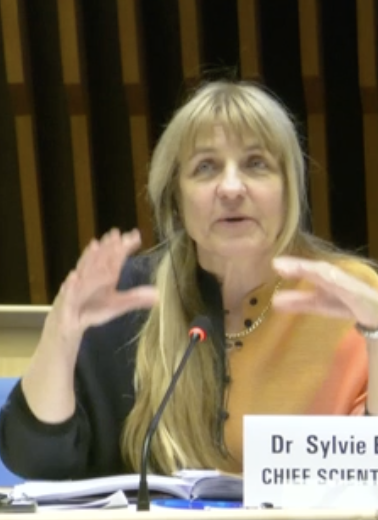
WHO Chief Scientist Sylvie Briand stresses the need to “listen, connect, and communicate”.
Her division aims to launch a movement called ‘Together for Science and Health’ to address mis- and disinformation.
Mardini acknowledges that misinformation spreads “faster than our collective ability to counter it”
“We will not solve disinformation by correcting falsehood faster. We must build systemic resilience by strengthening scientific literacy, investing in transparency, reinforcing links between science and communities, and working through trusted international networks.
He also calls for “supporting healthcare workers as trusted communicators”, as they are “the most credible interface between science and society, but they need time, training and institutional backing to play this role”.
“Ultimately, the question is not only how we fight misinformation and disinformation, but whether we create environments where it cannot easily take root and spread.”
Image Credits: EU vs DiSiNFO.
Combat the infodemic in health information and support health policy reporting from the global South. Our growing network of journalists in Africa, Asia, Geneva and New York connect the dots between regional realities and the big global debates, with evidence-based, open access news and analysis. To make a personal or organisational contribution click the donate button below.