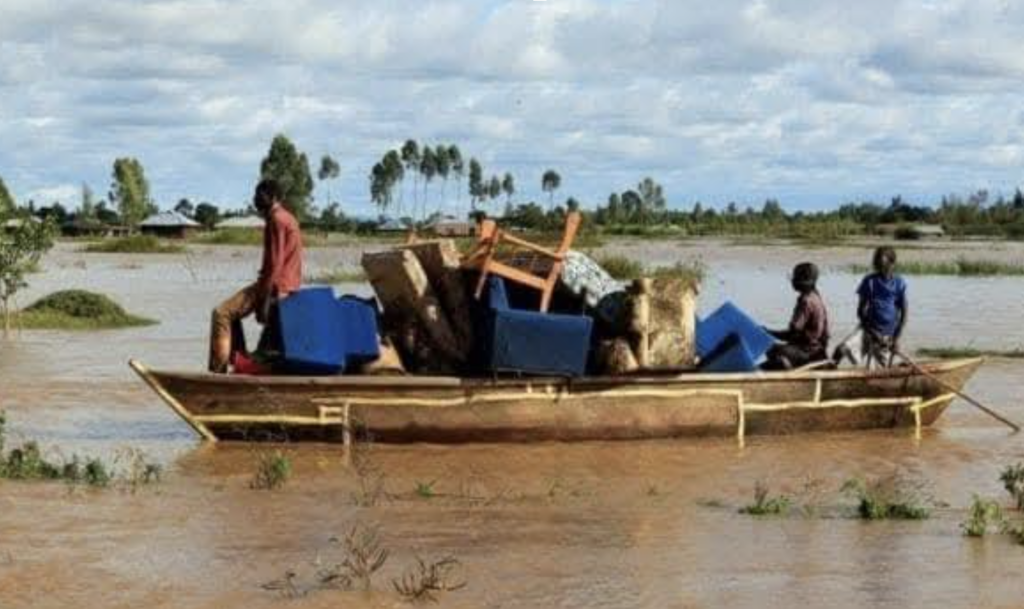
For decades, residents of Kakola-Ombaka village in Western Kenya lived through cycles of seasonal heatwaves and droughts on the shores of Lake Victoria without significant harm.
That changed in 2019, when heavy rainfall of unprecedented intensity struck the area. The entire village and surrounding communities were inundated. The lake swelled, water levels rose steadily, banks eroded, and backflows spread across the land. Many residents were forced to flee to higher ground.
For over a month, much of the village remained submerged. Families camped at local schools until those, too, were overtaken by water. Canoes and boats became the primary means of transport, though many residents with insufficient access to vessels continued to wade through the floodwaters on foot.
When the water eventually receded, families returned home. But the following year, the flooding returned, and then again, with increasing frequency. Historically, the area experienced a single rainy season.
In recent years, two have become the norm — one from March to May and another from October to December. Residents have barely recovered from one episode before the next begins. Today, four camps of permanently displaced people remain in the area.
Water contaminated by pit latrines
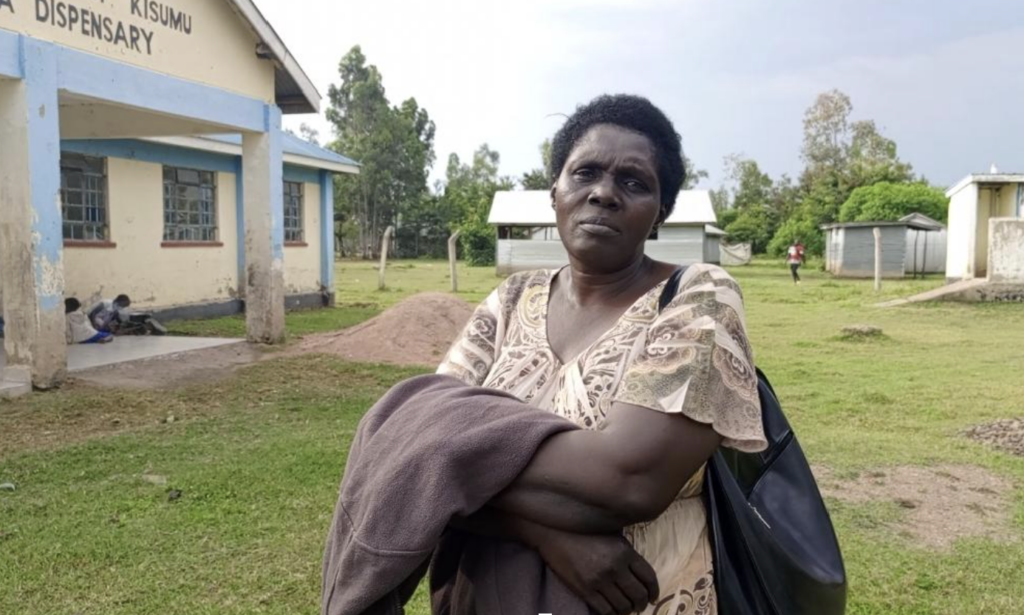
Many homes in this impoverished area rely on pit latrines, most of which were in a state of disrepair. When the floods came, virtually all of these were submerged.
Carren Onjala, a local community health promoter, explained that faeces-filled stagnant water quickly became a breeding ground for snails, worms, and mosquitoes. Water and sanitation systems were seriously disrupted across the entire community.
The warmer, wetter conditions also accelerated the life cycle of parasites. The result has been a marked increase in cases of Schistosomiasis (commonly known as bilharzia) and other diseases transmitted by parasitic worms, known as helminths.
Dr Martin Mutuku, a neglected tropical disease expert from the Kenya Medical Research Institute (KEMRI), explained that rising temperatures combined with unpredictable rainfall create ideal conditions for the breeding of the snails that serve as intermediate hosts for the Schistosomiasis parasite. Many communities in Western Kenya, particularly those living along the shores of Lake Victoria, have been affected.
Children most affected
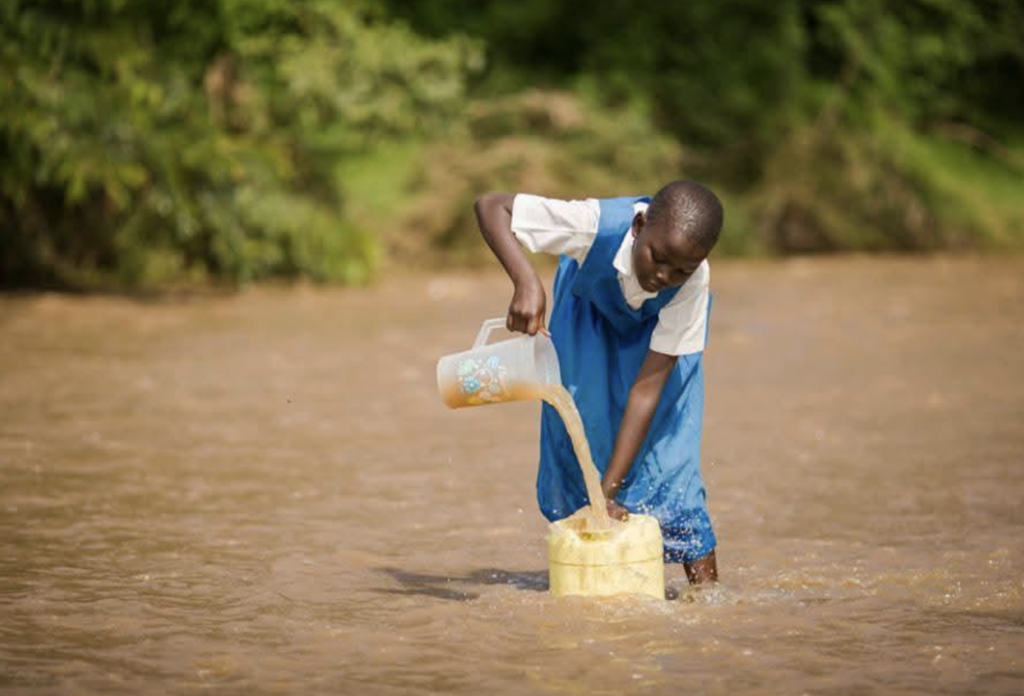
Schoolchildren were particularly vulnerable. Many were required to walk through floodwaters twice a day to attend school and collect water for their families, making prolonged contact with contaminated water unavoidable.
Prisca Awuor Aende, a teacher at Nyamasao Primary School in Kakola-Ombaka village, recalled seeing children playing in stagnant water.
Many stopped attending school altogether as a result of bilharzia infections. Younger children stayed away for fear of the rising water. Others lost their books in the floods, and academic performance across the school declined sharply.
The broader economic toll on the community has also been severe. Families have lost livestock, household goods, and property. Some have suffered damage to their homes; others have lost their land entirely, driving a rise in poverty across the area.
Neglected Tropical Diseases and climate
Neglected Tropical Diseases (NTDs) are a broad group of conditions caused by a range of pathogens, including parasites, bacteria, viruses, and fungi.
According to the World Health Organization (WHO), more than one billion people are affected by NTDs globally, and approximately 200,000 die from them each year.
In rural Western Kenya, the twin pressures of rising temperatures and shifting rainfall patterns are emerging as significant drivers of NTD spread, with Schistosomiasis and soil-transmitted helminths (STHs) finding new footholds as ecological changes bring parasites closer to vulnerable communities.
These climate-related risks were anticipated long before the 2019 floods. The Nyando and Kadibo sub-counties rank among the worst affected by climate change in Kisumu County, according to the county’s Special Programme and Disaster Management data.
As early as 1966, the Kenyan government had predicted that changing weather patterns and lake flooding would place residents of Kadibo sub-county at risk. In response, the government purchased land in the Muhoroni Scheme and resettled affected communities. But after years passed without major flooding, many residents returned to their original homes and lived without incident — until 2019.
The first indications that community members were suffering from bilharzia came when men and male children began presenting with swollen abdomens, an unusual symptom for their demographic.
Those affected were taken to Ahero Sub-County Hospital, where they were diagnosed. In response, the Ministry of Health, various NGOs, UNICEF, and the Red Cross intervened with food, sanitary products, clothing, water containers, books, and medication, including Praziquantel, the primary drug used to treat Schistosomiasis.
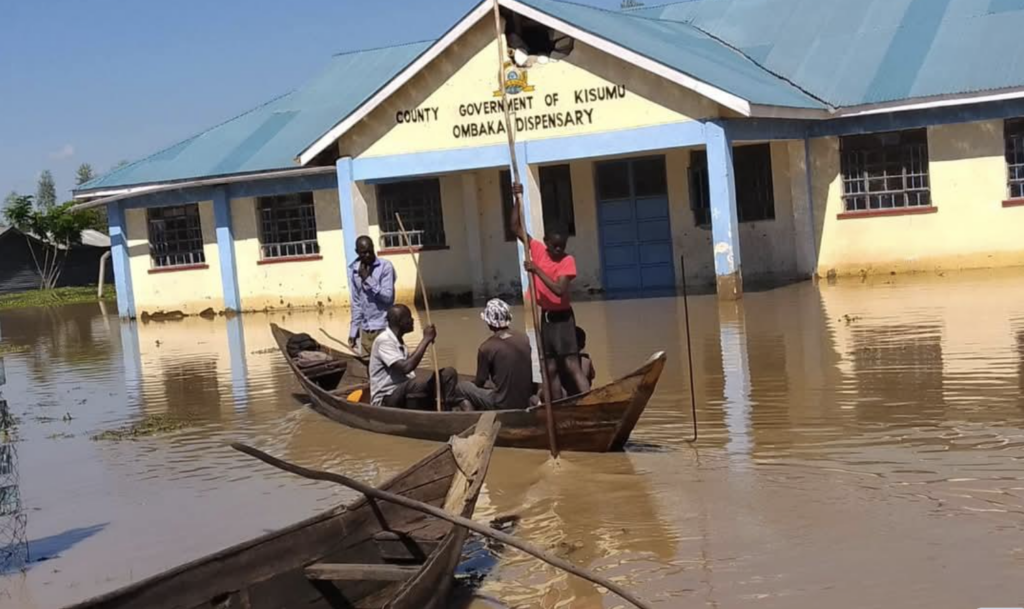
But the delivery of these supplies was complicated by the fact that the nearby dispensary was also flooded, requiring health workers to distribute medicine and mosquito nets by boat and canoe.
Despite annual deworming programmes conducted by the Ministry of Health, re-infection rates remained high., said Maurice Murithi, the area’s Disease Surveillance Officer.
Residents continued to wade through floodwaters to check on their submerged homes, exposing themselves repeatedly to contaminated water. The area also lacked reliable access to clean water, leaving residents with little alternative but to use what was available.
The deputy county director for special programmes, Migosi Oluoch, pointed to another contributing factor: the chronic contamination of the lake, rivers, and streams.
Waste discharged without adequate treatment from nearby industries and hotels enters the water system, creating a persistent snail habitat. When rains or lake backflows occur, this contaminated water spreads into surrounding communities, increasing exposure to both bilharzia and soil helminths.
Mutuku highlighted structural reasons why NTDs persist despite intervention. Mass drug administration and deworming programmes are typically conducted in schools, leaving adults at home without treatment and resulting in poor overall coverage.
Pharmaceutical companies also have limited commercial incentive to manufacture NTD drugs, as these are diseases that predominantly affect people living in poverty. This dynamic has led to a scarcity of bilharzia medication.
Without reliable access to safe water, communities will continue to have unavoidable contact with contaminated sources.
Flood mitigation
Oluoch confirmed that flooding is the foremost climate-related disaster facing Kisumu County, with Kadibo among the most severely affected.
The county government has responded by opening water channels and canals to direct floodwater back towards the lake,while a Disaster Management Committee, co-chaired by the Governor and the County Commissioner, has been established to coordinate the response at the county level.
Residents of Kakola-Ombaka and the wider Kadibo and Nyando sub-counties have called for the construction of dykes, a recommendation that Oluoch supports.
He also urged the national government to accelerate the completion of the Koru-Soin Dam, which could help regulate water levels significantly.
He further proposed that vacant land rendered unusable by flooding – including the sites of former institutions such as Ombaka High School and several other abandoned settlements – be repurposed for a research centre or university.
Simultaneous actions
The situation in Kakola-Ombaka illustrates the relationship between climate change and neglected tropical diseases.
Controlling the spread of Schistosomiasis and soil helminths in Western Kenya will require action on several fronts simultaneously.
Infrastructure investment – including dams, dykes, and improved water and sanitation systems – is essential to reduce flooding and the contamination it brings.
So too is the elimination of industrial and commercial waste entering the lake. Community-wide mass drug administration, rather than school-focused programmes alone, would improve treatment coverage. And sustained public education remains critical to equipping communities with the knowledge to protect themselves.
As Mutuku noted, vector-borne diseases that were once controlled can re-emerge whenever climate change raises temperatures and disrupts rainfall patterns. In Kakola-Ombaka, that re-emergence is already well underway
Combat the infodemic in health information and support health policy reporting from the global South. Our growing network of journalists in Africa, Asia, Geneva and New York connect the dots between regional realities and the big global debates, with evidence-based, open access news and analysis. To make a personal or organisational contribution click the donate button below.