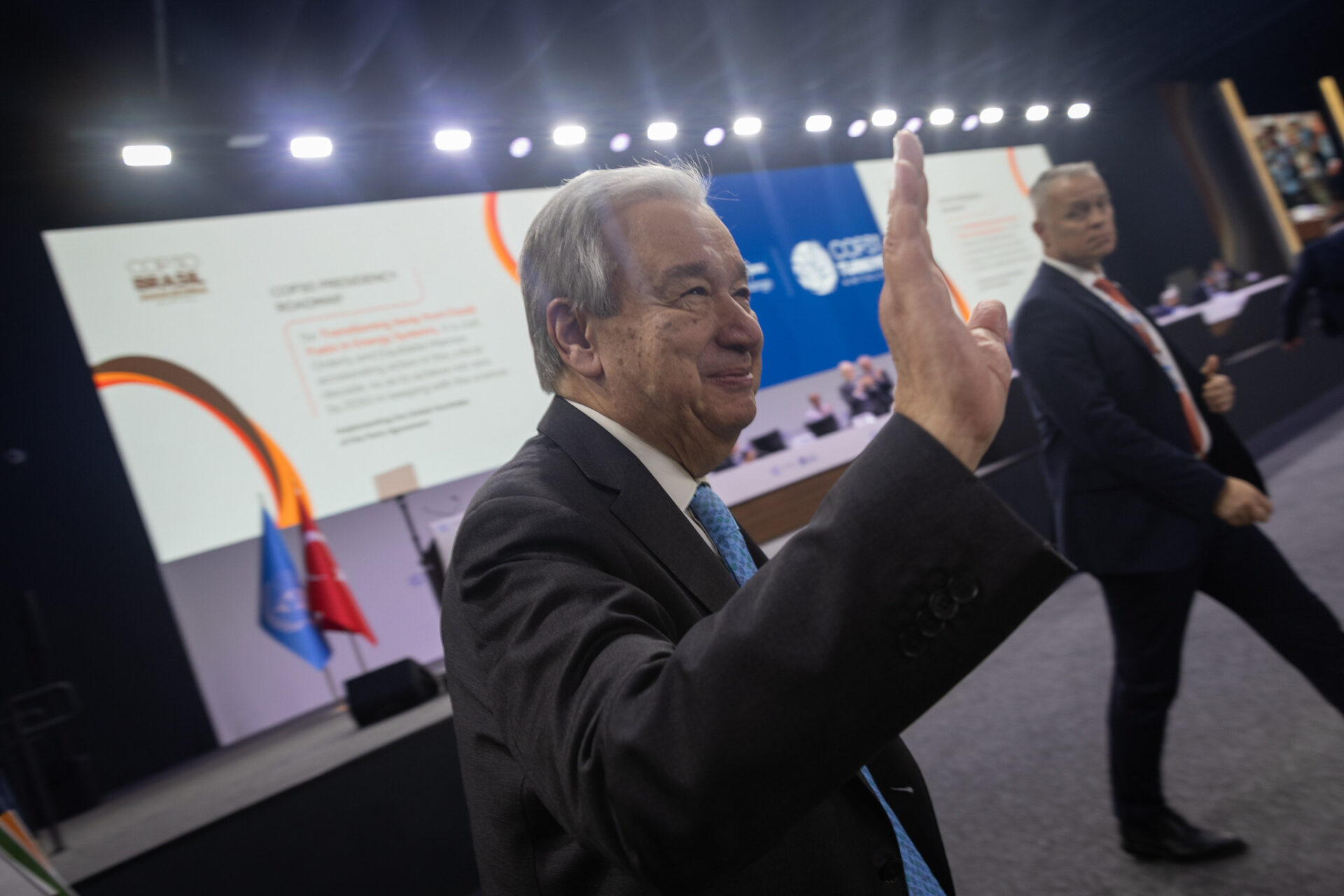
In his last climate summit address as UN secretary-general, António Guterres accused fossil fuel interests of “making a killing while killing our planet”, and warned that a world set to blow past 1.5°C of warming was on a “path to mutually assured destruction.”
“Fossil fuels must go the way of the dinosaurs,” Guterres told the leaders. “But that won’t happen on its own. The dinosaurs did not have a lobby. But fossil fuels do.”
The nine largest oil companies made $95 billion in profit last quarter alone, he noted, while the fund launched at COP28 in Dubai in 2023 to pay for losses from climate disasters has received around $600 million, roughly what those companies earn in 14 hours.
“The brutal truth is that the climate crisis is outrunning us,” Guterres said. “It’s time for governments to tax these windfall profits and use them to help vulnerable countries recover. Polluters must pay.”
Speaking as more than 70 world leaders gathered in Antalya for two days of speeches, Guterres appealed for unity at a time of deep divisions over war, debt and who should pay for the costs of a warming planet.
“We do not need countries to agree on everything,” Guterres said. “But we do need to cooperate on the things no country can solve alone, and the climate process itself must evolve. Negotiations matter, but success must be measured on the ground.”
Leaders of the three biggest emitters stay home
The leaders’ summit marks the point where COP31 turns from procedural wrangling to politics, before the talks close on 20 November. After a year dominated by war, inflation and an oil price shock, the path to a true breakthrough in Antalya looks steep.
“Chaos in global energy markets and climate disasters are supercharging inflation,” UN climate chief Simon Stiell told leaders. “The political costs of fossil fuel dependency are unforgiving.”
A procession of heads of state, from Australian Prime Minister Anthony Albanese to European Commission President Ursula von der Leyen, accepted that warming can no longer be held below the Paris Agreement’s 1.5°C limit, the north star of COP negotiations for the past decade.
Despite the accelerating crisis, heads of state from many of the world’s largest economies – and the three top emitters in China, India and the US – are skipping the summit.
Leaders who stayed home included China’s Xi Jinping and India’s Narendra Modi, who lead the world’s largest and third-largest emitters, as well as France’s Emmanuel Macron and Germany’s Friedrich Merz. The United States, the second-largest emitter, sent no official delegation for the second year running.
“It is a disgrace that only one G7 head of state and a handful of G20 leaders are attending the summit,” said Mohamed Adow, director of the Nairobi-based think tank Power Shift Africa. “The world’s biggest economies should be leading the response to the climate crisis, not leaving it to others.”
A White House official told Spectrum News the summit “rejects reality by failing to acknowledge that extremist climate policies are destroying countries around the world.”
“This concern turned into silence,” Brazilian President Luiz Inácio Lula da Silva said of climate’s place at G7 and G20 summits. “We started talking more about weapons and tariffs than the survival of future generations.”
‘Fight harder’
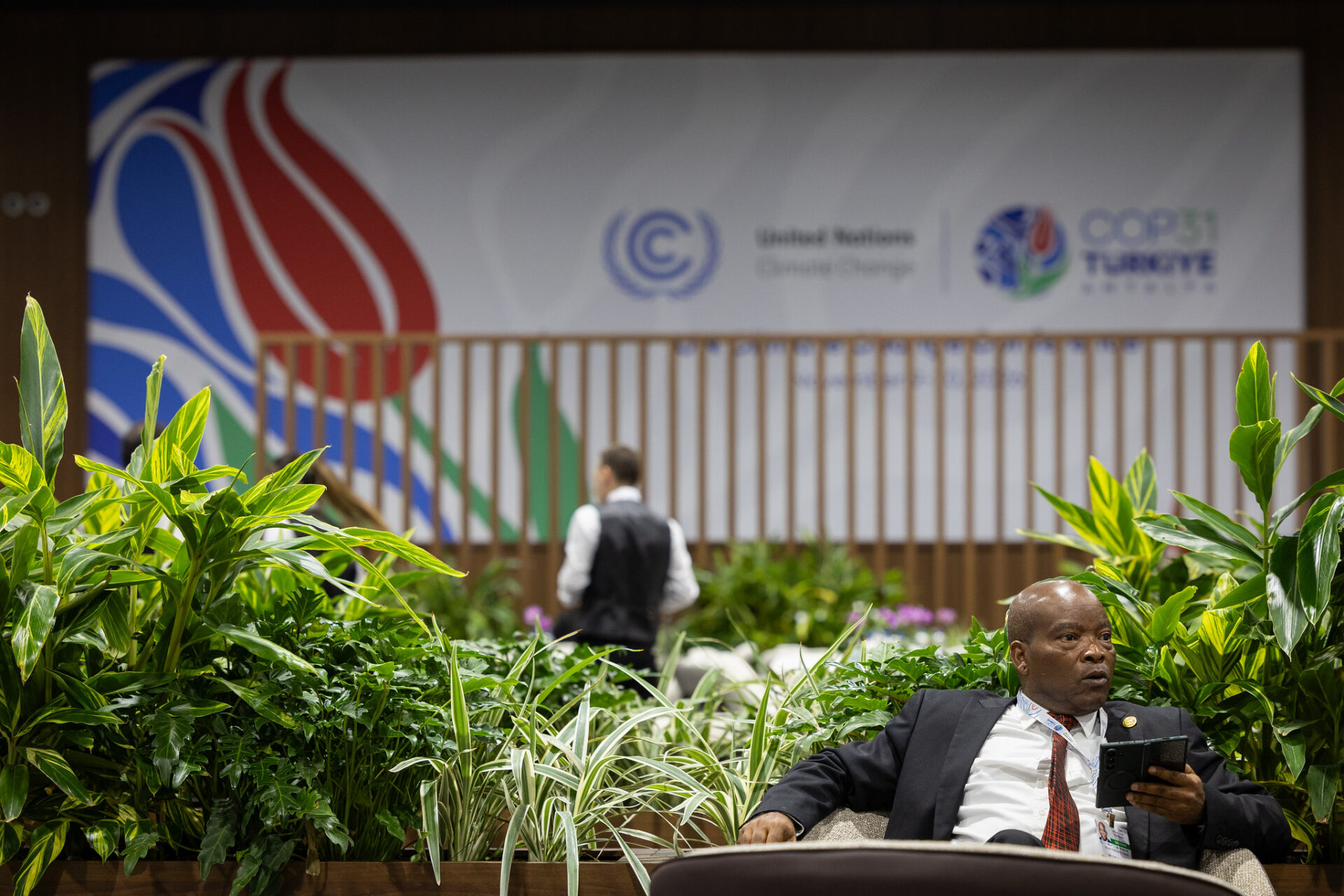
“Science tells us an overshoot above [1.5°C] is now inevitable,” Guterres said. “But science is not telling us to surrender. It’s telling us to fight harder. The truth is that we have the power to determine how high, how long and how devastating that overshoot will be.”
The World Meteorological Organization put the global average temperature from January to September at 1.47°C above pre-industrial levels in its latest update. An El Niño forecast to reach record strength by December will push that higher, giving a “new meaning to the phrase off the charts,” WMO Secretary-General Celeste Saulo said on Monday.
Hilda Heine, president of the Marshall Islands, whose atolls average about two metres above sea level, told leaders the global response to overshoot must be “overwhelming, or the world we know is over.”
“Overshoot means waves eating away our shores, flooding that destroys towns, schools, hospitals,” she said. “In July, I went to my home island. I saw coral, bright and lush beneath the water, as it has been throughout my life. I returned just a few months later, to find half [of it] white from bleaching.”
Most countries want the Intergovernmental Panel on Climate Change (IPCC), the UN body that assesses climate science, to finish its next reports in time for the 2028 global review of climate progress, known as the global stocktake. Oil exporters Saudi Arabia and Russia have pushed back, along with India.
“We have seen efforts to undermine the IPCC and to [block] its reports informing the next global stocktake,” Heine said. “Our Pacific scientists tell us the work can and should be completed on time.”
Trillion-dollar hurdle
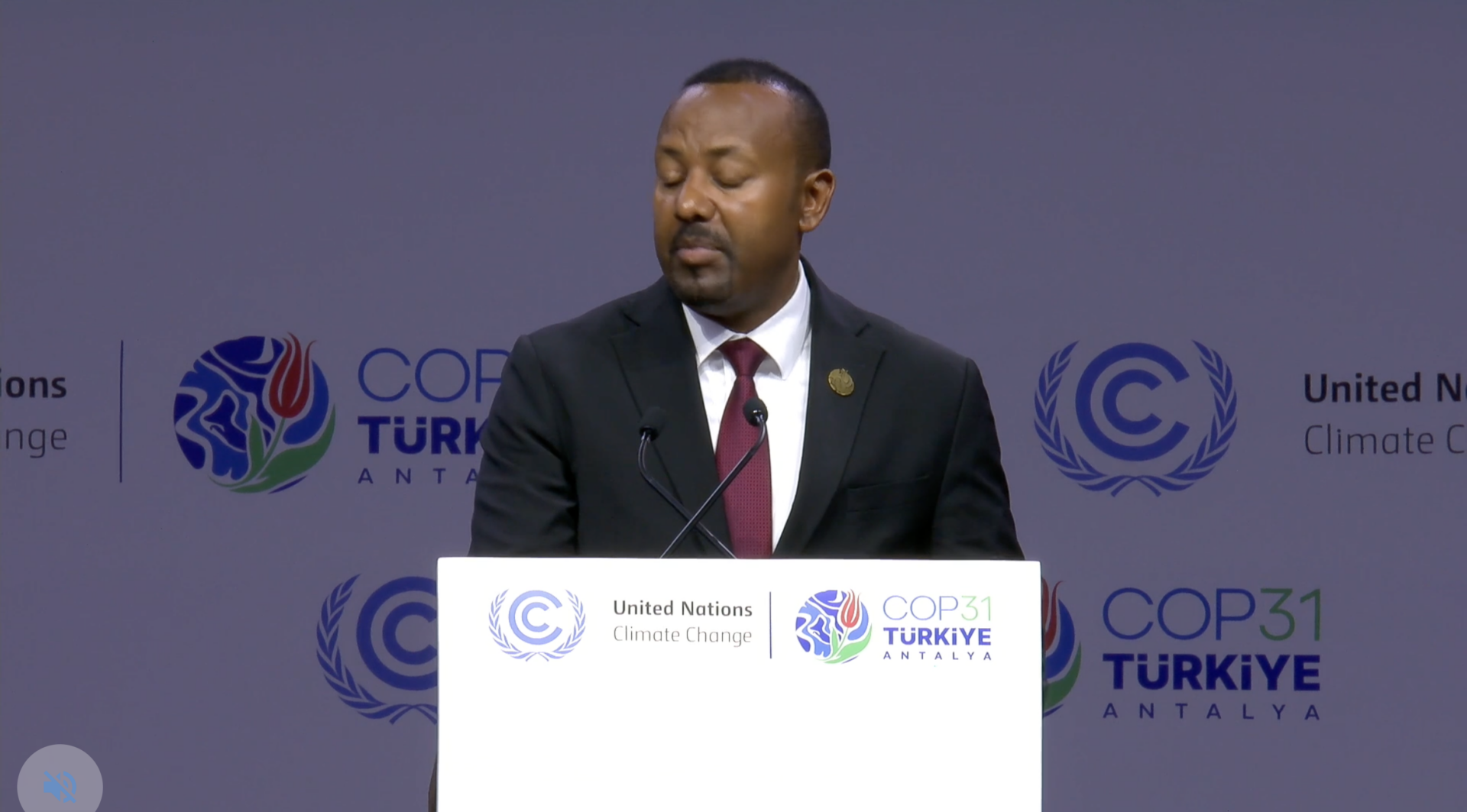
“Developing countries pay nearly $1 trillion in interest on public debt,” said Ethiopian Prime Minister Abiy Ahmed, whose country hosts COP32 next year. “[Early action] should begin here, with every pledge of finance answering three questions: how much, by when, on what terms.”
The UN trade and development agency, UNCTAD, puts the 2025 bill for developing nation interest payments at $995 billion and counts 3.7 billion people living in countries that spend more on interest than on either health or education.
Australian Climate Change and Energy Minister Chris Bowen, who is leading the negotiations, told leaders that just 0.2% of climate finance goes to small island developing states to help them adapt to climate change. “This must change,” he said.
“We cannot demand that countries transform their economies while denying them the means to do so,” Guterres said. “Emerging and developing economies outside China are home to nearly two-thirds of humanity, yet they receive less than one-fifth of global clean-energy investment.”
Stiell said the talks would focus on “delivering, and improving access to finance – without reopening previous agreements,” leaving untouched the Baku target. Developing countries went into the 2024 talks in Baku seeking $1.3 trillion a year and left with a pledge under which developed countries agreed to mobilise $300 billion a year by 2035. The latest OECD figures show they provided and mobilised $136.7 billion in 2024, less than half that sum.
On opening day, developing countries won a dedicated agenda item on whether rich nations are meeting their legal duty to provide finance, over EU objections.
The dinosaur lobby is in the room
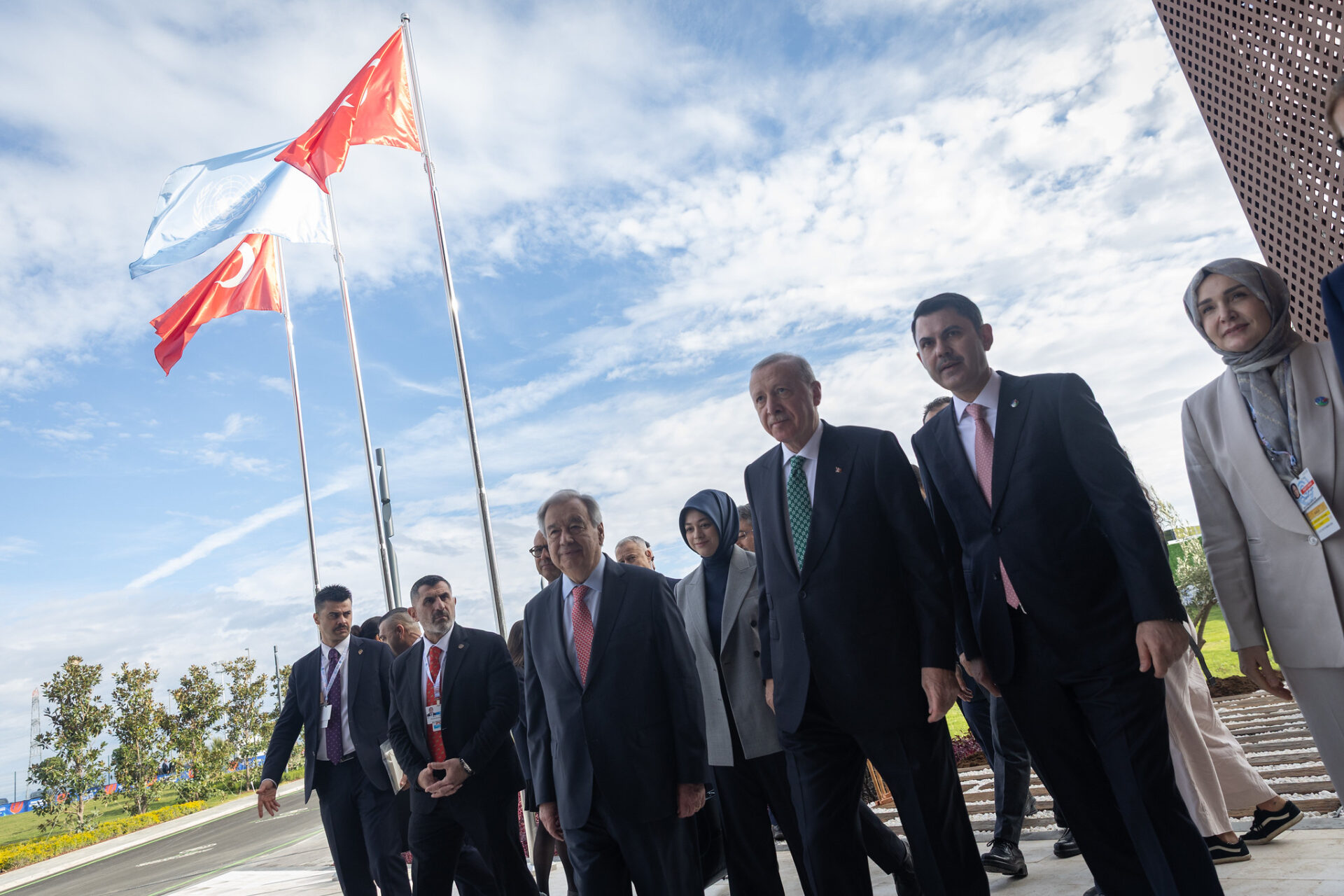
“Their strategy is simple,” Guterres said of the fossil fuel lobby. “Distort the science. Delay the policy. Delay the action. Delay the accountability.”
On Monday, the day COP31 opened, Turkish President Recep Tayyip Erdoğan announced that Türkiye’s Gabar region now produces about 84,000 barrels of oil a day from 184 wells, and unveiled two new fields. Türkiye’s emissions rose by 24.4 million tonnes in 2025, the second-largest increase of any country after the United States, UNEP reported last month.
“Every new oil well drilled, every piece of coal extracted, is a threat to my country’s future,” Heine said. “The discovery of new fossil fuel resources is not something to celebrate, but something to fear.”
The presidency’s flagship pledge, to raise electricity’s share of global energy use to 35% by 2035, does not require that extra power to come from clean sources. “Electrification is important,” Heine added, “but must be linked to renewable generation.”
In a fiery address in which the Turkish president declared that “unnecessarily cutting down a healthy tree is, in fact, equal to killing a person”, Erdoğan told leaders that developed countries “that have historically consumed the global carbon budget should assume greater responsibility for emissions reductions and financing,” reopening one of the oldest fault lines in climate talks: who counts as a donor.
No new donors
The 1992 UN climate convention puts the duty to provide climate finance on a list of wealthy nations known as Annex II: the United States, Japan, Germany and 20 other countries that belonged to the OECD in 1992, plus the European Union.
Russia, China and the Gulf states were never on the Annex II list. Despite decades of growth that have made China the world’s second-largest economy and Qatar and the United Arab Emirates among the richest countries per person, they insist they are not donors and will not become ones.
The Paris Agreement only encourages other countries to contribute voluntarily, which some do on their own terms: China says it has provided and mobilized more than 177 billion yuan, about $24.5 billion, for other developing countries since 2016, and the UAE launched a $30 billion climate investment fund when it hosted the 2023 summit in Dubai.
In an interview with Russian state media Interfax before the summit, Russia’s top climate envoy drew a red line reflecting non-donor states’ attitude.
“There are issues, if not ‘red lines,’ that we do not support,” Ruslan Edelgeriev, President Vladimir Putin’s special representative for climate said. “The first is the rapid abandonment of hydrocarbons. The second issue is that they are trying to force Russia to become a ‘donor’ … we are not donors; this is purely voluntary.”
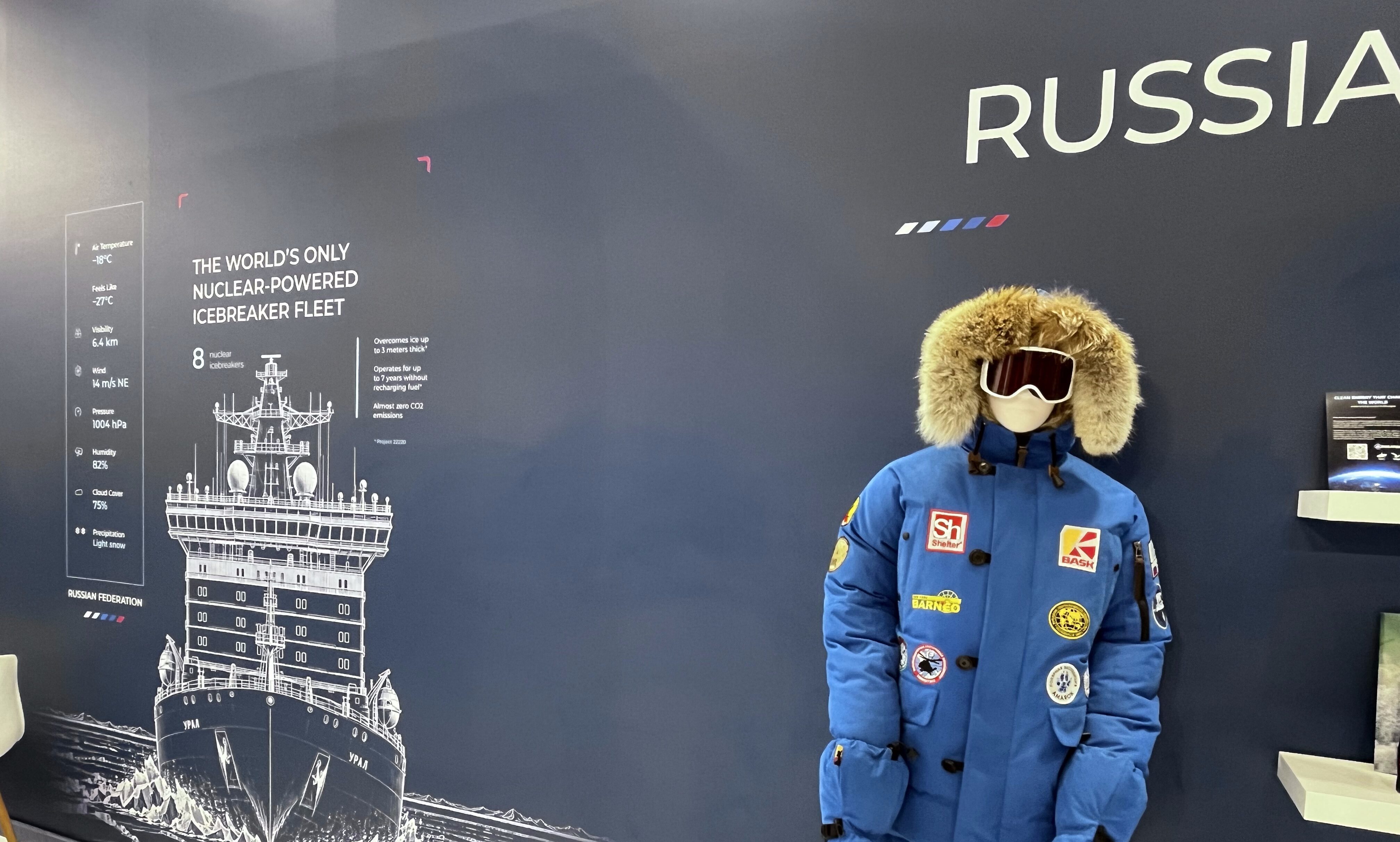
At Russia’s pavilion, an exhibit on its fleet of nuclear-powered icebreakers showcases how the country stands to profit from a warming planet, as melting sea ice opens the Northern Sea Route, an Arctic shortcut to Asia.
Russia’s long-term climate strategy, filed with the UN, says climate change “creates new opportunities” for the country’s trade and economy, including “an increase in the navigation period” on the route.
Image Credits: UNFCCC.
Combat the infodemic in health information and support health policy reporting from the global South. Our growing network of journalists in Africa, Asia, Geneva and New York connect the dots between regional realities and the big global debates, with evidence-based, open access news and analysis. To make a personal or organisational contribution click the donate button below.