
Action is lagging far behind the milestone commitments of the 2024 UN High Level Declaration on Antimicrobial Resistance (AMR). But a Ministerial Meeting scheduled for 6-8 December in Abuja offers an opportunity to pick up the baton. Ahead of that, civil society gropus will convene in mid-November in Rome.
Two years after the UN General Assembly pledged to reduce deaths from AMR 10% by 2030, the world is losing the battle against superbugs. And UN institutions vested with leading the charge against the proliferation of drug resistant pathogens are plagued by budget cuts and leadership questions. According to WHO, some 4.9 million deaths annually are somehow associated with AMR, while a 2022 Lancet study found 1.27 million deaths were a direct result of superbug resistance to antibiotic treatment. Two studies published in July and August document the worsening trends including:
- “Steeply increased” AMR among children with common infections in low-resourced settings, in a study of over 100,000 people published in July, and;
- Persistent overuse of antibiotics for human health in 72% of countries and territories with data available, according to another study from August.
And along with the annual death toll, scientists worry that a drug resistent pathogen could trigger the next pandemic.
Meanwhile a long-delayed ministerial meeting to follow up on the commitments made in 2024 is now finally scheduled for 6-8 December in Abuja, Nigeria. Ahead of the December event, a multistakeholder meeting including civil society, academia and private sector, as well as governments, will meet in Rome 16-18 November, during World Antimicrobial Awareness Week.
Calling on governments to invest more in AMR

region, 2019, as published in The Lancet’s 2022 estimate of 1.27 million such deaths annually.
A draft “Abuja Compact on Antimicrobial Resistance” prepared for the December ministerial calls on governments to recommit to the goals of the 2024 Declaration, and include more AMR spending in routine government planning and budgets. It notes that only about 10% of national AMR action plans are adequately financed.
Governments would also be asked to strengthen national surveillance of antimicrobial resistance and antimicrobial consumption – which includes antibiotics, but also anti-parasitic and anti-viral agents.
And national systems should step up routine reporting of such data to the World Health Organization (WHO), the Food and Agriculture Organization (FAO) and the World Organization of Animal Health (WOAH).
Governments are also asked to step up commitments to infection prevention; access to clean water and sanitation; improved use of diagnostics and appropriate antibiotics; as well as more investments in R&D, as well as regional manufacturing of health products.

Finance is another overarching theme of the draft. The Compact calls for greater involvement by finance ministries and asks the World Bank, regional development banks and other funders to consider AMR in grants and lending. That reflects a problem repeatedly raised by countries and civil society groups that many governments have adopted AMR plans without allocating enough money to carry them out.
“There’s been a lack of investment in actual National Action Plans. We need to dramatically step this up if we want to effectively combat AMR,” says Katherine Urbáez, founder and executive director of the Geneva-based Health Diplomacy Alliance, which as been a leading civil society actor on AMR.
“The December meeting is a chance to reaffirm our commitments, and accelerate action. The Rome meeting will also provide an important platform for engaging civil society, academia and the private sector.”
Ambitious 2024 commitments but poor followup
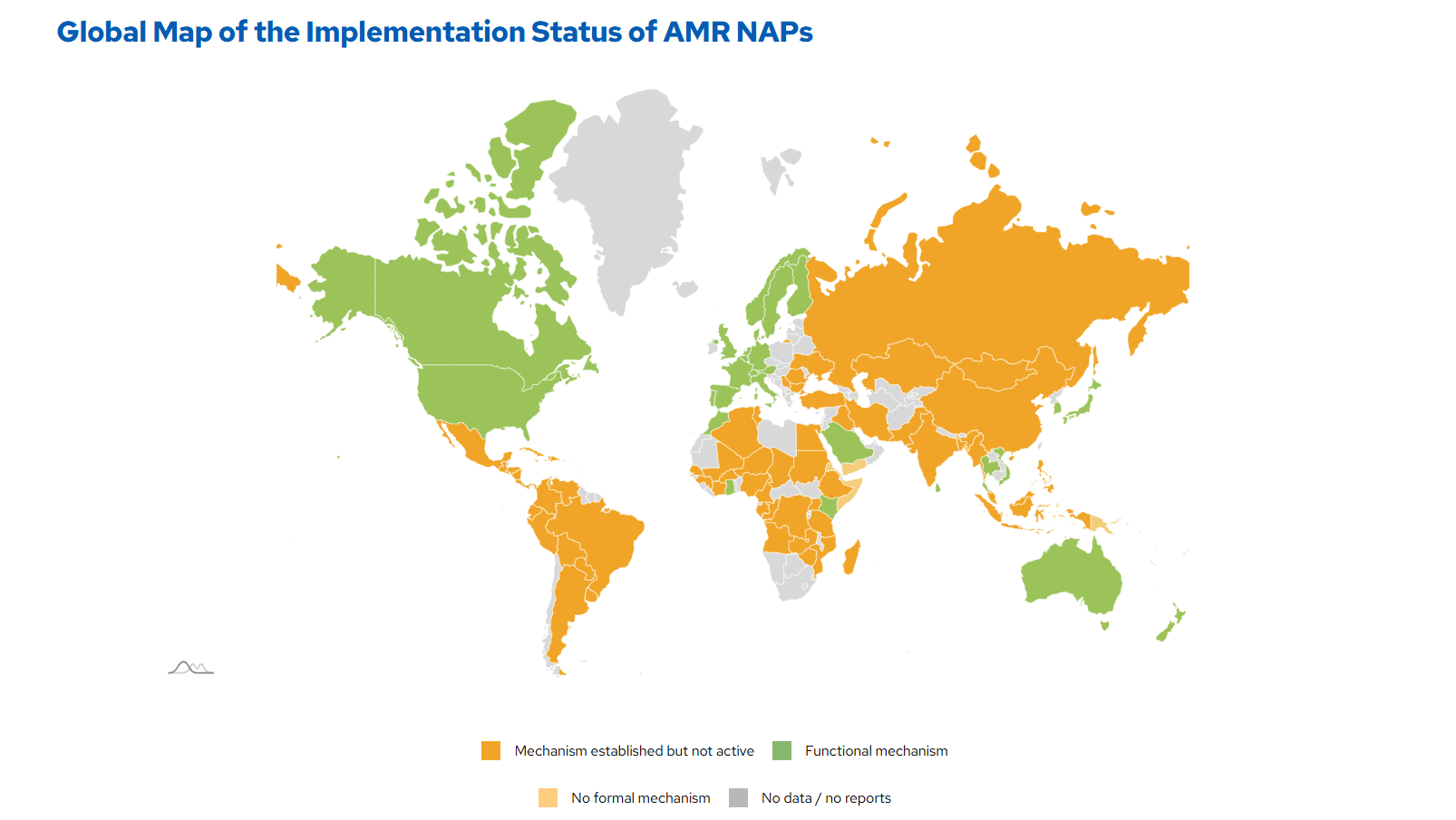
In the 2024 UN GA declaration, all UN member states committed to creating national action plans (NAPs) to fight AMR but few have actually invested money into them.
According to the latest WHO data from 2023, while 178 countries had developed and endorsed AMR NAPs, only about 11% were in fact implementing them. And anecdotal observations indicate little has improved since, says Urbaez. “We need strong engagement from Governments to participate in this Abuja meeting – and so far we haven’t seen enough of that,” Urbáez says. “Now, Abuja is the moment to focus on delivering them: tracing each commitment to measurable implementation, so that governments and partners can see where to act next and what is politically feasible.”
Progress in Geneva – WHO AMR action plan
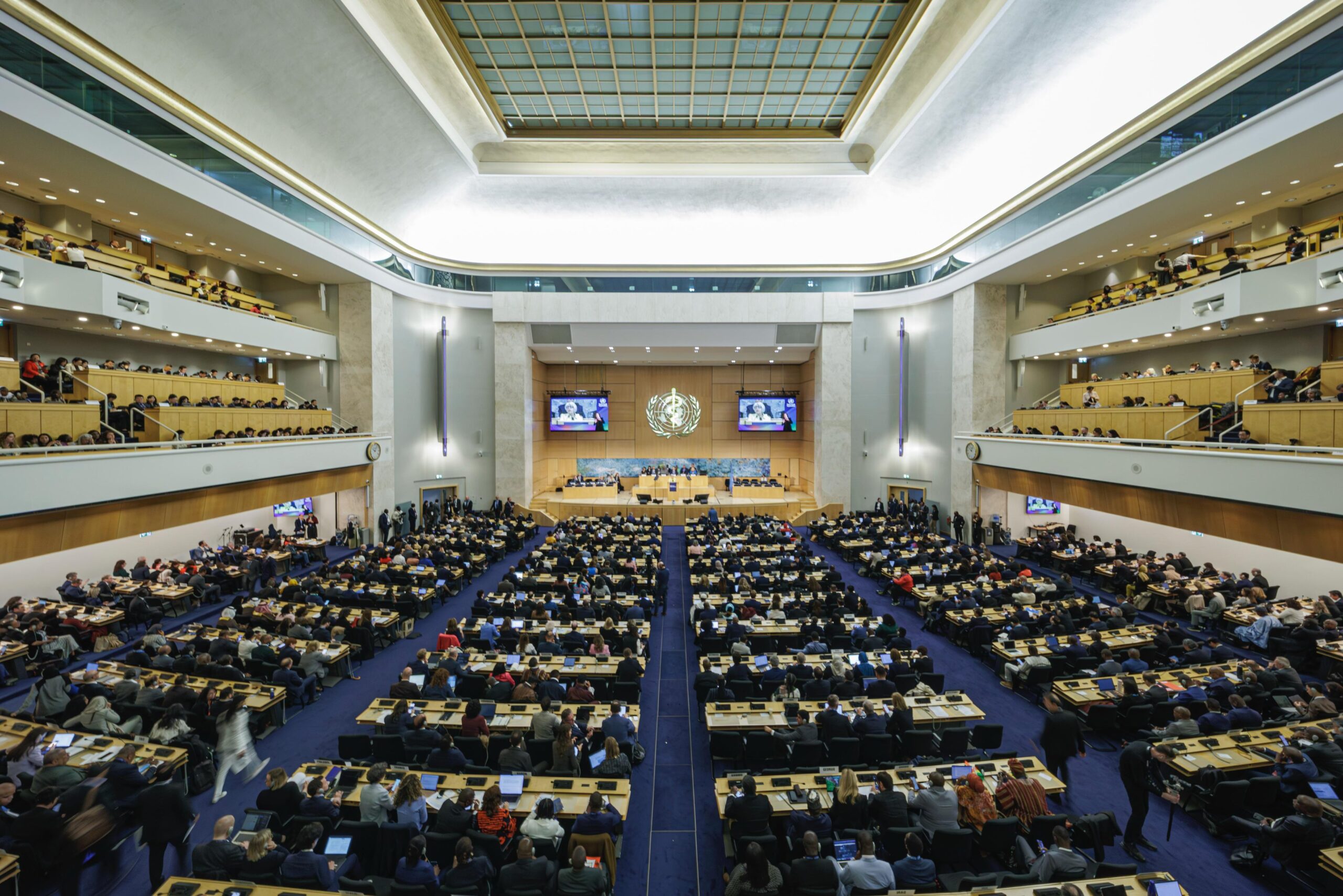
This year has seen some progress already in Geneva. In May, the World Health Assembly adopted a Global Action Plan on AMR (2026-2036) after over a year of delays due to developing and developed country wrangling over language around technology transfer.
The plan strengthens the ‘One Health’ framework for combatting AMR across human, animal, plant and environmental health sectors – setting out a road map for Health Ministries to act more assertively, with WHO support. And it highlights member state commitments to themes of UN Declaration including prevention, equitable access to antimicrobials alongside responsible use; stronger surveillance and financial measures. See related story:
Infection Prevention and Control Falters Post-Pandemic – Increasing AMR Risks
Civil society advances new ‘check the box’ initiative
On the sidelines of the World Health Assembly, and in fora since, civil society organizations have become active in tracking countries commitments to AMR plans and programmes and their follow-through – including through a new ‘Check the box’ initiative, launched by HDA.
“Check the Box is not about naming and shaming,’ Urbáez said at a WHA side event where the initiative was launched: ‘The aim is to link the dots between promise and delivery so governments and partners can identify what is missing and act.”
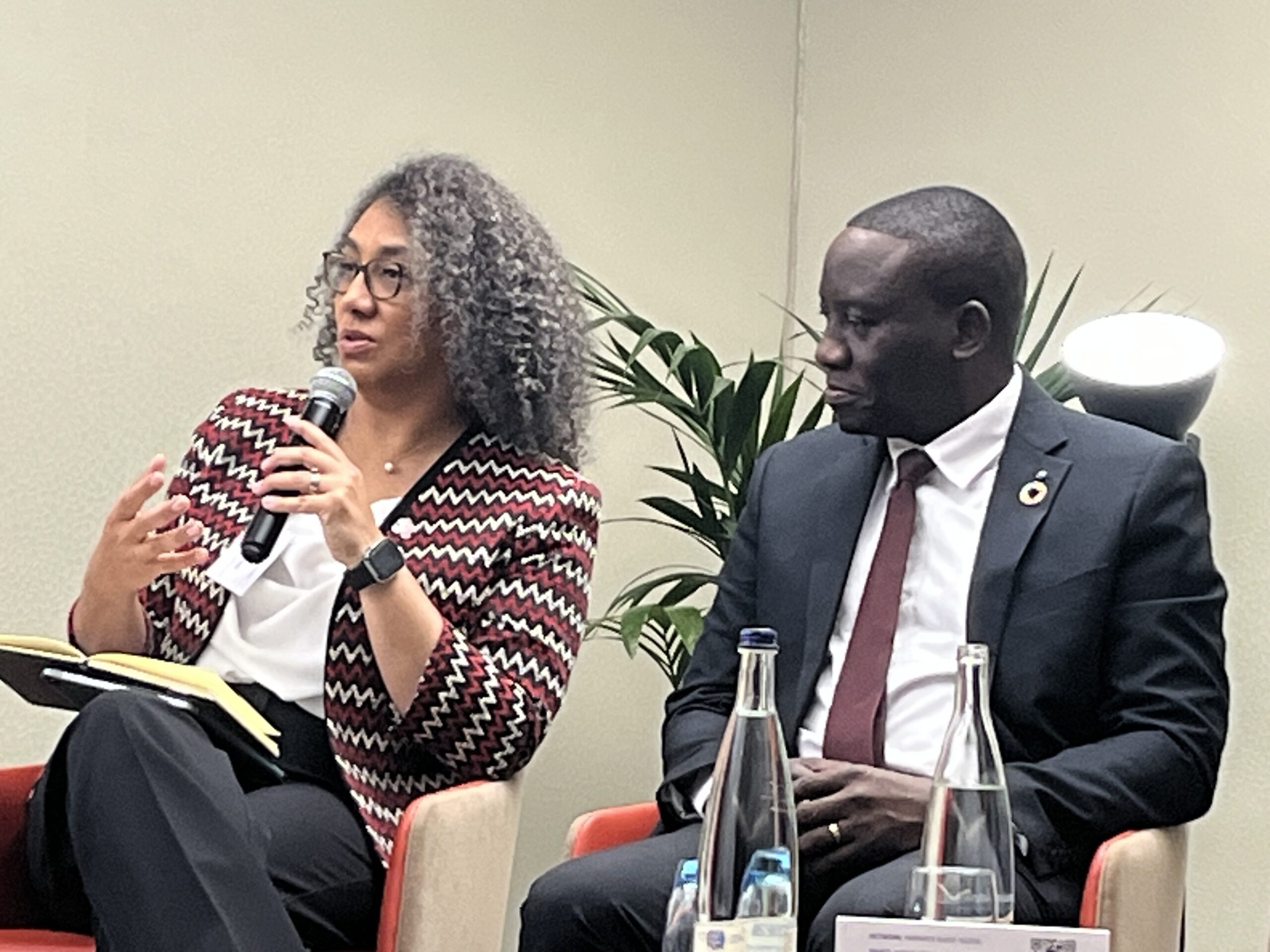
At the event, , the AMR-Health Security Equation, experts in AMR and senior government exchanged views on why high-level commitments are so often diluted as they move into national planning and delivery.
Money is a key problem, pointed out Ntuli Angyelile Kapologwe, Director General of the East Central and Southern Africa Health Community. Laboratories, pathogen surveillance and water and sanitation systems all require sustained expenditure, yet budgeting for such costs is far removed from the lofty statements issued in international meetings, “Global commitments must be translated into national measures,” he said.
“A national action plan means changing practices around procurement, prescribing, laboratory capacity, infection prevention, workforce planning and access to treatment,” added WHO’s Silvia Bertagnolio.
For countries sharing borders and markets, national plans therefore depend in part on regional surveillance and cooperation, other health officials pointed out. And resistant organisms not only cross those borders through trade, but they move through people, food systems, agriculture and water ecosystems, as well – while responsibility for these areas is divided across ministries and agencies.
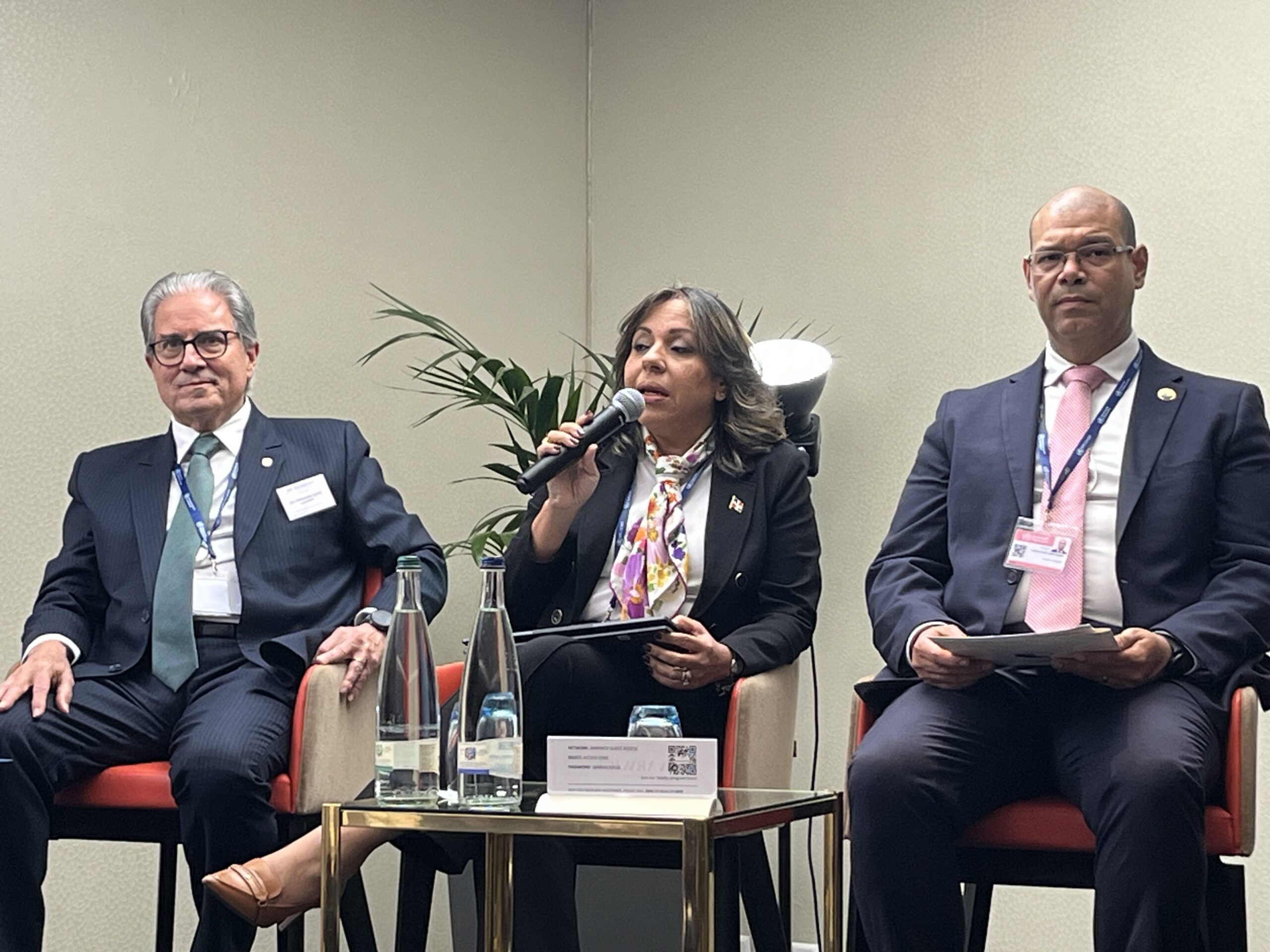
“Measures must have an institutional owner; that institution must have authority, staff and financing; and indicators, data sources and a reporting timetable,” said Gina Estrella Ramia, vice-minister of Environmental Health in the Dominican Republic. She stressed that finance ministries need to be involved in AMR planning from the outset.
Reinforcing a ‘One Health’ approach
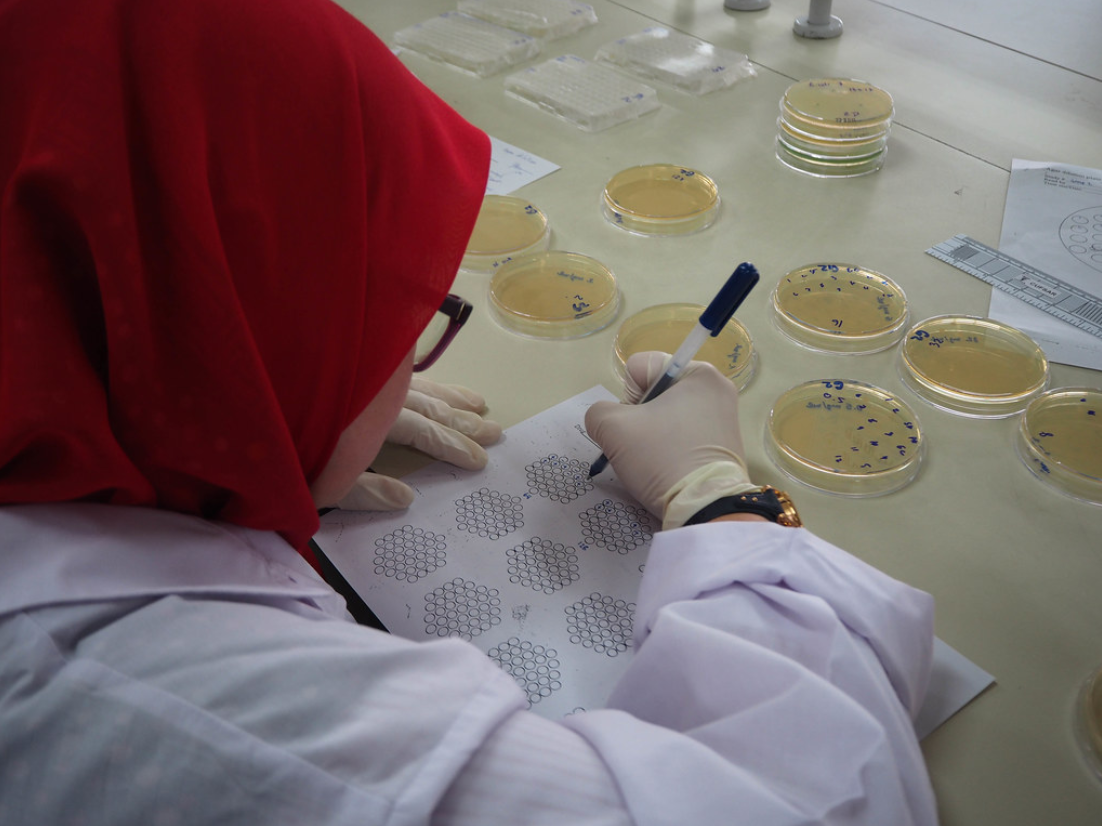
Responding to that need for a holistic approach, ‘Check the Box’ tracks country follow-up on recommendations issued all four global agencies that make up the One Health Quadrapartite, founded in 2022 to coordinate work against AMR.
They include not only WHO, but also the UN Environment Programme (UNEP), the Food and Agriculture Organization (FAO) and the World Organisation for Animal Health (WOAH).
“The Quadripartite created important technical and scientific foundations. Our role is to help sustain the political attention and coordination needed to turn those foundations into measurable results,” said Urbáez.
Tracking systems incomplete
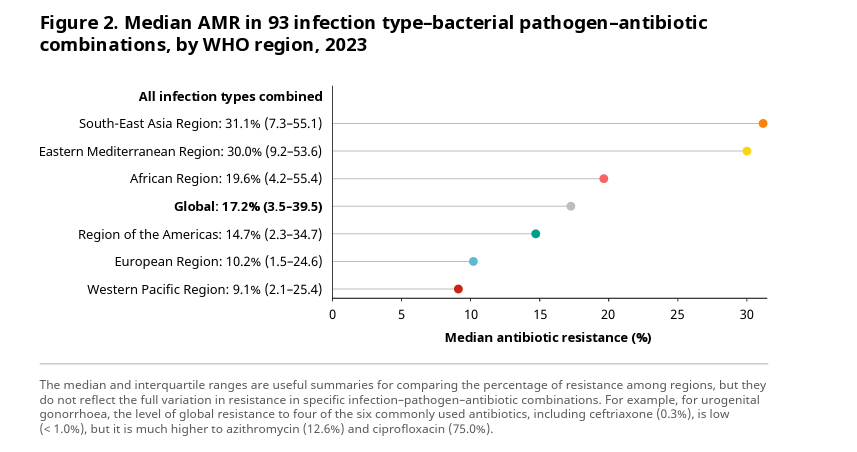
Each organization coordinates and reports on core components of the global response – but tracking systems remain fragmented and incomplete.
For instance, WHO’s GLASS data base is supposed to follow trends in appropriate antibiotic use, and resistant infections recorded by health systems. However around 42% of countries don’t report to WHO at all. And in the case of others, reporting is limited.
That limits WHO’s ability to provide accurate global and regional tracking of actual trends in resistant infections. The slack in missing data is picked up by modelled estimates of the global burden of deaths and disease, undertaken by the Institute of Health Metrics and Evaluation in collaboration with actors such as Wellcome Trust and the University of Oxford.
In the food and agriculture sector, FAO’s InFARM collects data on antimicrobial use in crop and animal production – but most of that data is not even publicly available. This, despite the fact that the lion’s share of antibiotics, in terms of volumes, are used in agriculture and not humans. See related story:
Breeding Superbugs – Veterinary Drugs, More than Human Ones, Drive AMR
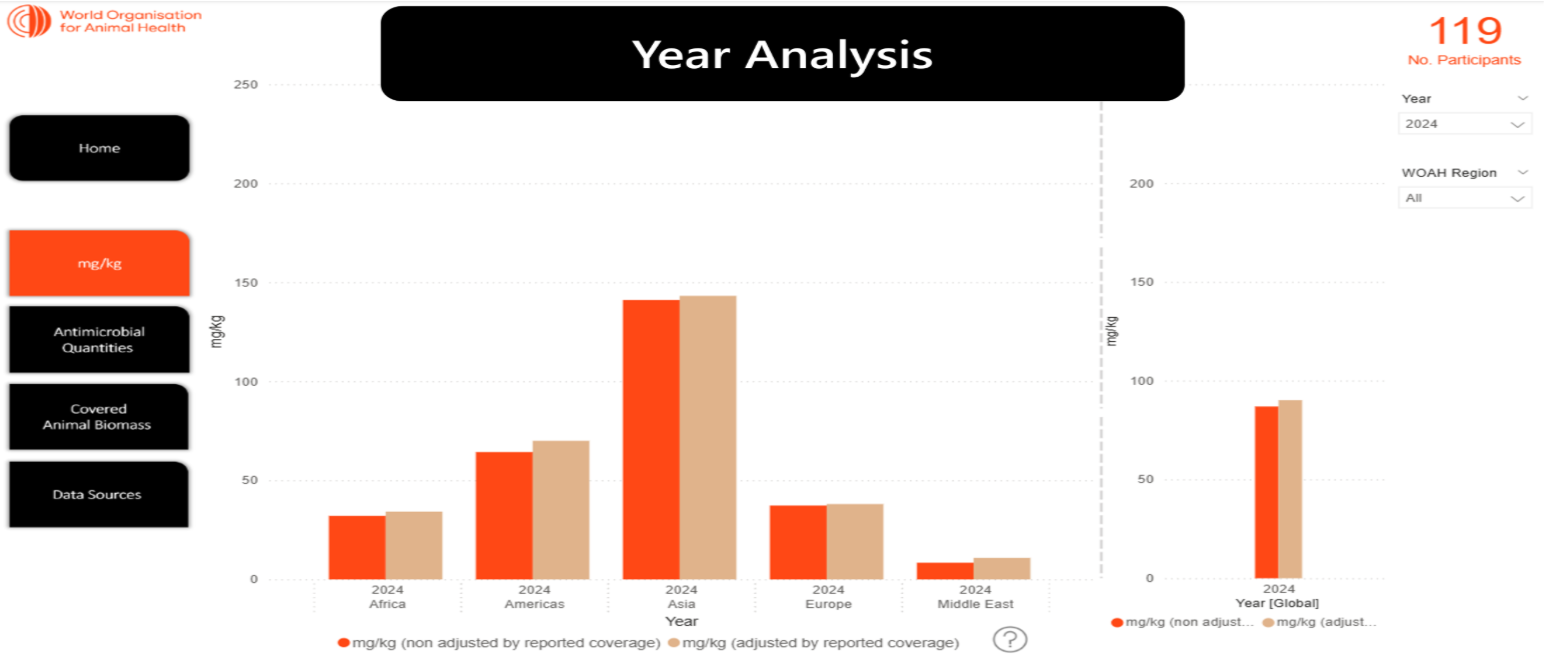
On a more positive note, however, the World Organization for Animal Health (WOAH) has begun reporting on antimicrobial use on animal more transparently. It’s new ANIMUSE database follows trends in nearly 120 countries, by region and by leading antimicrobial agents. This provides valuable data to countries aiming to reduce inappropriate use.
Budget strapped UN agencies – a weaker wheel of engagement ?
The efforts of the Quadriparte, as well as the broader constellation of global and regional stakeholders, however, also face new challenges from the wave of budget cuts hitting global health – and most notably, WHO’s AMR programme.
WHO’s AMR team has been “emaciated” one insider notes – with a full-sized department now shrunk to a unit of just 13 people with no acting director.
The high-profile former WHO Assistant Director General Hanan Balkhy, who once led the AMR effort, left to become Director of WHO’s Eastern Mediterranean Region, and is now on leave from that position as a candidate to become the next WHO Director General.
Pipeline of new antibiotics and preventative therapies

Another gap is in the arena of prevention. An October policy brief by the BEAM Alliance, an innovation hub for European biotech companies, cites one recent study showing that some 83% of adults with viral respiratory infections are still wrongly prescribed antibiotics, even though antibiotics do not treat viral infections.
But beyond the classic approaches of better diagnosis, prevention of common, chronic infections should also be given more attention in AMR R&D, argued Christian Terreaux, Public Affairs Director at OM Pharma, a BEAM Alliance member.
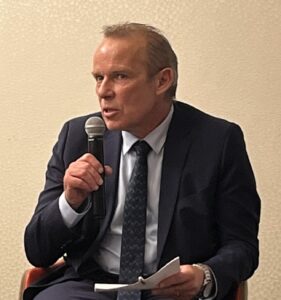
This should include more investment in vaccines and immunotherapies that can help reduce recurrent infections and the resulting need for antibiotics, he said, citing research estimating that every €1 invested in prevention returns about €3 in economic benefits.
“AMR policy on infection prevention needs to consider a broader spectrum of preventive options beyond the important hygiene and sanitation measures and vaccination programs,” argued Terreaux. And that should include “leveraging already existing options to reinforce the immune system, as well as stronger incentives to promote development of novel strategies.”
Image Credits: WHO/Quinn Mattingly, The Lancet, L Pezzoli/ WHO, HDA , WHO/X, Health Policy Watch , Fletcher/Health Policy Watch , USAID Asia/Flickr, WHO GLASS, 2025, WOAH/ANIMUSE, DFID – UK Department for International Development.
Combat the infodemic in health information and support health policy reporting from the global South. Our growing network of journalists in Africa, Asia, Geneva and New York connect the dots between regional realities and the big global debates, with evidence-based, open access news and analysis. To make a personal or organisational contribution click the donate button below.