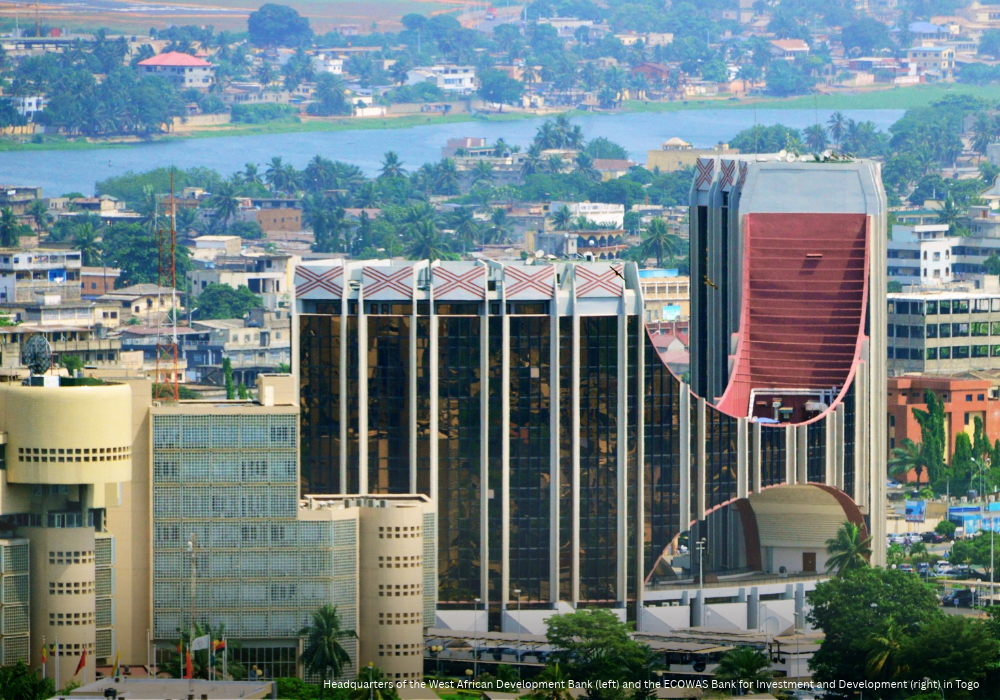
Multilateral development banks (MDBs) are moving to centre stage in global health financing, driven by collapsing bilateral aid and political momentum from initiatives like the Accra Reset. Experts view the shift as an opportunity to deliver the predictable, large-scale investment needed to strengthen domestic health systems – provided governments and lenders can ensure transparent terms that safeguard sovereign solvency.
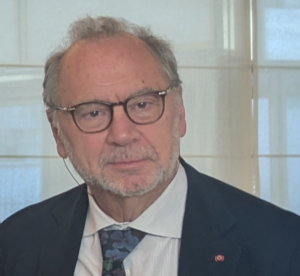
“Multilateral development banks will probably become the major external source of funding, just like in high-income countries where we go to banks,” explained Peter Piot, professor of global health at the London School of Hygiene and Tropical Medicine, in an interview with Health Policy Watch at the World Health Summit in Berlin.
A veteran negotiator who represented the United Nations (UN) in establishing the Global Fund, Piot co-led the Accra Reset High-Level Panel workstream on governance and institutional reform.
According to the panel, integrating MDBs into national health budgets is inevitable as domestic tax revenues fall short of mounting post-pandemic healthcare demands. Unlike short-term, disease-specific donor grants, development bank loans offer multi-year, scalable capital designed to finance foundational health infrastructure, digital systems, and workforce expansion.
Bilateral aid declines, development bank financing steps in
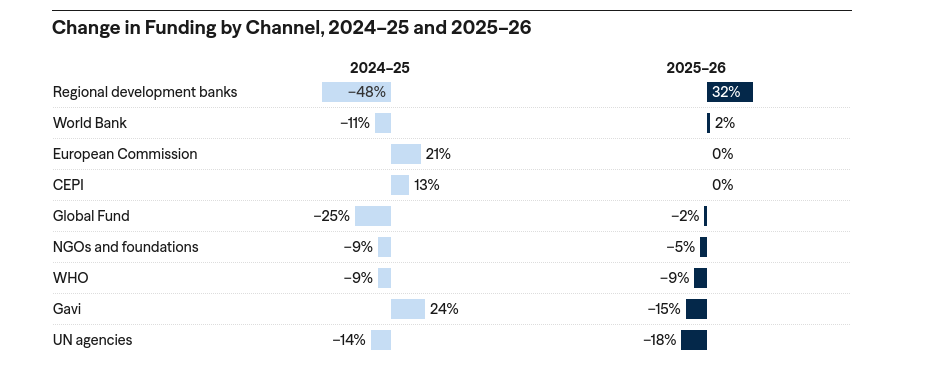
Recent preliminary data from the Institute for Health Metrics and Evaluation (IHME), published by Think Global Health, underscores the volatility of this pivot. Development assistance for health from regional development banks grew by an estimated 32% ($270 million) between 2025 and 2026 – alongside a 2% ($91 million) increase from the World Bank.
This rebound follows a 48% contraction the previous year as pandemic-era emergency disbursements unwound. But bank lending falls far short of replacing the billions lost in bilateral and multilateral grant cuts, demonstrating that development banks are being pulled into a primary role by default as traditional grant streams recede.
Overall, global health grant aid contracted by 12% in 2025 and a further 5% in 2026. External health funding to sub-Saharan Africa alone fell by nearly 70% between 2021 and 2025 following the expiration of emergency COVID-19 facilities, according to the Accra Reset High-Level Panel report.
Although low-income nations increased government health spending by an average of 8% per year between 2024 and 2026 to cushion these losses, budget constraints and mounting external interest burdens meant total per capita health spending still fell by 3% annually.
Sharp cutbacks from major donors – led by the United Kingdom slashing assistance by 37% ($891 million) and the United States by 8% ($668 million) – were compounded by parallel declines across multilateral grant channels, including an 18% drop for UN agencies and a 15% drop for Gavi.
Disbursements from the Global Fund to Fight AIDS, Tuberculosis and Malaria contracted by 25% between 2024 and 2025, followed by another 2% drop in 2026, as emergency funding unwound. This comes as the organisation registered an unprecedented $5.32 billion shortfall in its Eighth Replenishment.
Blended finance: the Global Fund-Islamic Development Bank deal

To bridge this widening fiscal gap, traditional global health funds are turning to financial engineering, using grant dollars to stretch capital through blended finance. In October, the Global Fund and the Islamic Development Bank (IsDB) signed a partnership agreement mirroring the new fiscal realities.
This institutional framework blends Global Fund grant capital and technical expertise with IsDB’s concessional lending portfolio and implementation scale to fund public health priorities, including integrated primary healthcare, supply chains, and health workforce development.
The partnership focuses on a major shared territory: 43% of the Global Fund’s country grants (roughly $4.5 billion) goes to nations that are also IsDB member states, enabling the two institutions to coordinate joint and blended financing streams.
Responding to queries from Health Policy Watch, the Global Fund explained that the agreement forms part of a broader strategic effort to collaborate with MDBs – including parallel arrangements with the World Bank and Asian Development Bank – to stretch capital. A spokesperson cautioned that these bank co-investments mobilise complementary capital and cannot replace continued donor grant commitments or domestic health allocations.
However, the organisation confirmed that the precise financial terms and interest structures of its co-investment arrangements remain undisclosed to the public – leaving public watchdogs unable to assess the ultimate repayment liabilities being incurred.
Concerns over health equity trade-offs

While critical of the sparse published partnership details, Mariska Meurs, global health expert at Dutch civil society advocacy organisation Wemos, sees potential in these new financing instruments. Co-investing through global health initiatives offers the advantage of directing MDB capital into public systems rather than commercial ventures.
However, she stresses that it is essential to distinguish public bank borrowing from private-sector de-risking when evaluating health equity. Public MDB concessional loans expand state budget capacity; by contrast, blended models engineered to de-risk private commercial investment tend to channel funds toward profitable medical services rather than non-profit public healthcare for high-need populations.
Over-relying on MDB borrowing also risks distracting global health advocates from systemic fiscal solutions, including progressive national and international tax justice and sovereign debt cancellation.
“To solve the health financing gap, the global health community should rally behind campaigns for debt and tax justice,” Meurs urged, highlighting public-sector initiatives like the WHO-EIB-IsDB Health Impact Investment Platform (HIIP) focused directly on primary healthcare.
Financing experts warn of growing debt risks
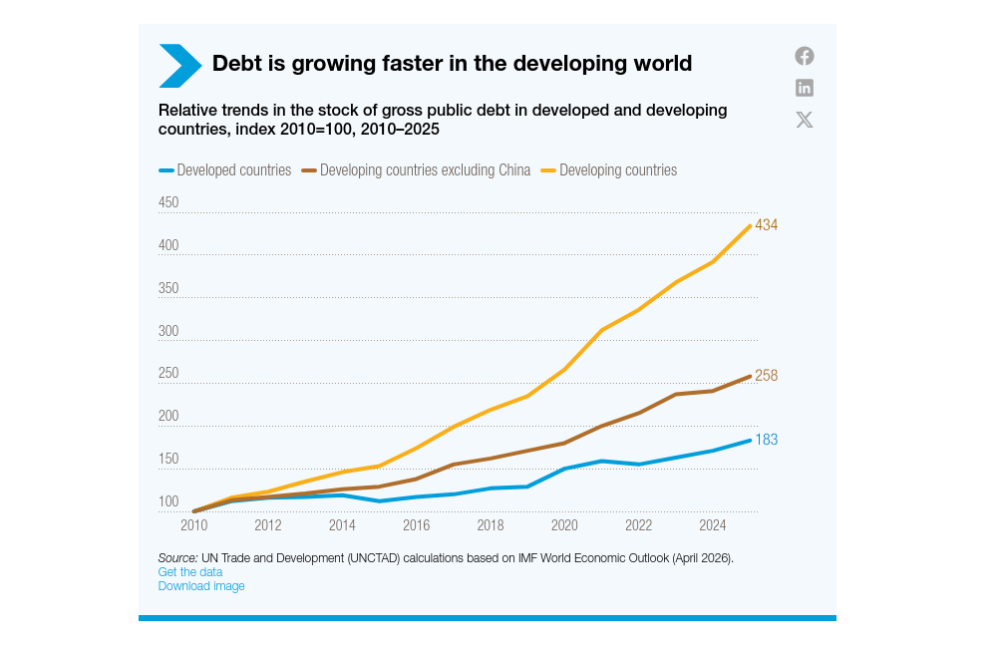
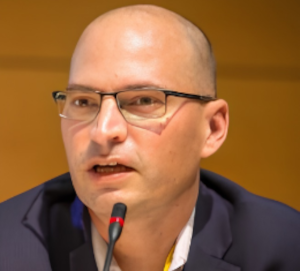
While closer coordination between global health funds and multilateral development banks reduces donor fragmentation, analysts warn that converting grant streams into debt risks locking vulnerable nations into an escalating debt spiral.
“A trend toward blended finance must be treated with caution, as it means more loans and thus more debt for the Global South,” warned Bodo Ellmers, director of financing for development at the German NGO, Global Policy Forum Europe, in response to a query by Health Policy Watch.
“The Global Fund has historically disbursed almost exclusively grants, and that should remain the case, as many developing nations are already groaning under an unsustainable debt burden.”
This warning comes against a broader backdrop of mounting fiscal distress across the Global South. Developing nations face an escalating sovereign debt crisis, with interest payments on external public debt across developing countries (excluding China) outstripping net new lending since 2022, according to UN Trade and Development (UNCTAD) data. This systemic interest burden leaves borrowing governments under severe fiscal constraints precisely as grant aid recedes.
Debt swaps offer fiscal space alongside bank capital
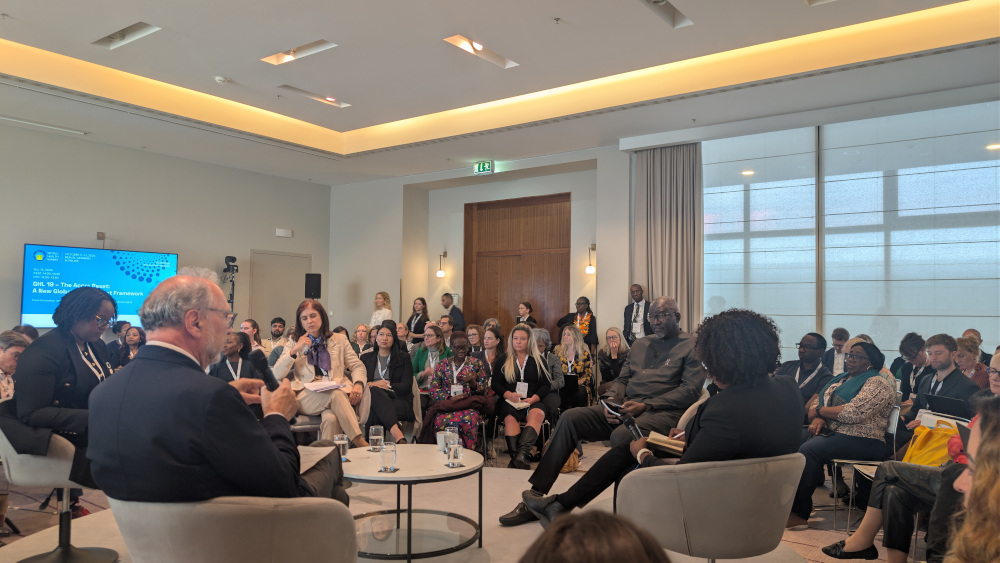
To create the fiscal room needed to absorb development bank capital without triggering defaults, Accra Reset leaders argue that new loans must be paired with debt relief mechanisms, such as debt-for-health swaps. Through these swaps, creditors forgive or restructure sovereign debt on the condition that saved interest payments are redirected into national health budgets.
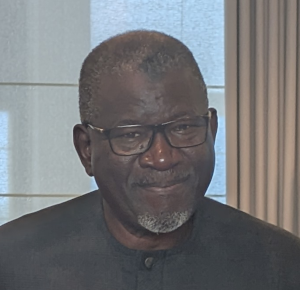
“The discussion going on is to create more fiscal space – that is debt swaps for health, and bringing the International Finance Corporation and the private sector along so that we can have a more critical combination,” explained Elhadj As Sy, chair of the board of the Kofi Annan Foundation and co-chair of the Accra Reset High-Level Panel, during an interview with Health Policy Watch in Berlin.
In As Sy’s view, pairing debt restructuring with development bank loans and private capital is intended to create the structural headroom necessary for countries in the Global South to build self-reliant health systems anchored in domestic resources.
Reform agenda maps pathway to health sovereignty
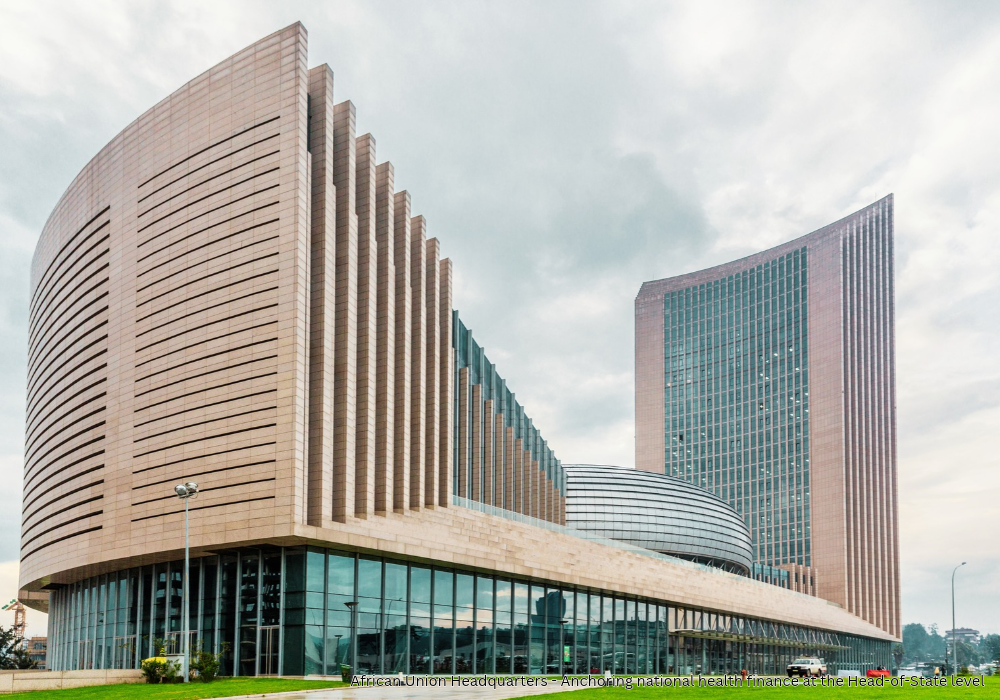
Translating health sovereignty into practice requires overhauling how external capital enters recipient nations. Rather than allowing lenders to impose parallel application and reporting processes, the Accra Reset urges MDBs and global health funds to channel financing through a single country interface aligned behind one national health plan – a model demonstrated in Indonesia, where four development banks harmonised $4 billion in capital.
This structural alignment is critical because development bank borrowing requires formal approval from Ministries of Finance managing tight sovereign debt ceilings.
To ensure fiscal discipline without sidelining healthcare, the Accra Reset mandates that national health investment plans be jointly co-signed at the cabinet level by ministers of finance, health, and planning, with external lenders relying on national audit offices rather than duplicative reporting tracks.
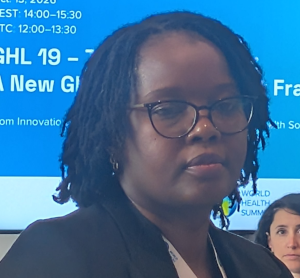
Reflecting on previous reform initiatives – including the 2023 Lusaka Agenda – Shingai Machingaidze, advisor to the Accra Reset Secretariat, noted in an interview with Health Policy Watch that earlier frameworks correctly identified the systemic flaws of donor-driven aid but struggled to compel change through voluntary compliance.
“Everything said in those previous analyses remains valid today,” Machingaidze explained. “If we continue to rely on voluntary implementation, we should expect the same results – the difference with the Accra Reset is that it is anchored at the Head-of-State level, providing a direct political pathway to practical implementation.”
Ultimately, whether this new financial architecture succeeds will depend on converting Head-of-State political momentum into resilient, self-reliant health systems that safeguard national sovereignty long after grant aid recedes.
See related story:
Accra Reset’s Plan for Health Sovereignty Includes Closing Some Global Health Bodies
Image Credits: mtcurado via Canva, Think Global Health / CFR, Suzanne Blanchard Photograhy, UNCTAD, Global Policy Forum Europe, Felix Sassmannshausen/HPW, derejeb via Canva.
Combat the infodemic in health information and support health policy reporting from the global South. Our growing network of journalists in Africa, Asia, Geneva and New York connect the dots between regional realities and the big global debates, with evidence-based, open access news and analysis. To make a personal or organisational contribution click the donate button below.