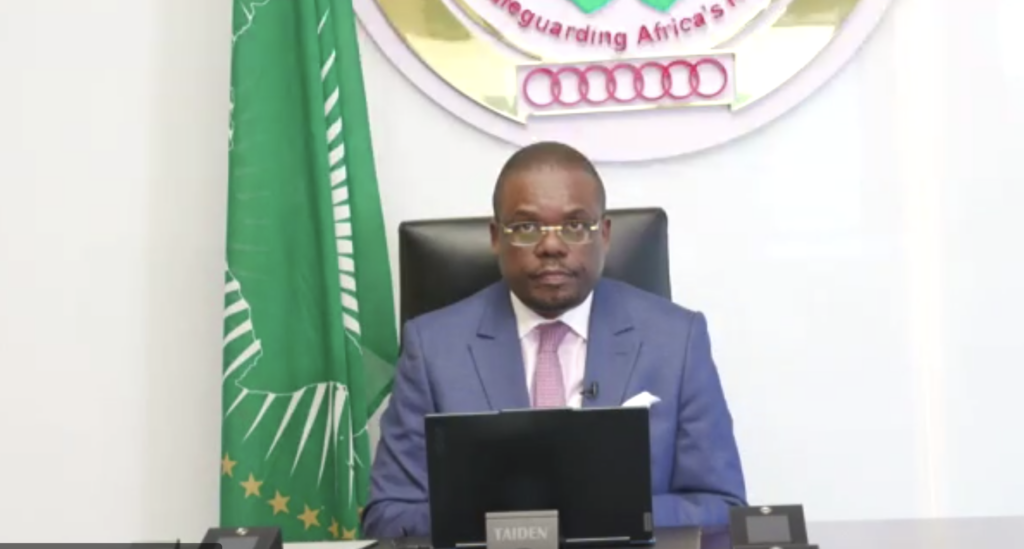
Only around 12% of the contacts of Ebola patients in Ituri province in the Democratic Republic of Congo (DRC) have been reached, posing a “huge risk” for community transmission, Dr Jean Kaseya, Director General of Africa Centres for Disease Control and Prevention told a media briefing on Thursday.
Ituri is the epicentre of the current outbreak, accounting for 600 of the 635 confirmed cases by 9 June.
Around 4,955 contacts have been recorded, but Kaseya said that in high-density urban areas, such as the mining towns in Ituri, each patient would have been in contact with around 40 people.
This would mean 24,000 contacts. As less than 60% of the current contacts had been traced so far, Kaseya said this meant that only around 12% of case contacts had been found and tested.
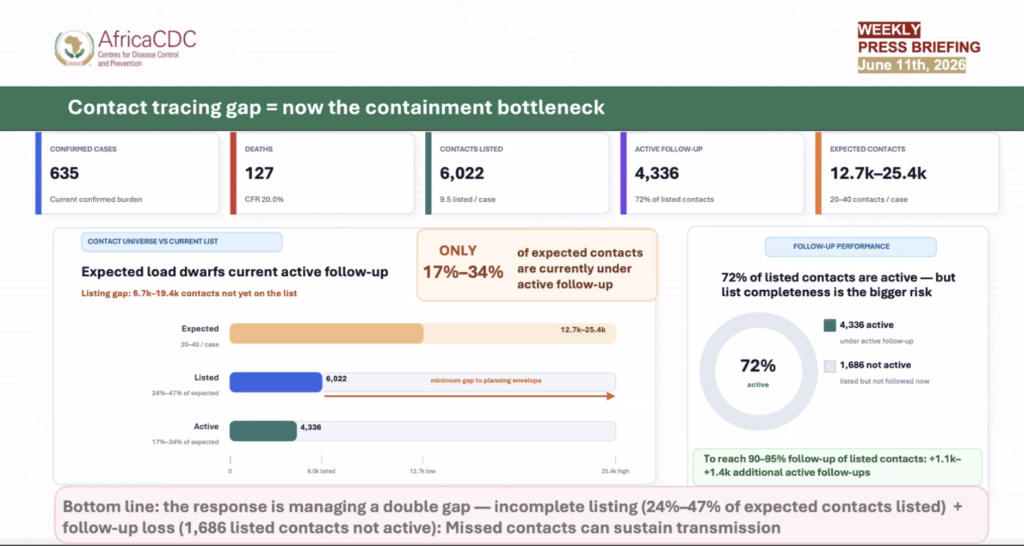
“If we don’t know these people, if we don’t have them on the [contact] list, if we don’t follow up, it means there is a huge risk of transmission to be sustained in the community,” he said, adding that some confirmed cases had still not been admitted to hospitals.
Obstacles to contact tracing include “the rapid geographic expansion [of the outbreak], delayed detection, high mobility, insecurity and community resistance”, said Kaseya.
“We saw that people attacked health workers today in Beni [in northern Kivu]. People destroyed an isolation centre, they destroyed a treatment centre.”
Unlike the DRC, Uganda has followed up 91% of contacts of its 19 Ebola cases, there is no community transmission, and the country is “doing very well”, said Kaseya, adding that it is “totally wrong” to impose travel restrictions on the country.
Conflict in the outbreak zones is also hampering the response, with new clashes between the DRC and M23 rebels in Beni.
“We cannot respond to this outbreak when we are facing insecurity, and this is why we are calling to our leaders to give us access to people and, as the EU requested, we really to have the ceasefire, otherwise this outbreak will continue,” said Kaseya.
There are also “huge” resource gaps. The reponse needs 540 staff yet only 84 are available, and 98 ambulances but it has to make do with seven.
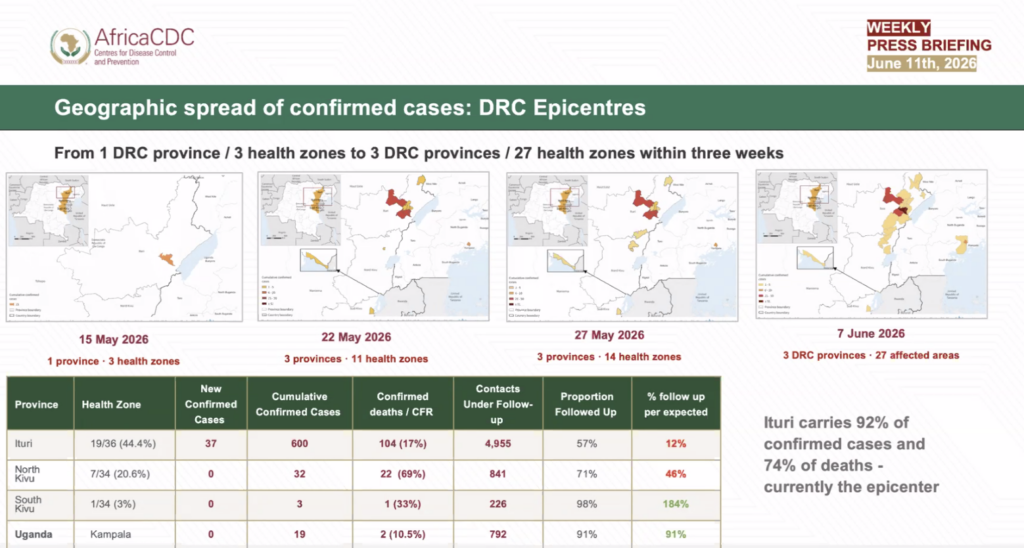
So far, the current outbreak is the third biggest in the history of the past 20 Ebola outbreaks. Some 27 health zones in the DRC now report Ebola cases, more than double the 14 affected zones 10 days ago.
Young people aged 15 to 44 years of age make up 62% of all cases. However, the outbreak is particularly deadly, with a 44% case fatality rate in young children up to the age of four.
Risk to health workers
Professor Salim Abdul Karim, chair of Africa CDC’s Emergency Consultative Group, addressed the media briefing from Bunia, a town in Ituri.
Of the 22 Ebola patients currently in the local hospital, five are health workers, said Abdul Karim.
“That gives you some idea of the risk frontline health workers are facing,” he said. “Frontline healthcare workers are always at higher stress because they are the ones who are dealing with the patient’s blood and the patient’s secretions, and they are the ones who are directly involved in the care of the patients.”
“These are hospitals not specifically designed to deal with haemorrhagic fevers. Patients are presenting initially with a range of symptoms that can easily be mistaken for other common conditions like malaria, so it’s those early stages that we need better triage systems.”
So far, 34 health workers have been infected in the outbreak, and five have died.
Combat the infodemic in health information and support health policy reporting from the global South. Our growing network of journalists in Africa, Asia, Geneva and New York connect the dots between regional realities and the big global debates, with evidence-based, open access news and analysis. To make a personal or organisational contribution click the donate button below.