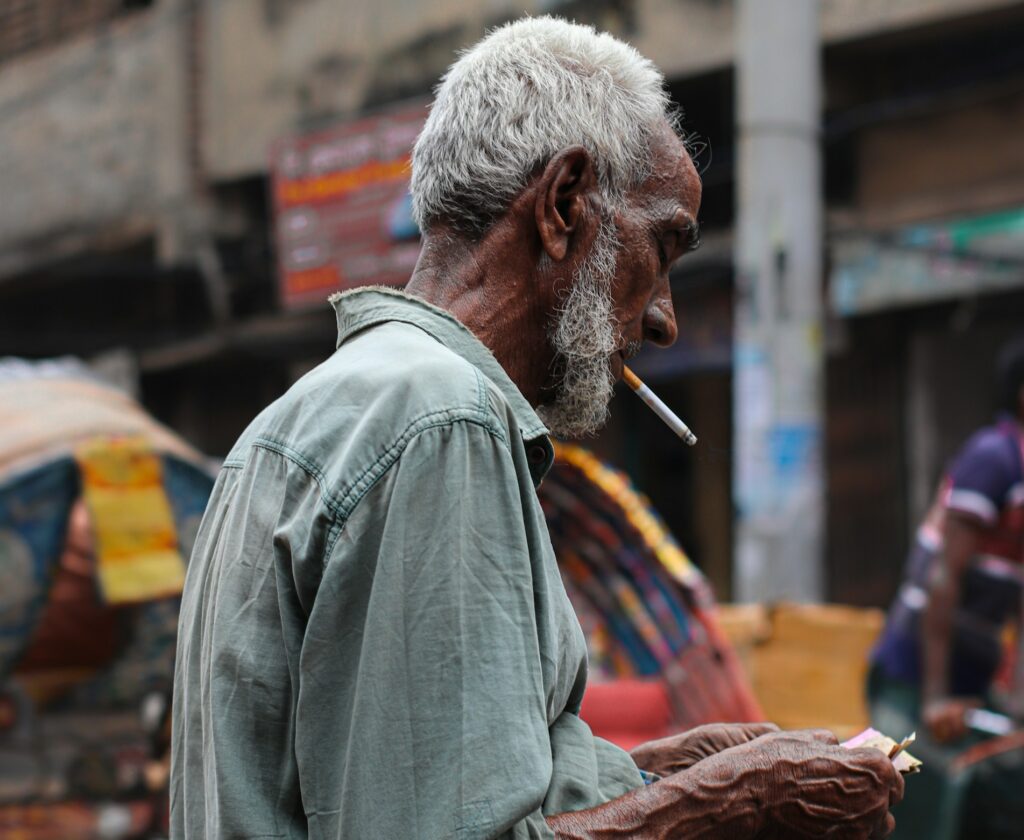
Bangladesh’s new government has approved a wide-ranging anti-tobacco law that bans advertising, promotion and display across print, electronic, digital and social media, entertainment platforms and points of sale.
The Smoking and Tobacco Usage (Control) (Amendment) Law, 2025 also prohibits corporate social responsibility initiatives from using tobacco brand names, logos or trademarks.
Cigarette packs have to carry pictorial health warnings covering at least 75% of their surface and include the contact numbers of the national quit line.
It also expands smoke-free public places and bans the sale and use of tobacco products within 100 meters of schools, hospitals, clinics and playgrounds.
This is one of the first laws passed by the government of Prime Minister Tarique Rahman, who was sworn in last month after winning elections in February. Rahman’s Bangladesh National Party took over from an interim administration installed after an uprising in 2024 removed Prime Minister Sheikh Hasina and her Awami League from power.
the country has a high prevalence of tobacco use, with an estimated 25% of men in Bangladesh smoking – over 21 million.
In 2023, around a quarter of deaths among men and 10% of women’s deaths were caused by tobacco – almost 200,000 people in total, according to the Tobacco Atlas.
In addition to the substantial health burden, the annual cost of illness attributable to smoking in Bangladesh is estimated to be 730.63 billion takas (approximately US$5.9 billion).
Vapes excluded
The law does not cover newer tobacco and nicotine products, including vapes, heated tobacco products, electronic nicotine delivery systems and nicotine pouches.
This is despite almost 25% of people using smokeless tobacco products, according to the Tobacco Atlas.
Welcoming the law, Gan Quan, Vital Strategies’ senior vice president for tobacco control, urged its quick implementation.
“This is a positive step, setting the stage to save millions of lives and deliver economic gains, so we must seize this moment with continued collaboration among government agencies, civil society and public health partners, and continuing public education about the harms caused by tobacco,” he said.
“Together, we must remain vigilant against the industry’s attempts to subvert or delay these measures and further strengthen policy to address the regulation of emerging tobacco and nicotine products. There is an urgent need to protect youth in particular from being targeted with these products.”
Smita Baruah, Campaign for Tobacco-Free Kids executive vice-president, said that the new measures “will drive down rates of tobacco use, save lives and protect kids from addiction to tobacco.”
“Tobacco companies know that strong tobacco control laws work to stop people from smoking and prevent young people from starting to smoke, so they do everything in their power to undermine lifesaving laws like this. It is crucial that these measures be protected from the interests of the world’s largest tobacco companies,” she added.
Image Credits: Simon Reza/ Unsplash.
Combat the infodemic in health information and support health policy reporting from the global South. Our growing network of journalists in Africa, Asia, Geneva and New York connect the dots between regional realities and the big global debates, with evidence-based, open access news and analysis. To make a personal or organisational contribution click the donate button below.