The election to lead the World Health Organization (WHO) offers an opportunity to rethink not simply who should lead the institution, but how it should exercise leadership in a world that has changed profoundly. The greatest challenge facing the next Director-General may be transforming an organization whose political masters are reluctant to change.
When the seven candidates for WHO Director-General meet Member States in Geneva on 18–19 November 2026, they will be asked what they would change. Governments should face a question of their own: what changes are they prepared to authorize, finance and defend? The next Director-General can set priorities and propose reforms. Whether those reforms take hold will depend on decisions that only Member States can make.
The wrong starting question
As the contest for the next Director-General of the World Health Organization (WHO) gathers momentum, candidates are presenting competing visions of their leadership role on WHO’s future. But what if the debate so far has focused on the wrong question?
The most consequential decision facing member states may not be whom to elect, but whether they are prepared to change the institutional model that the successful candidate will inherit.
Having spent almost three decades working within the United Nations system, the WHO and its governance bodies, we have witnessed successive efforts to reform international institutions. One recurring lesson is that organizations often change their structures more readily than they change their strategic direction. They become more efficient at doing what they have always done, without necessarily asking whether those are still the right things to do.
WHO now confronts precisely this dilemma.
Its ongoing financial crisis has generated an understandable focus on budgets, staffing and organizational restructuring. Yet the deeper challenge may be that over the last few decades, global health architecture has evolved faster than WHO’s institutional model.
The next Director-General could be the most capable manager WHO has ever had and still fail to transform the organization. The forthcoming election should therefore become something more ambitious than a contest between individuals. It should become a constitutional moment for WHO – not necessarily to rewrite its Constitution, but to rethink how its constitutional mandate can be fulfilled in a fundamentally different world.
Three challenges, one institutional mismatch

WHO’s predicament is commonly described in terms of three challenges: an expanding technical agenda, financial vulnerability and geopolitical fragmentation.
The scale of the unfinished health agenda is striking. The WHO–World Bank 2025 Global Monitoring Report on universal health coverage estimates that 4.6 billion people were not fully covered by essential health services in 2023, while 2.1 billion experienced financial hardship from out-of-pocket health expenditure in 2022. Meanwhile, pandemics, noncommunicable diseases, emerging infections, antimicrobial resistance, climate change and artificial intelligence continue to reshape global health priorities.
WHO carries broad responsibility for global health leadership and is expected to address virtually every dimension of health and its determinants. Yet it does not control many of the instruments through which that leadership must be exercised.
The financial crisis has exposed a longstanding structural weakness in WHO’s financing model, although important progress has been made. Member states approved successive 20% increases in assessed contributions for 2024–2025 and 2026–2027 – a cumulative increase of 44% over two biennia. This represents a significant commitment to more sustainable financing, with the longer-term objective of assessed contributions covering 50% of WHO’s core budget by 2030–2031.
Yet financial vulnerability persists, sharpened by the exit of the United States, previously WHO’s top donor, which it declared complete in January 2026, and by Argentina’s notification of withdrawal.
WHO’s proposed base programme budget for 2026–2027 was reduced by more than one-fifth, from $5.3 billion to $4.2 billion. Perhaps more revealing is that WHO ended the 2024–2025 biennium with 96% of its base programme budget financed, but only 85% implemented. This exposes a paradox: an organization can appear almost fully financed while lacking the ability to achieve its collectively agreed priorities.
Geopolitical fragmentation compounds the other two. Global health is increasingly shaped by intensifying competition, multipolarity and declining trust in international institutions. Consequently, Member States have different expectations of WHO and its reform, different approaches to global health cooperation and sometimes conflicting views on the balance between national sovereignty and collective action.
These challenges are real. But they also reveal a deeper responsibility: authority mismatch.
WHO is expected to exercise leadership over a global health system in which authority, financing and implementation are increasingly distributed across institutions that it does not control.
The result is an institution expected to lead comprehensively, financed selectively and increasingly required to negotiate its influence across a fragmented system by maintaining its scientific credibility and political legitimacy.
The task for the global community is not simply how to sustain WHO as it exists today. It is whether the institutional model we are supporting is sufficiently adapted to the world in which WHO must operate tomorrow.
WHO’s greatest risk may not be decline, but irrelevance
WHO is unlikely to disappear. Its constitutional mandate, global membership, scientific authority and historical legitimacy provide strong foundations for institutional survival. But survival is not the same as relevance.
An organization can stabilize its finances, maintain its global presence, publish authoritative guidance and continue convening international meetings while gradually losing influence over the decisions that matter most.
Consider where some of the most consequential decisions about global health are increasingly being made.
Development banks determine major health investments. Global health initiatives allocate substantial programme resources. Governments and private companies shape technological innovation. Pharmaceutical companies influence access to medical products and their research and development. Regional institutions are developing their own approaches to health security and cooperation.
WHO remains involved in many of these discussions. But involvement is not necessarily leadership. The uncomfortable question is whether WHO’s influence over these decisions is keeping pace with its responsibility for their consequences. The danger is not that WHO disappears. It is that the world gradually learns to operate around it.
This possibility should fundamentally change the way we assess WHO reform. Success cannot be measured simply through institutional survival, financial stability or organizational efficiency. It must be measured by whether WHO continues to shape the decisions that determine the health of populations.
A WHO that survives but becomes increasingly peripheral to those decisions would represent a failure of reform, however successful its internal restructuring might appear.

Three reforms, but only one future
What makes the present moment particularly significant is the convergence of three reform processes: WHO’s internal reform, WHA79 global health architecture reform process and the wider UN80 Initiative.
Each addresses a different problem, but together they could reshape WHO’s institutional future.
WHO could reduce the technical capacities that a reformed global health architecture subsequently requires. UN consolidation could weaken specialized functions essential to WHO’s authority. Global health architecture reform could generate new coordination mechanisms without resolving the institutional competition and fragmented financing that make coordination necessary.
The opportunity is to connect these processes into a coherent vision of WHO’s future and to mitigate the risk that three separate reform agendas produce three different answers to the same institutional question.
But there is an even more fundamental issue: what kind of influence should WHO seek to exercise in the emerging global health system?
More power without more institutional territory
The conventional response to institutional vulnerability is to protect mandates, mobilize additional resources and preserve operational capacity. But perhaps WHO’s future strength requires a different understanding of institutional power. There is a distinction between the power to deliver and the power to shape what others deliver.
WHO will never command the combined financial resources of development banks, governments and global health initiatives. Nor should it attempt to replicate their operational capacities. Its unique opportunity lies in influencing how those resources are used, which scientific standards guide their application, and whether their collective contribution advances global health priorities.
Envisage a WHO whose technical recommendations are systematically reflected in major health investments; whose scientific standards inform procurement and implementation across global health institutions; and whose assessment of emerging health risks influences decisions well beyond its own programmes.
Such an organization could exercise greater influence without necessarily managing a larger operational portfolio. This would represent a shift from institutional centrality to system leadership.
The distinction is especially important for WHO’s normative work. A global clinical guideline may be scientifically impeccable, but its impact depends on whether countries can adapt it, finance its implementation and incorporate it into clinical practice.
WHO’s responsibility should not end when the guideline is published. Nor does WHO need to undertake every activity necessary for its implementation. Its leadership should be judged by whether it can mobilize the wider system to make authoritative knowledge consequential.
Consider the implications for artificial intelligence. WHO may never possess the technological resources of major private companies. But it could shape the standards governing the use of AI in health, ensuring that scientific integrity, patient safety and equity are not subordinated to commercial or technological priorities.
The same principle applies to pandemic preparedness, antimicrobial resistance and universal health coverage.
WHO should not seek to become the largest actor in every area of global health. It should become the actor whose contribution makes the collective efforts of others more effective. That is a different model of institutional power – and potentially a more sustainable one.
The courage to relinquish

The next Director-General will undoubtedly be expected to defend WHO’s interests. But transformational leadership may require something more difficult: the willingness to relinquish selected institutional responsibilities to strengthen WHO’s wider influence. This is an uncomfortable proposition for any international organization.
Institutional leaders are generally rewarded for securing resources, expanding programmes and protecting organizational territory. Success is rarely associated with deciding that another institution should undertake a function previously performed by their own. Yet a more coherent global health architecture cannot emerge if every institution enters the reform process determined to preserve its existing responsibilities.
WHO cannot credibly lead system-wide reform while treating its own institutional arrangements as exempt from reconsideration. This does not mean weakening WHO’s scientific authority, abandoning its country presence or relinquishing indispensable emergency functions. On the contrary, these capabilities must be protected. Nor should the transfer of responsibilities become an excuse for donors to withdraw resources or for countries with limited institutional capacity to receive less support. It means recognizing that leadership and ownership are not synonymous.
In selected areas, WHO may need to do less directly to achieve more collectively. In others, particularly where countries lack alternative technical or operational capacity, it may need to do more. The strategic question is not how much WHO should retain, but which distribution of responsibilities produces the greatest benefit for countries.
This should become a defining test of the candidates.
What would they be prepared to relinquish?
What would they protect, even under severe financial pressure?
And where would they seek to expand WHO’s influence without expanding its bureaucracy?
The answers would reveal far more about their understanding of transformational leadership than familiar commitments to efficiency, innovation and partnerships.
An election that challenges the electorate
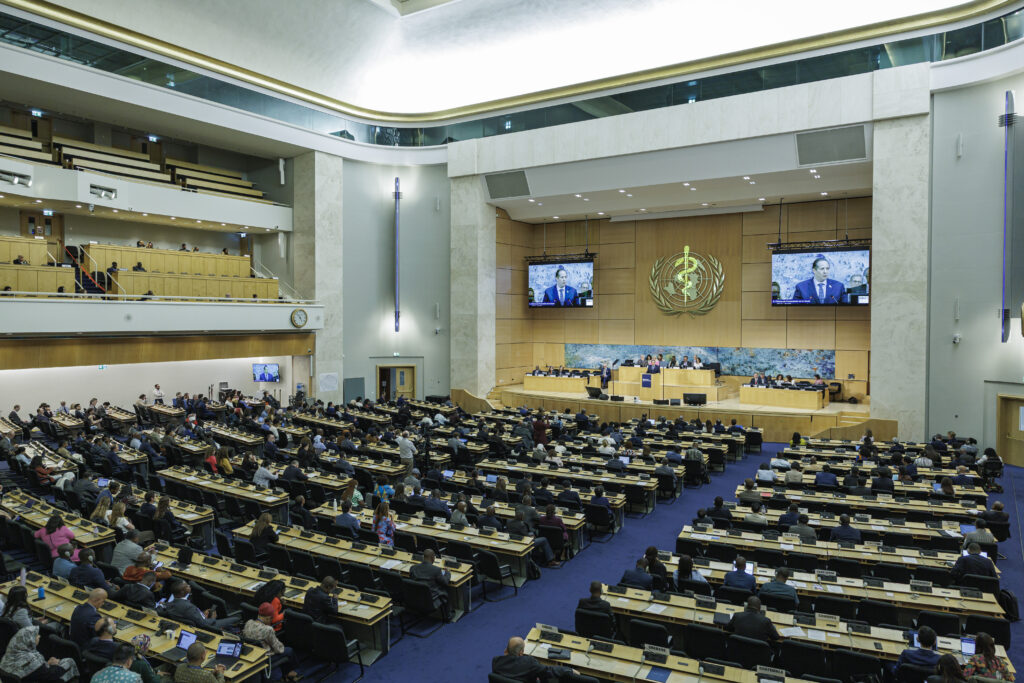
There is a paradox at the heart of the forthcoming election. Member states are seeking a leader capable of transforming WHO. Yet those same member states determine the organization’s mandate, leadership and hierarchy, approve its budget, influence its financing and govern many of the other institutions with which WHO must cooperate.
The next Director-General will be asked to make difficult choices within a system that governments themselves have created.
Can the WHO Secretariat be expected to prioritize effectively when its governing bodies continue to add responsibilities without necessarily providing corresponding resources? Can it exercise independent scientific leadership when political considerations influence the reception of its recommendations? Can it achieve greater coherence, efficiency and accountability without addressing the long outstanding hierarchical, governance and management challenges across its headquarters, regional and country levels? Can it lead a better coordinated global health architecture when governments pursue different institutional interests across the organizations they govern?
These are not questions that even the most capable Director-General can answer alone.
The election should therefore produce something more than a new leader and a new strategic vision. It should establish a Transformation Compact between the incoming Director-General and Member States. Its central principle would be simple: the Director-General commits to making difficult institutional choices; member states commit to creating the political, governance and financial conditions that make those choices possible.
This would mean accepting that some existing activities may need to end, that collectively agreed priorities require predictable and sufficiently flexible financing, and that scientific authority must be protected even when its conclusions are politically inconvenient.
It would also mean supporting a clearer distribution of responsibilities across global health institutions rather than expecting WHO to resolve fragmentation through coordination alone. The compact should not become another elaborate reform instrument. Its value would lie in making explicit the reciprocal obligations that are too often absent from leadership elections.
The Eightieth World Health Assembly (WHA80) in May 2027 offers a practical opportunity to establish such a compact, linking the appointment of the next Director-General with the decisions emerging from global health architecture reform. We should ask not only what candidates are promising member states, but what member states are prepared to promise the successful candidate.
The real choice before WHA80
WHO’s defining moment is not simply the financial crisis, the reform of the global health architecture or the election of its next Director-General. It is their convergence, alongside the wider transformation of the United Nations.
WHO could emerge from this period as a smaller institution that continues to operate according to essentially the same institutional logic. Or it could emerge as an organization whose influence extends far beyond its own operational footprint. The choice is not necessarily between a larger and a smaller WHO. It is between preserving an institution, revisiting its role and renewing its leadership. The world does not need WHO to do everything. It needs WHO to do what only WHO can do—and to make possible what no institution can achieve alone.
The next Director-General must have the conviction to challenge established institutional practices and programmes, reconsider traditional boundaries and articulate a compelling vision of WHO’s future.
But that is only half the leadership challenge.
The other half lies with the governments that will elect that person and will take decisions that change what WHO does, provide the resources to carry them out, and stand behind those decisions when they become politically difficult.
The defining choice of the 2027 election is not simply whether the next Director-General will have the courage to transform WHO. It is whether Member States will have the courage to transform the conditions under which WHO must lead. Without that commitment, the world may elect a transformational leader only to condemn her or him to managing the crisis.
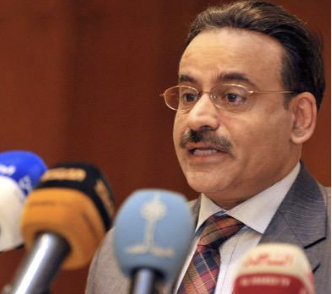
Dr Mubashar Sheikh is a former WHO Director of Quality Assurance, Norms and Standards. He was earlier Executive Director of the Global Health Workforce Alliance, WHO Representative in Iran and UN Resident Coordinator in Kuwait.
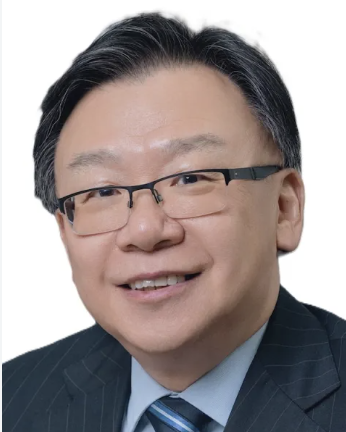
Dr Ren Minghui is a professor at the Institute for Global Health and Development, Peking University. He is a former WHO Assistant Director-General and previously headed international cooperation at China’s national health ministry.
Image Credits: WHO, Anonymous/HPW, X/Tedros Adhanom Ghebreyesus, WHO/Antoine Tardy .
Combat the infodemic in health information and support health policy reporting from the global South. Our growing network of journalists in Africa, Asia, Geneva and New York connect the dots between regional realities and the big global debates, with evidence-based, open access news and analysis. To make a personal or organisational contribution click the donate button below.