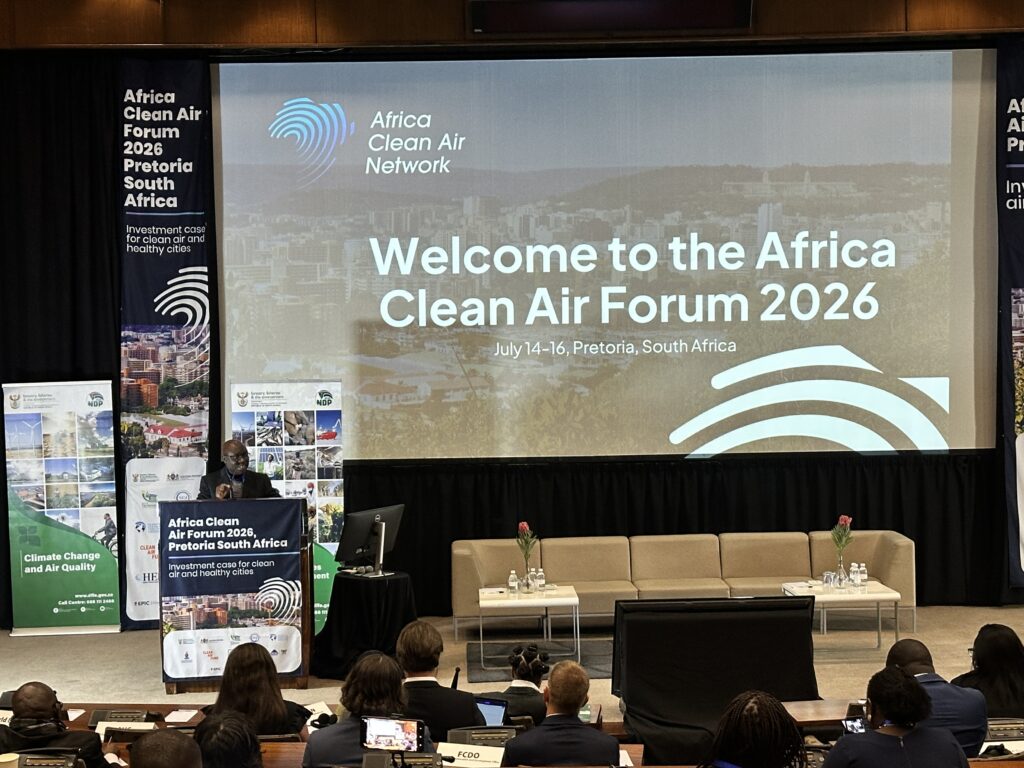
PRETORIA, South Africa – Participants from 47 African nations are meeting at the Africa Clean Air Forum this week as part of a continental drive to address the air pollution health crisis.
The forum, convened by the Africa Clean Air Network (AfriCAN), is in its fourth year, and this is the first time it is being held in southern Africa.
The theme of the four-day forum is “investment case for clean air and healthy cities”, and participants have been sharing evidence-driven clean air actions, discussing sustainable funding and promoting cross-border knowledge sharing.
It follows the first G20 resolution on clean air, which was proposed by South Africa last year. Advocates are now focusing on what the continent requires to improve air quality, especially as it faces development challenges and a growing population.
Opening the conference, Bernice Swarts, South Africa’s Deputy Minister of Forestry, Fisheries and the Environment, said that her country’s presidency of the G20 last year created an opportunity to elevate air quality as a strategic development priority.
This resulted in the G20’s air pollution resolution, which recognised that poor air quality is a cause of premature mortality, and the importance of open and reliable air quality data. However, the resolution also noted that sharing
The resolution also commits G20 countries to supporting “international collaboration to combat transboundary air pollution”.
But in an interview with Health Policy Watch, Swarts asked: “What are we talking about when we say we are going to work together? It must not just be broad and blank. It must be specific so that it talks to outcomes that we want to achieve and will add value to the air quality that we are going to have.”
However, apart from Swarts, the forum was not attended by any Cabinet Ministers or senior politicians, and focused on the work by scientists, city and provincial officials, and policy experts.

Changing tradition for cleaner air
Africa’s population is projected to grow from about 1.5 billion now to about 2.5 billion by 2050. The median age is 19 today, but by 2073, the number of young Africans under 25 is likely to surpass Asia.
Development will have to pick up pace to meet the needs of the population, but the challenge is to do that without the air pollution that has typically accompanied rapid development.
That challenge is most noticeable at the grassroots level. Xoli Fuyani from Black Girls Rising, a South African non-profit, described how she couldn’t breathe in a traditional mud hut when a fire was lit for tea. Her hosts seemed unconcerned, saying that is how their grandmothers cooked.
“How long can we accept this as normal?” Fuyani says.
“Any transformation begins when communities see themselves as innovators and not just beneficiaries,” said Fuyani, calling for local communities to be made partners in air quality management.
Indoor air pollution from biomass cooking fuels remains one of sub-Saharan Africa’s most persistent yet under-prioritized public health emergencies.
South-South cooperation
Although the focus is on Africa, South-South cooperation between all developing countries is one of the core themes.
Rebecca Garland from the University of Pretoria cautioned against relying on the Global North’s support, including for funding, as the North often had a different agenda.
Sharifah Buzeki, executive director of the Kampala Capital City Authority in Uganda, provided a direct example of South-South collaboration.
Officials from Dhaka, Bangladesh’s capital and one of the world’s most polluted cities, visited to see Kampala’s progress in air quality management, said Buzeki.
She explained that Kampala’s response rested on hyperlocal monitoring, live public data access via a mobile app and website, and an awareness campaign on digital screens in the city.
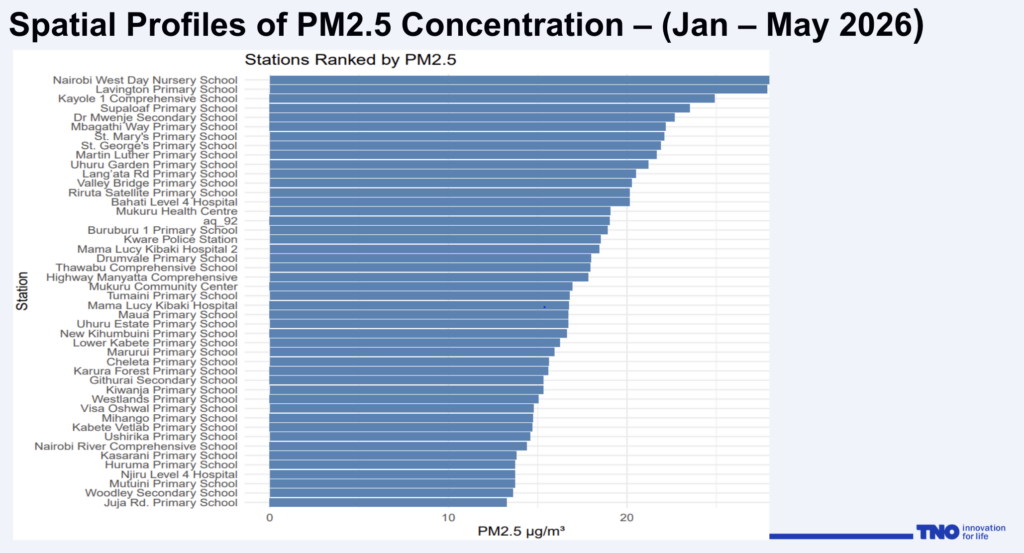
A research team from the Kenyan capital of Nairobi explained how the city went from just two low-cost air pollution monitors to about 130 in four years, leading to impact on the ground.
“Analysts have been able to map out trends in pollution. For example, it peaks between six and nine in the morning and evening. probably because of traffic and household habits. But the extensive data across Nairobi has meant enforcement can be tracked,” explained one of the researchers.
“We can now translate this into action on the ground. We are able to inspect. We are able to carry out our compliance and enforcement in various sectors within the city.”
The researchers showed the data from low-cost sensors at about 40 schools from January to May. All of them were above the WHO’s safe guideline of 5 micrograms/cubic metre of PM2.5, the fine particulate pollutant.
This is the annual conference’s fourth edition, and the largest with over 530 participants. The large number of participants this year demonstrates “a great continental movement,” says Tunde Ajayi of the Lagos State Environmental Protection Agency and Africa Clean Air Network.
“Clean air is not a luxury. It is a prerequisite for healthy people, for thriving economies and sustainable development. The investments we make today will determine the quality of life of generations to come,” said Ajayi.
Combat the infodemic in health information and support health policy reporting from the global South. Our growing network of journalists in Africa, Asia, Geneva and New York connect the dots between regional realities and the big global debates, with evidence-based, open access news and analysis. To make a personal or organisational contribution click the donate button below.