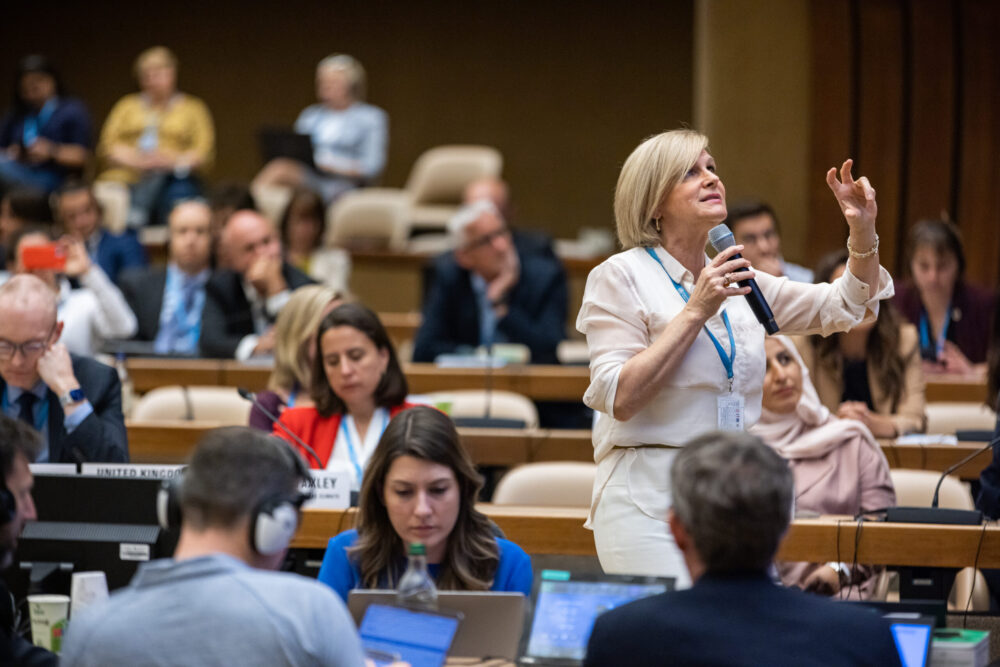
The World Health Organization (WHO) must rebuild public trust, protect its most important functions and resist across-the-board budget cuts as it confronts growing health threats and shrinking financial resources, according to Dr. Maria Neira, a candidate to become the agency’s next director-general.
“One thing that I will never do is to cut across and saying, OK, we need to reduce 20 percent. We will reduce everything by 20 percent. No, we need to be very strategic on what functions we maintain,” Neira said.
Speaking on the Inside Geneva podcast, produced in partnership with the Geneva Graduate Institute’s Global Health Centre and SWI swissinfo, Neira outlined her vision for WHO at a time when the United States has withdrawn, other countries are reducing funding and public confidence in health institutions is being challenged by misinformation.
A Spanish physician and former vice minister of health who has spent much of her career at WHO, Neira said reforms must focus on the agency’s core mandate rather than simply reducing costs. She identified antimicrobial resistance, rising rates of noncommunicable diseases, climate change and the continued lack of access to safe water and sanitation as urgent priorities.
“Something that for me is unacceptable and makes me really upset is the fact that today, in 2026, a lot of people still do not have access to safe water and sanitation,” she said.
Neira also acknowledged that WHO can no longer assume its scientific guidance will automatically be accepted, particularly following the COVID-19 pandemic.
“Communication is absolutely important,” she said. “Because now, as I say, it’s a question of gaining everyday credibility.”
She argued that restoring confidence will require transparent experts, stronger partnerships and clearer communication about WHO’s impact on everyday life.
“Credibility is linked to what you need to earn it. You need to demonstrate it every day,” Neira said.
Listen to the full podcast:
The interview series with WHO DG candidates is being co-produced by the SwissInfo media platform with the Geneva Graduate Institute’s Global Health Centre, as part of a media collaboration on the upcoming WHO election also supported by Health Policy Watch.
See more about the candidates on Health Policy Watch’s special WHO election website.
Image Credits: WHO.
Combat the infodemic in health information and support health policy reporting from the global South. Our growing network of journalists in Africa, Asia, Geneva and New York connect the dots between regional realities and the big global debates, with evidence-based, open access news and analysis. To make a personal or organisational contribution click the donate button below.