Four of the seven candidates vying to succeed Dr Tedros Adhanom Ghebreyesus faced member-state questioning in Geneva on Wednesday. The hearings exposed sharp fault lines over budget cuts and regional manufacturing, though contenders refused to name programmes facing termination.
Wednesday’s hearing marked the first public forum in a race shaped by escalating health threats, geopolitical conflicts, funding shortfalls, and institutional reprioritisations. Delegations tested four distinct leadership philosophies competing to take the helm in May.
The field featured former Qatari health minister Dr Hanan Mohamed Al Kuwari; Belgium’s nominee, WHO Europe director Dr Hans Henri P. Kluge; China’s maternal health veteran Dr Song Li and Botswana’s outsider nominee, Armenian paediatric oncologist Dr Gevorg Tamamyan.
The remaining three contenders face questions on Thursday: Dr Hanan Balkhy of Saudi Arabia, Spain’s Dr María Neira, and Indonesia’s Budi Gunadi Sadikin.
Inside the mechanics of the WHO candidate forum
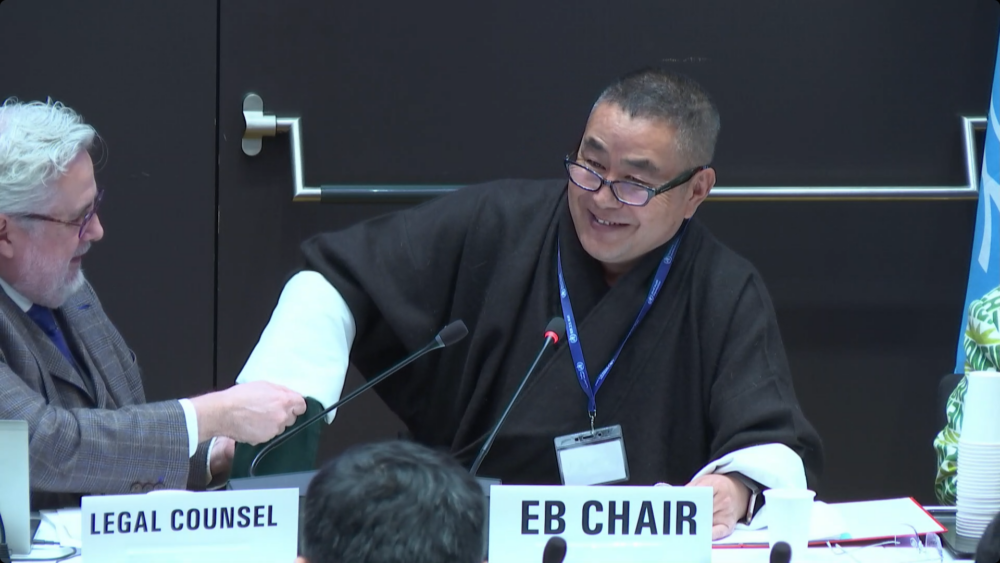
While decisive commitments – vote-trading, bilateral alliances, and financial pledges – continue behind closed doors, the public forum provides a rare window into multilateral health diplomacy. First introduced during WHO governance reforms, the live-streamed hearings allow global scrutiny of candidate priorities and member-state pressure points.
Inside the hall, proceedings followed strict procedural mechanics established by the World Health Assembly. Guidelines barred electronic presentations, capping opening statements at 10 minutes, with two traffic-light systems enforcing speaking limits across the room.
Delegations submitted questioning requests by dropping colour-coded tokens into six regional ballot boxes circulating across the floor. The Executive Board chair drew lots to ensure each WHO geographic region posed an opening query. Secretariat staff then merged the remaining tokens into a single container for random selection.
Selected nations were restricted to a single 60-second question, and contenders had three minutes to reply within each 50-minute interrogation block.
Questions highlight geographic divides
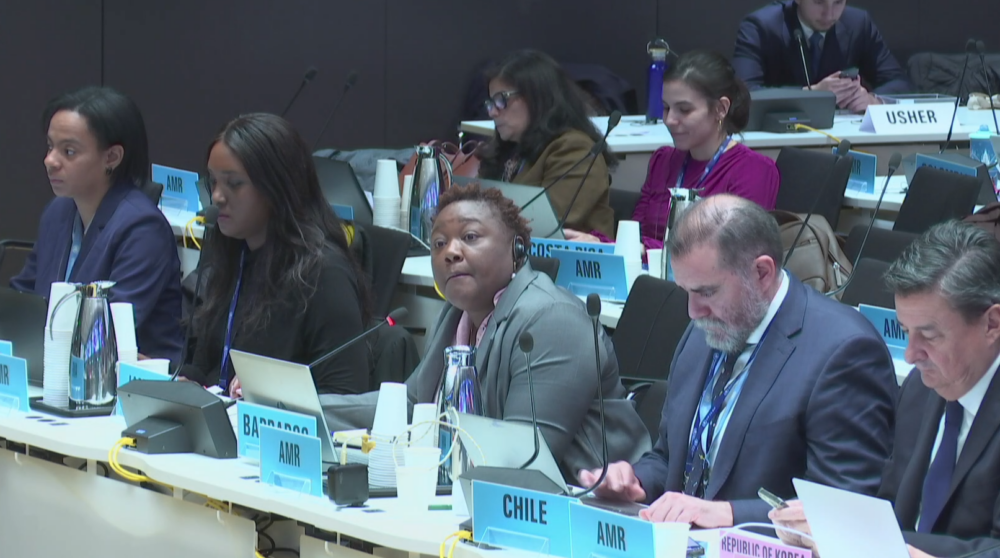
Across Wednesday’s four sessions, contenders answered a total of 63 questions, which highlighted a sharp geographic divide.
Donor governments concentrated at least 14 separate questions on normative standards, fiscal discipline, administrative consolidation, and terminating redundant programmes. Conversely, 19 questions from African, Latin American, and Asian delegations pressed on workforce retention, technology transfer, and sovereign biomanufacturing.
Low-income delegations, particularly from sub-Saharan Africa, treated the sessions as a test of operational survival. Their interventions targeted basic delivery failures, demanding that candidates explain how WHO would sustain primary care, reduce reliance on foreign-manufactured medicines, and shield conflict-affected populations from recurring funding cliffs.
Small Island Developing States (SIDS) pressed contenders to overhaul resource allocation formulas that disqualify middle-income islands from concessional technical assistance despite crushing climate threats and medical brain drain.
Meanwhile, Latin American middle-income economies warned that WHO routinely bypasses their non-communicable disease burdens and high, out-of-pocket health costs, demanding tailored partnerships rather than a one-size-fits-all model designed solely for the poorest states.
Qatar’s operational moderniser
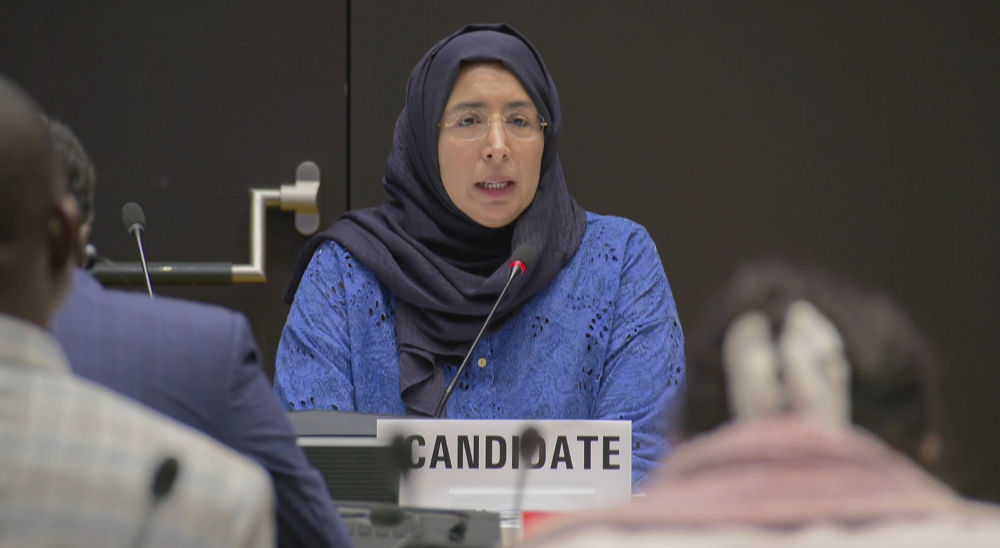
In her presentation, Al Kuwari leaned heavily on her track record leading Qatar’s health system, pitching herself as an operational reformer ready to instil strategic discipline in Geneva. Speaking with measured precision, she argued that WHO’s effectiveness is blunted when it spreads resources thin, urging the agency to refocus on core normative standards and tailor its country-level work directly to primary healthcare.
Her platform pitched rigorous functional reviews, digital transformation, and delegating operational field delivery to external partners while re-anchoring headquarters in standard-setting. Al Kuwari also drew a firm line between technical work and fundraising.
“I would like the department heads, project leads, directors not to worry about the financial situation and to leave that to a team of experts,” she said.
Kenya challenged her on regional manufacturing, noting that while prequalification opens factory doors, sustained orders keep them in business. Al Kuwari agreed, arguing that commercial viability requires public-private partnerships and concluding the Pandemic Agreement negotiations.
Al Kuwari faced sharp scrutiny from European capitals on sensitive normative mandates. When Iceland pressed her on upholding sexual and reproductive health and rights amid deep geopolitical fractures, Al Kuwari drew on constitutional neutrality. She noted that while national capitals ultimately apply guidance according to domestic laws, WHO’s baseline must remain anchored in non-discrimination and human rights.
“Our position will always be the science and protection of the rights of everybody regardless of race, nationality, gender, whatever, to health services,” said Al Kuwari. Asked by Health Policy Watch to clarify what the phrase “gender, whatever” encompasses, her campaign did not respond by publication deadline.
Belgian reformer and reckoning for big pharma
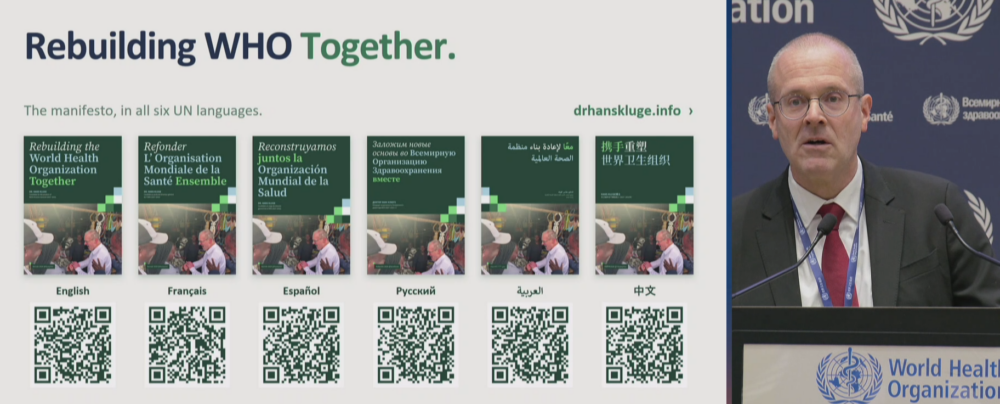
Kluge delivered an assertive, high-energy defence of pragmatic multilateralism, leaning heavily on his frontline crisis management across the European Region. Rejecting conventional UN austerity formulas, he emphasised that promising “more with less” or “same with less” carries “no credibility.”
Instead of cutting frontline muscle, he pointed to his region’s digital overhaul, reporting that developing in-house artificial intelligence tools had saved $1.3 million in staff time, avoided $340,000 in commercial software licensing fees, and recouped 15,500 working hours in a single year.
On global health equity, Kluge adopted an unexpectedly confrontational posture toward multinational pharmaceutical manufacturers. He pledged to summon pharmaceutical chief executives to Geneva “one by one” – mirroring the negotiations that produced the Pandemic Influenza Preparedness (PIP) Framework – insisting that corporate interests must not dictate who accesses life-saving therapies.
“It cannot be that pharmaceutical interests decide on who gets medicines or not,” said Kluge.
Addressing concerns over Africa’s dependence on imported medicines, he set a concrete operational deadline, projecting that pooled procurement and the African Medicines Agency could enable the continent to produce “15 to 20 vital medications” within six years.
When pressed by Ghana about how he would accelerate the Accra Reset, Kluge pledged that WHO would act as an agile technical secretariat, working “hand-in-hand” with regional bodies rather than competing for political primacy. He specifically singled out Africa CDC Director-General Jean Kaseya, referring to him warmly as “my other brother.”
This comes amid scrutiny over governance and leadership friction at Africa CDC. Asked by Health Policy Watch whether he was aware of staff complaints and formal inquiries regarding Kaseya’s tenure, Kluge did not respond.
The cross-regional institutional outsider
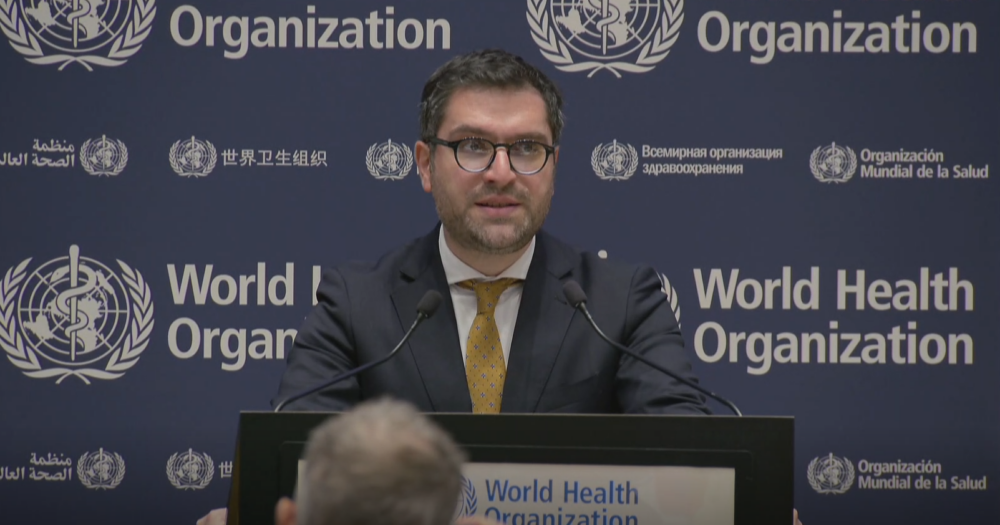
Botswana’s nominee, Dr Gevorg Tamamyan, upended diplomatic decorum, presenting himself as an unvarnished outsider taking aim at Geneva’s institutional inertia. Recounting how artificial intelligence calculated his odds of nomination outside Armenia at “zero” – drawing laughter from delegates – he contrasted multilateral diplomacy with bedside realities where patients die waiting for essential therapies.
“I have had to make health systems deliver where failure has consequences for actual patients,” said Tamamyan.
Challenging member states to hold him accountable, Tamamyan is the only contender pledging to step down after a single five-year term if an independent evaluation shows he achieved less than 80% of his targets. To halt unexecutable mandates, he proposed requiring every future World Health Assembly resolution to carry a binding delivery plan and designated funding source before adoption.
He also proposed publishing monthly leadership meeting minutes, releasing an annual public report card on promised deliverables, and guaranteeing a physical WHO office to every member state that requests one.
While the Armenian paediatric oncologist deflected several political blows with disarming candour, he was forced to concede his institutional inexperience when pressed on bureaucratic mechanics. When Spain asked how WHO should steer the complex future and transition of UNAIDS into WHO structures, Tamamyan refused to bluff diplomatic fluency.
“I don’t want to get into these details because I’m not an expert on this… Sorry for not being specific, but that’s my answer,” said Tamamyan. He acknowledged that while WHO must lead on health, he would rely on seasoned UN hands to manage inter-agency mechanics.
China’s disciplined pitch for Global South equity
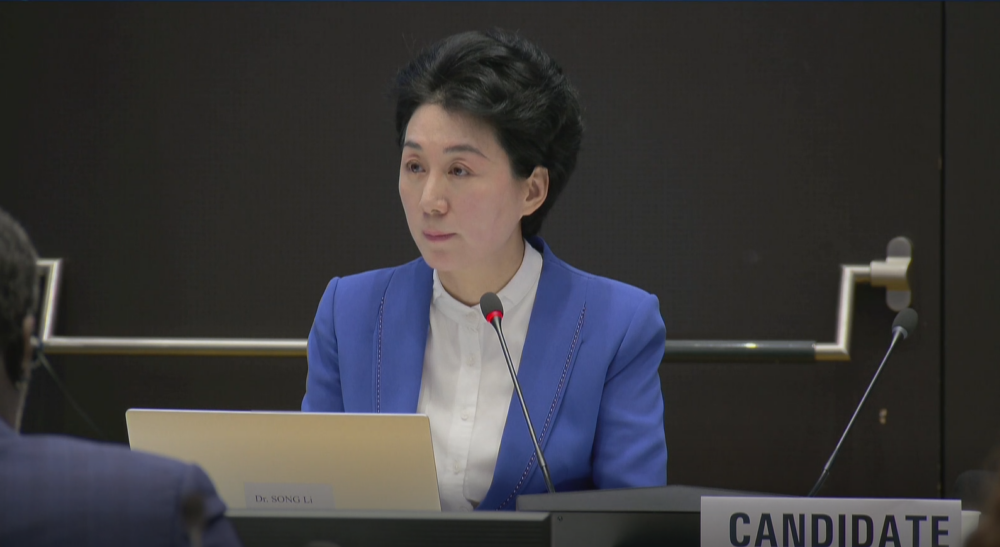
Song adopted a disciplined, measured posture, presenting a vision anchored in multilateral stability, South-South cooperation, and institutional continuity. Drawing on decades of national experience in maternal and child health, she firmly resisted donor pressure to name programmes facing termination.
To rebalance institutional power, Song proposed overhauling WHO’s expert advisory groups to mandate representation for scientists from Africa, small island states, and the broader Global South, insisting that normative standards must no longer be shaped by a handful of traditional powers. On access to medical countermeasures, she championed voluntary licensing via the Medicines Patent Pool to foster local production before health emergencies strike.
When pressed on budget discipline, Song proposed deploying artificial intelligence to eliminate internal administrative bottlenecks. When asked what functions WHO should surrender, she argued existing inter-agency partnerships already prevent duplication.
Breaking briefly with her formal technical register when answering Chad on protecting displaced women and children, Song closed with an impassioned plea for peace: “All human beings… we are brothers, we are sisters, we are family. One family living in the one planet, the Earth.”
Australia confronted Song with the hearing’s most delicate geopolitical challenge. Delegates asked how an official from an emerging superpower would safeguard scientific independence against political pressure. Song avoided direct friction, defining independence as constitutional neutrality. She argued that true autonomy requires ending the traditional powers’ dominance over advisory panels.
Nominating states cross-examine competing contenders
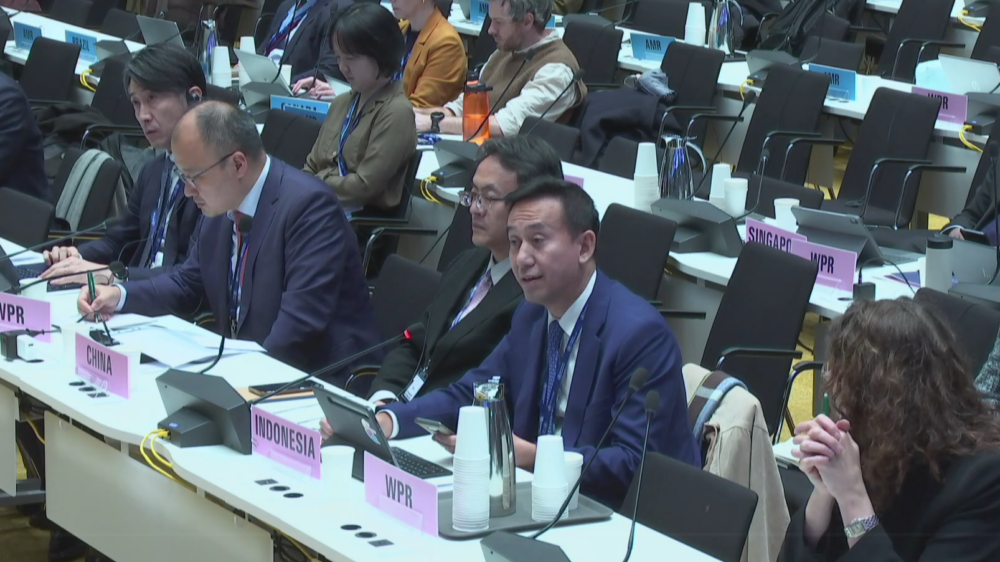
Delegations fielding their own contenders used the lottery to cross-examine rivals. Five of the seven nominating governments were drawn from the ballot boxes, turning diplomatic floor time into strategic vetting.
Indonesia proved the most persistent challenger, successfully drawing tokens in three separate sessions. Jakarta interrogated Al Kuwari on delivering primary healthcare at scale, pressed Kluge on shielding national priorities from earmarked donor funding, and challenged Tamamyan to identify which unfunded mandates he would abandon.
European contender sponsor Belgium used its floor time to interrogate China’s Song Li, pressing her on where she would look first to dismantle administrative complexity and simplify WHO workflows.
Outsider Tamamyan faced a concentrated barrage from rival sponsors. Besides Spain’s question on managing the transition of UNAIDS, China challenged him on who defines institutional priorities, and Saudi Arabia pressed him on how an institutional outsider could resolve WHO’s sustainable financing crisis.
Conflicting mandates await the victor
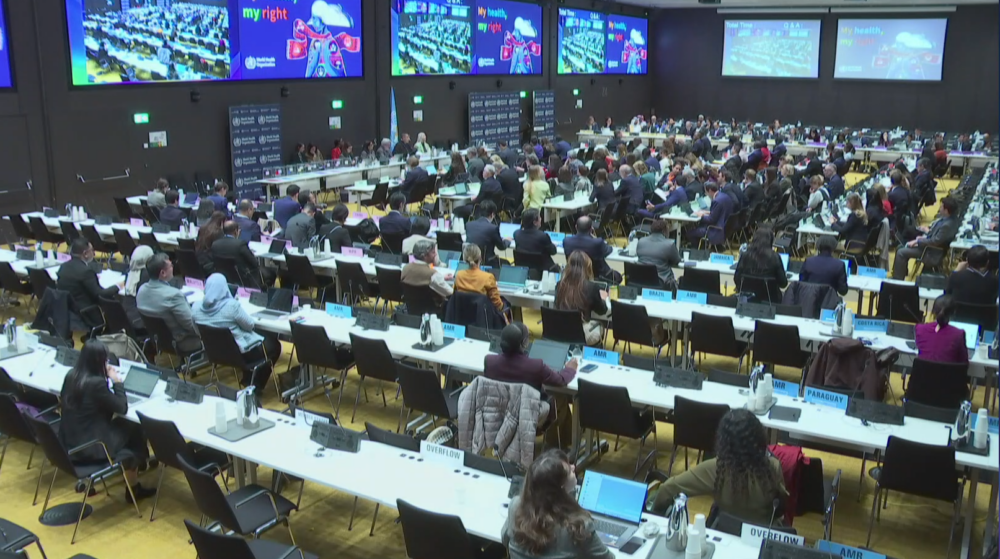
Wednesday’s forum confirmed that member states demand conflicting outcomes from their next chief executive – no matter what pledges the candidates make on the campaign trail. Major contributors want ruthless programmatic contraction, while the Global South pushes for equitable expanded technical intervention and local sovereignty.
The contenders demonstrated formidable stamina and command of multilateral jargon. Yet each candidate retreated to process and committees when pressed to name concrete budgetary eliminations.
Hearings resume Thursday, when delegations will interrogate the remaining three contenders in Geneva. In January, the 34-member Executive Board will interview a shortlist of five candidates and nominate up to three finalists before a final vote in May.
Image Credits: Wikipedia , WHO.
Combat the infodemic in health information and support health policy reporting from the global South. Our growing network of journalists in Africa, Asia, Geneva and New York connect the dots between regional realities and the big global debates, with evidence-based, open access news and analysis. To make a personal or organisational contribution click the donate button below.