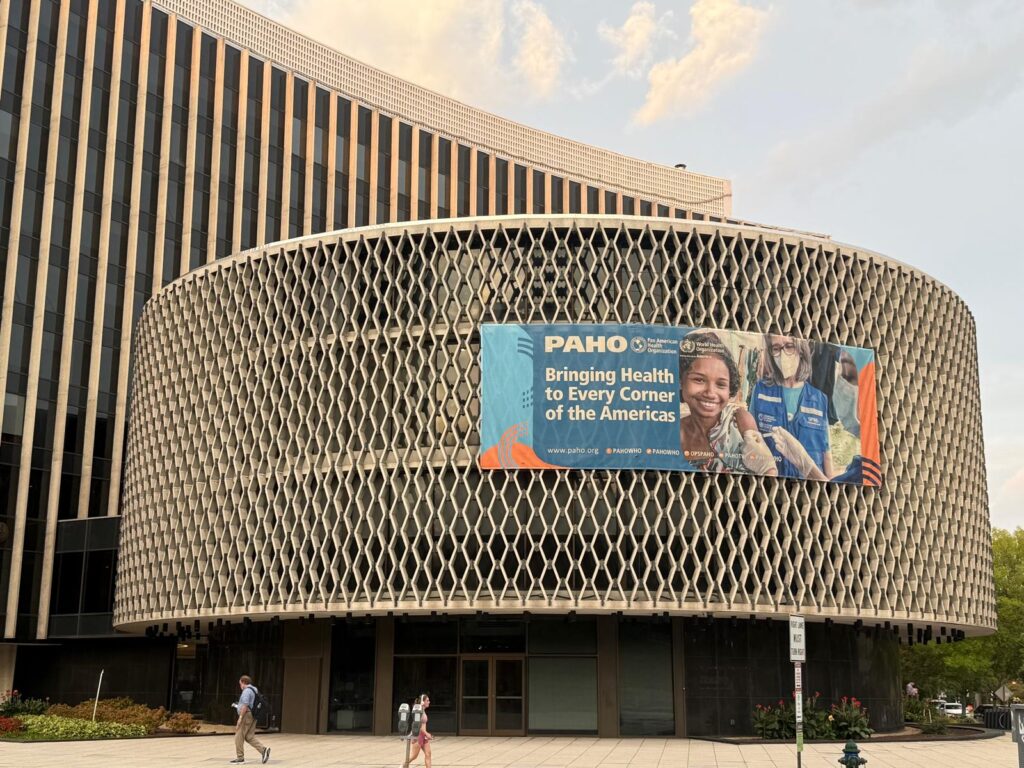
A group of senior national security and health officials contend that cutting funding to the regional health organization will cripple the Western hemisphere’s ability to defend itself against disease threats.
The oldest multilateral health organization in the world, the Pan American Health Organization (PAHO), is fighting many of the same health threats it did at its founding in Washington, DC, some 120 years ago: vector-borne diseases such as dengue and Zika, new and emerging diseases like New World Screwworm, and recurring outbreaks of vaccine-preventable diseases like measles.
But the organization now faces an unprecedented challenge: the potential loss of United States funding.
Amid ongoing outbreaks across the Americas, the US President’s Fiscal Year 2027 budget request to Congress proposes eliminating funding to PAHO, calling it and the World Health Organization (WHO) “corrupt organizations” that show “no independence from inappropriate political influence”, part of a raft of international organisations it describes as promoting “dangerous ideologies” and “taking advantage of American generosity”.
The US is the largest single contributor to PAHO and accounts for half of all member state contributions to the organization. The US already owes nearly $135 million in member fees since 2024.
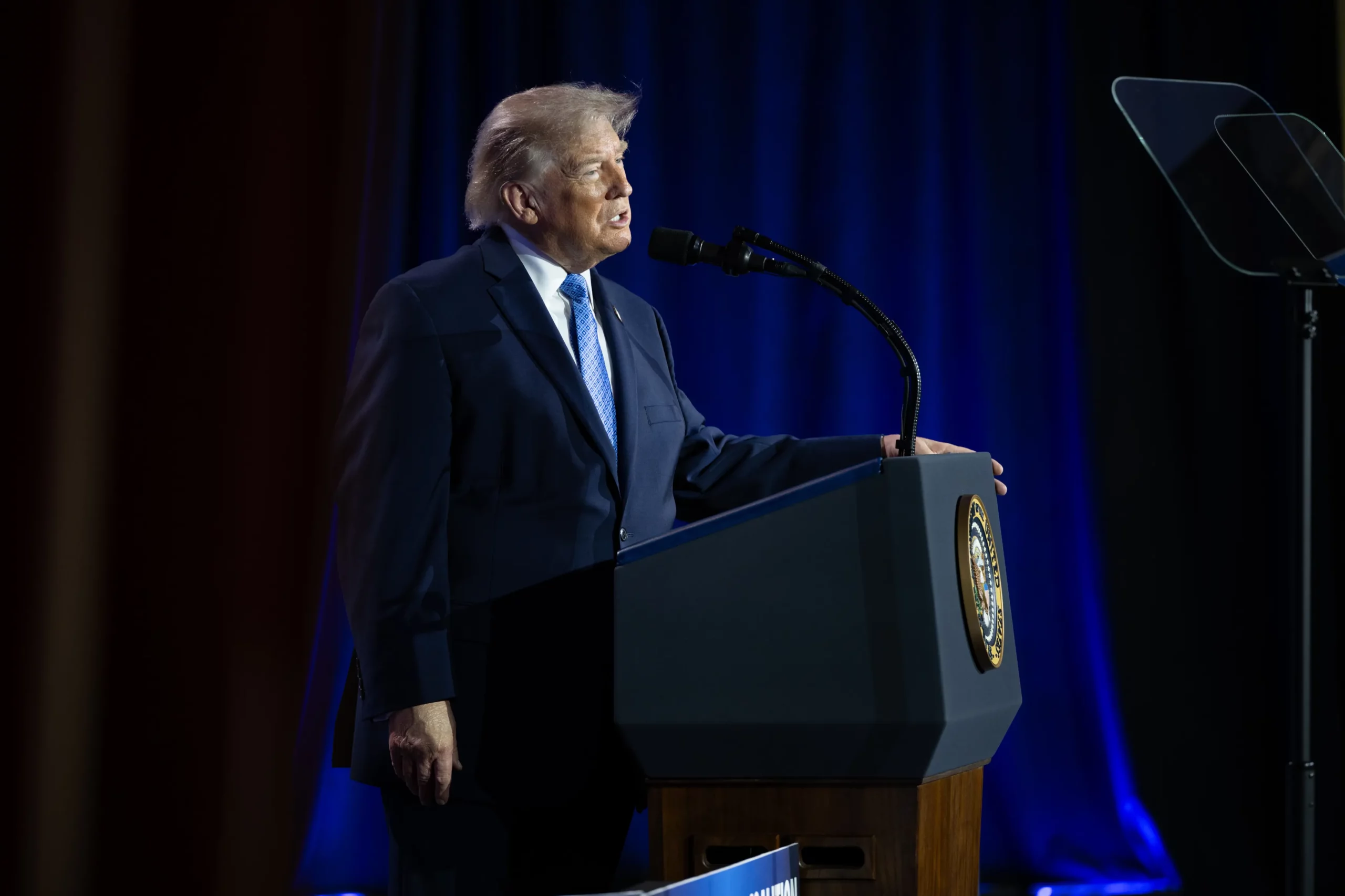
Former national and health security officials, though, were quick to back PAHO as the “first line of defense” against diseases in the Western Hemisphere.
“Destroying the institution – PAHO – that has protected us all is the worst idea circulating in Washington right now,” said Andrew Natsios, a Republican politician and humanitarian official under multiple administrations, in a statement to Health Policy Watch.
“It is delusional to think we can stop disease at our borders. We can only manage these health crises through regional cooperation.”
In response to unpaid US dues, PAHO, the WHO’s regional arm with 35 member states across the Americas, has adopted a 17% reduction in its upcoming budget. It has also established a cost-saving “Shared Services Hub”– an effort to consolidate and streamline core administrative functions from Washington headquarters to lower-cost locations, the organization said in a statement to Health Policy Watch.
Across the organization, total positions are projected to drop from 1,042 during the 2024–2025 budget cycle to approximately 869 positions across 2026–2027.
With USAID shuttered and the future of CDC regional offices unclear, PAHO remains one of the only presences in the region that could coordinate 35 member states across the Americas on issues of health security.
Leading US national security officials decry defunding
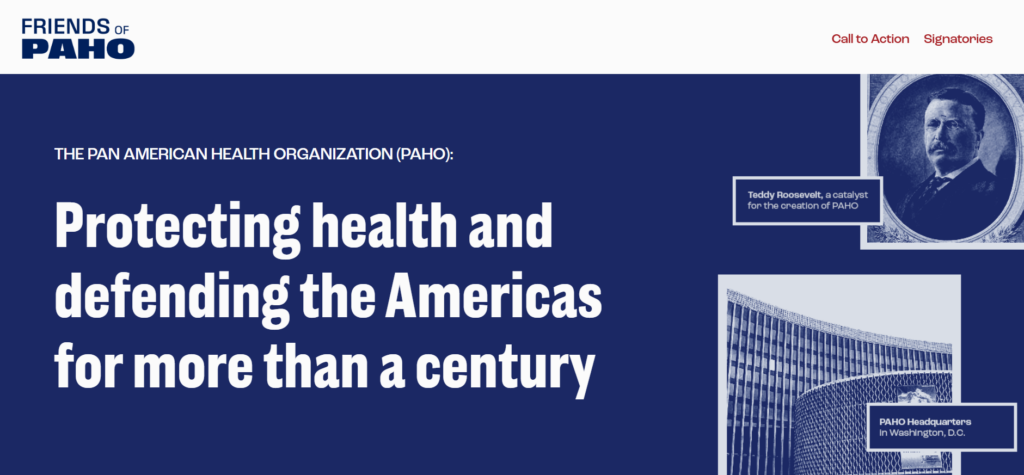
Trump’s submitted budget mirrors last year’s turmoil in global health funding – deep slashes to programs that support maternal and child health, malaria and tuberculosis control, HIV/AIDS control, and neglected tropical diseases (NTDs).
Congress may still appropriate funds, as advocated for by an open letter signed by the dozens of national security and health officials who served across Republican and Democratic administrations.
“PAHO has an unmatched record of protecting health,” the more than 100 signatories write in the letter, which include former Army surgeon generals, Department of Defense officials, Health and Human Services secretaries, former members of Congress, White House officials, and ambassadors. They represent a new bipartisan coalition, the Friends of PAHO.
“For 124 years, it has been one of the most effective health and disease prevention organizations operating anywhere in the world,” the letter states. “At a time when infectious disease threats continue to cross borders, we urge policymakers in Washington to reassert America’s commitment to health security in the Western Hemisphere and recognize PAHO’s essential role in safeguarding the American homeland.”
PAHO targeted for decades-old scandal
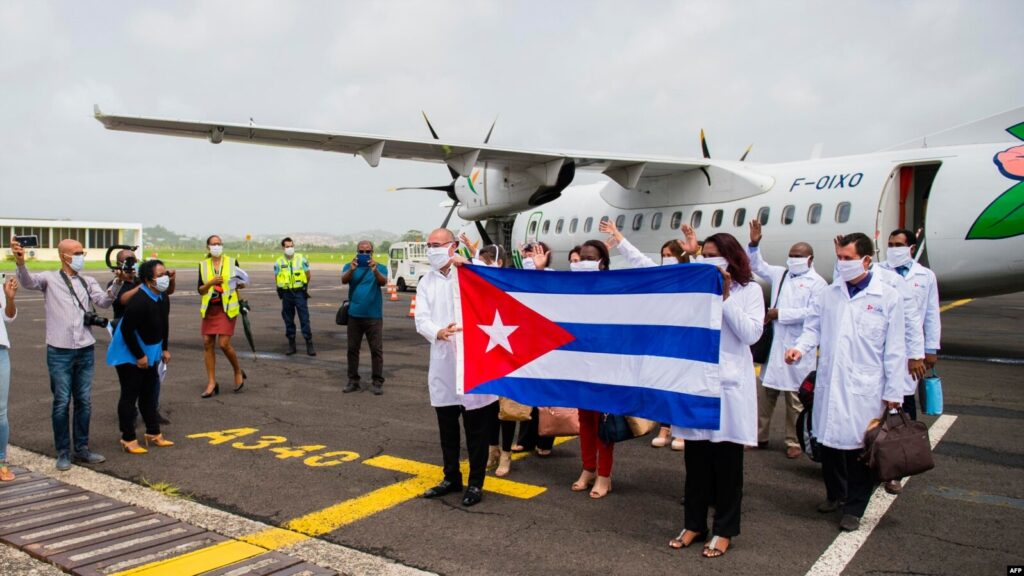
The Trump Administration initially singled out PAHO in 2025 in a move to withhold funding from key international organizations. The concerns came after the Trump Administration alleged PAHO was mediating a forced labor scheme among Cuban doctors, as part of a Brazilian program Mais Medicos.
The scheme, which took place over a decade ago, resulted in US sanctions against Cuba for forced labor of its doctors. The Brazilian health officials involved were also subject to sanctions.
In the past year, however, the administration has dredged the issue to the forefront of its qualms with PAHO and succeeded in withholding $4.9 billion in previously appropriated foreign assistance through a controversial “pocket rescission” in September 2025, including $45 million earmarked for PAHO. Representative Carlos Gimenez (FL-28), who issued the call to action against PAHO’s immunity in August 2025, did not respond to a request for comment.
However, it is not clear why the decade-old scandal has resurfaced as an issue for withholding contributions to PAHO.
See related story: Pan American Health Organization Targeted in New Round of US Funding Cuts
US owes over $135 million in assessed contributions
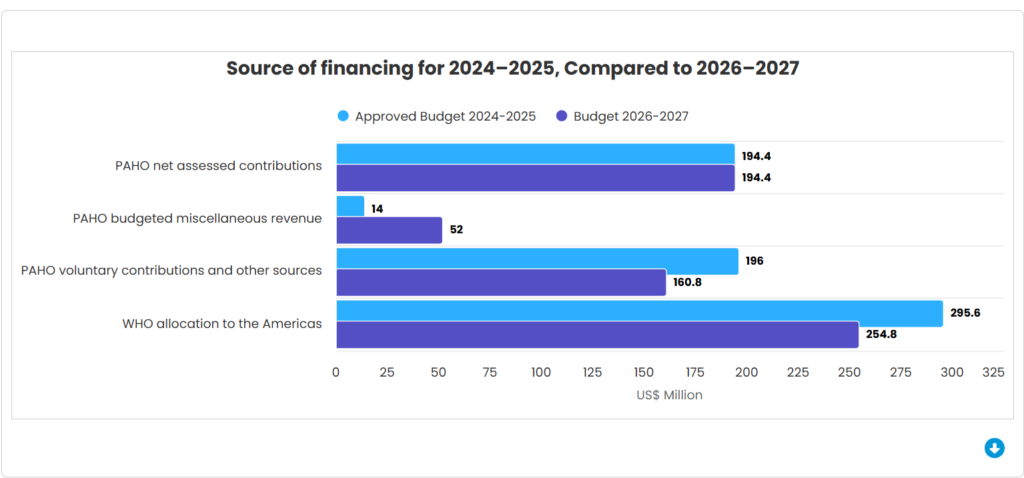
The US has not yet formally withdrawn from PAHO: it remains a member and continues to owe assessed contributions like several other countries. In fact, PAHO is the only multilateral health organization the US is a member of following last year’s withdrawal from the World Health Organization and other related organizations. US payments to PAHO have been delayed now for nearly two years, leaving the organization under increased pressure.
Beyond funding, the US supports PAHO through staffing experts and providing technical advice in Washington.
In a statement, PAHO said it has not been officially informed of a decision to eliminate funding to the organization.
There have been several instances in which US Congress has ignored proposed funding cuts from the Office of Budget and Management (OMB), instead opting to support global aid across party lines. Indeed, several high-ranking Republican members of Congress and former officials have spoken out against a US withdrawal from global aid, and the ways the Administration has attempted to rescind funding.
US Senator Susan Collins, Chair of the Senate Appropriations Committee, called the rescissions move “a clear violation of the law” and said that she “cannot support the cuts that are so deep and so damaging in global health programs,” in a Senate hearing with OMB chief Russel Vought.
Natsios, whose career as a Republican politician and public servant spans five decades, echoed this sentiment, saying that “diseases, both human and animal, don’t need passports to travel across borders. The health crises of Latin America will become the health crises of the US and our crises will eventually travel to our southern neighbors. PAHO, for more than eight decades, has been the first line of defense against these crises.”
For now, PAHO continues to coordinate responses to the devastating earthquakes in Colombia and Venezuela, surveil measles and dengue outbreaks, and monitor potential avian flu cases despite the budget cuts.
A sudden break in a 120-year partnership
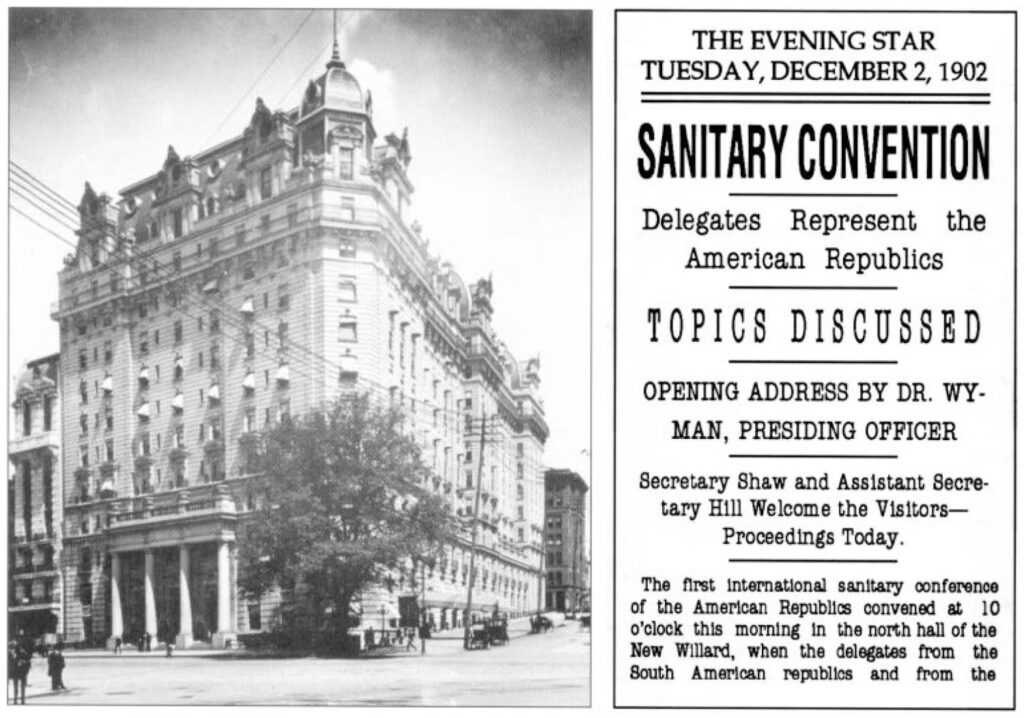
PAHO was founded in Washington, DC, in 1902 under President Theodore Roosevelt, making it the oldest such organization. The dire health consequences of the Spanish-American War in Cuba and the deadly yellow fever epidemics that struck American workers building the Panama Canal spurred Roosevelt to convene what was then called the International Sanitary Bureau in Washington, DC.
The close ties between the US and PAHO predate those of any other health multilateral. “Until the late 1950s, the organization’s earliest directors were US health specialists,” said Katherine Bliss, director at CSIS Global Health Policy Center and an expert on Latin America. She notes that included former military doctors and leaders within the US Public Health Service.
“PAHO was founded on US soil, by US leadership, and built on the conviction that American leadership in this hemisphere produces results,” the open letter calling to protect PAHO’s funding states. “For 124 years, the US has not only successfully engaged with PAHO but has been the moving force behind PAHO’s work that serves American interests and reflects American values.”
“In this context, sustaining US leadership in PAHO is an America First strategy in practice,” it adds.
Some 120 years later, spillovers in the Amazon Rainforest and ongoing dengue outbreaks mean that the original mission of PAHO is still as pertinent in protecting the US and the Western Hemisphere’s health security as it was last century.
“Its founding purpose was unambiguously practical: protect American commerce and public health by controlling infectious disease in the hemisphere,” Friends of PAHO said.
PAHO initially operated independently from the United Nations system with a mission of prompt data transmission and response coordination of sanitary conditions of seaports, maritime quarantines, and the control of infectious diseases–especially yellow fever.
Then in 1949, PAHO became the independent regional arm of the World Health Organization, continuing to track, respond to, and even eradicate the most insidious diseases in the Americas.
Victories despite ongoing outbreaks and emerging public health concerns
PAHO’s elimination of polio, malaria, and smallpox in the region are all seen as major victories. Despite this, new and re-emerging threats continue to threaten the health of the Americas, Friends of PAHO warn.
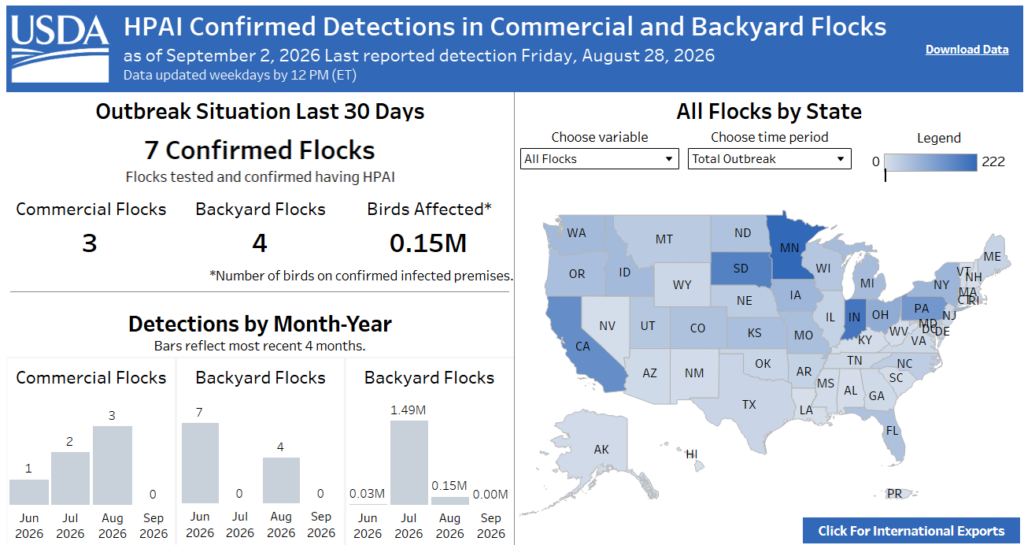
In particular, H5N1 avian influenza, dengue, chikungunya, and leishmaniasis are now circulating in the US. And an insect that carries a devastating disease afflicting cattle and other livestock, the New World Screwworm, has been identified in the US for the first time in six decades.
Other concerns in the region include dengue, which the US has recently seen a surge of locally acquired cases in Florida, the loss of measles elimination status in several countries, and the looming threat of a supercharged El Niño season.
“Our struggle with nature is both inherent and mandatory,” explained Stewart Simonson, a senior advisor at Global Health Strategies and a former WHO official, in reference to disease spillovers. “This requires multilateral action,” he said.
Simonson, who also also served as a US Health and Human Services official during the Bush Administration coordinating public health emergency management following 9/11, pointed to the example of a measles outbreak in Caracas, Venezuela, in the late 2010s under then dictator Nicolás Maduro.
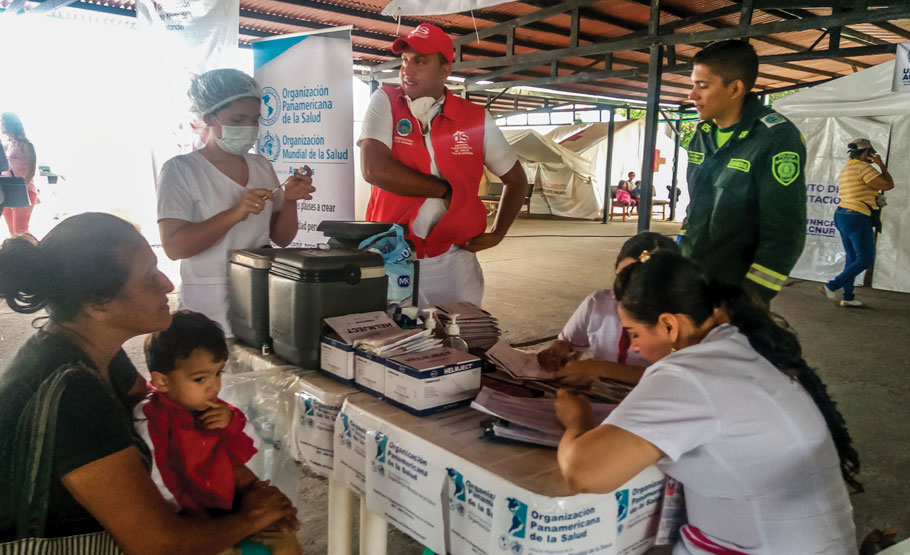
“The outbreak was going nowhere but North,” Simonson said. It was only through PAHO-mediated response and a US-funded vaccination campaign that involved mobilizing over 20,000 vaccinators per month that the outbreak was suppressed – with PAHO serving as the intermediary between the US and Venezuela.
In 2025 alone, PAHO’s regional surveillance system analyzed 2.1 million disease threat data points, detecting 157 public health events across the Americas, the organization said.
Advancing economic and national security
The issue of health security is largely a bipartisan one. Signatories of the open letter supporting PAHO point to how its programs protect American “troops and diplomats stationed throughout the hemisphere,” and Americans studying abroad and travelling.
“It keeps American markets open for business,” it states. “A US withdrawal from PAHO would not leave a vacuum; it would leave an opening that strategic competitors are prepared to fill.”
While the US has historically had strong bilateral relationships with countries in the region on health issues, these relationships depended on regional offices staffed by USAID, CDC, PEPFAR, and even the US Navy to promote cooperation across borders.
Yet, “there are no longer USAID missions, and the future of the CDC country and regional offices is unclear,” Bliss pointed out. Without these key US presences in the region, PAHO is the only organization still able to bring countries together on health security issues.
“If the US were to leave PAHO, it would be important to consider how difficult it would be to engage at a regional level on health and what it would take to put an alternative platform for communication and cooperation in place,” Bliss said.
Despite the financial pressures, PAHO remains confident it can continue performing its core operations throughout the Americas. When asked about diversifying funding, the organization pointed to strengthened partnerships with Canada, Spain, the EU, the US CDC, the World Bank, and philanthropic groups, among others.
In a statement, PAHO did note it “continues to encourage all Member States with outstanding contributions to fulfill their commitments.”
“The world is uniquely dangerous biologically right now. It is not the time to disengage from PAHO,” Simonson said.
Image Credits: S. Samantaroy, The White House, Friends of PAHO, Voice of America (VOA), PAHO/WHO, PAHO/WHO, WHO/PAHO, USDA.
Combat the infodemic in health information and support health policy reporting from the global South. Our growing network of journalists in Africa, Asia, Geneva and New York connect the dots between regional realities and the big global debates, with evidence-based, open access news and analysis. To make a personal or organisational contribution click the donate button below.