The defenders of sexual and reproductive health and rights are on the frontline of the “heightened hostility to science, fact, and truth, directly facing the anti-science toxic tangles of racism, sexism, and homophobia,” asserted Professor Kate Gilmore, co-chair of the Human Reproduction Programme’s (HRP) Gender and Rights Advisory Panel.
HRP is the United Nations instrument that conducts research in human reproduction and is hosted by the World Health Organization (WHO).
Powerful leaders seek to “suppress independent research, cancel academic freedom, and deny scientific evidence” – and are “slashing funding to restrict scientific benefit to the elite”, said Gilmore, addressing a webinar at the start of sexual and reproductive health month, which is held every September.
“Information platforms, knowledge production and exchange once intended to facilitate open and inclusive exchange of evidence and solutions, are today intentionally distorted for profit, for gain, deliberately designed to give free rein to misinformation and myth-information,” added Gilmore, former UN deputy high commissioner for human rights.
“As equality and diversity and inclusion are targeted by hate, the very notions of our common human family, of our universal rights to equal enjoyment of the fruits of science, are also under attack,” Gilmore added.
HIV and contraception
Lianne Gonsalves, a WHO scientist working on sexual health, reminded the webinar of two important trials that had advanced SRH knowledge.
The first compared three different contraceptives – the Depo-Provera intramuscular injection, a copper intrauterine (IUD) device, and the levonorgestrel hormonal implant – to test whether any heightened HIV infection.
The ECHO trial, conducted at 12 sites in four African countries over three years, found that there was “no statistically significant difference in HIV acquisition risk between the three methods”, said Gonsalves.
After the results were published by The Lancet in 2019, the WHO updated its guidelines.
“This is a really good example of seeing where there’s an evidence gap that may be prohibiting users from accessing methods that might be a good fit, having the funding and the collaborators available to design a rigorous, robust study and then carry it out,” she said.
“And then being able to channel that evidence immediately into impact, into guidelines that countries can then adopt to give access to more [contraceptive] methods to more women.”
Progress on gender-based violence
The second example involves gender-based violence (GBV). The global statistic that one in three women globally are going to experience physical and/or sexual violence during their lifetime comes from WHO’s landmark 2013 global and regional estimates on violence against women, produced in collaboration with the London School of Hygiene and Tropical Medicine and the South African Medical Research Council.
“In 2013, when these estimates first came up, they were launched alongside WHO’s clinical and policy guidelines on intimate partner violence and sexual violence,” said Gonsalves.
The estimates ensured that GBV was “recognised as a major public health issue”, resulting in country-based action.
“From 80 countries participating in the original estimates, we now have data on GBV from 168 countries [2023], and we’re seeing countries take meaningful efforts”.
“As of 2026, just over half of countries have clinical guidelines and protocols. 42% of countries include budgets for the health response and violence against women.”
Including pregnant women
WHO scientist Mariana Widmer provided a dramatic example of a study that improved outcomes for babies born to women living with HIV,
The 2011 WHO-led Kesho Bora study, conducted in Burkina Faso, Kenya, and South Africa, found that women living with HIV who started antiretroviral treatment while pregnant reduced HIV transmission to their babies by 43% and more than halved transmission during breastfeeding.
Widmer, who co-leads WHO’s efforts to ensure that pregnant and breastfeeding women are included in clinical research, contrasted these “striking results” with the exclusion of pregnant women from studies during COVID-19.
“Pregnant women during COVID-19 were largely excluded from the initial clinical trials, although we knew already that they were at increased risk of severe COVID-19 complications,” said Widmer.
She added that pregnant women “need medicines just like everyone else”, but that their bodies go through important changes during pregnancy, and the kidneys and liver can process medicines differently.
The WHO has developed a web portal to support the safe and ethical inclusion of pregnant and breastfeeding women in clinical trials.
Restrictive laws prevent access
But scientific evidence often does not reach those who need it most, warned Bertho Makso, community engagement lead for the International Planned Parenthood Federation’s (IPPF) Arab World Regional Office.
“In many contexts, especially in my region, restrictive laws and policies directly prevent people from accessing care,” said Makso, who also founded Proud Lebanon.
“They also reinforce stigma, discrimination, and the fear of being reported, exposed, or even criminalised. HIV and Mpox are clear examples,” he added.
“Many people still avoid services because they fear judgement, breaches of confidentiality, or legal consequences…. People are not hard to reach. Too often, our laws, policies, and health systems make services difficult or unsafe to reach.”
From evidence to implementation
Dr Njeri Nyamu, a health service provider in Kenya, warned that “it takes time for new evidence to actually become practice”.
She gave the example of the hormonal IUD, which was introduced in 2011 in Kenya’s private sector, but only made its way to the government sector 11 years later in 2022.
“Service delivery challenges are now plaguing the hormonal IUD intervention, and this is driven primarily by misconceptions, and we think also a lot of provider bias, either due to a lack of proper understanding or training on the hormonal IUD and how it’s administered,” said Nyamu.
“Countries need to really reflect on what it actually takes [to introduce scientific innovations] in practice,” said Nyamu. “Whether it’s support supervision, looking at performance data, and ensuring that providers are well capacitated.”
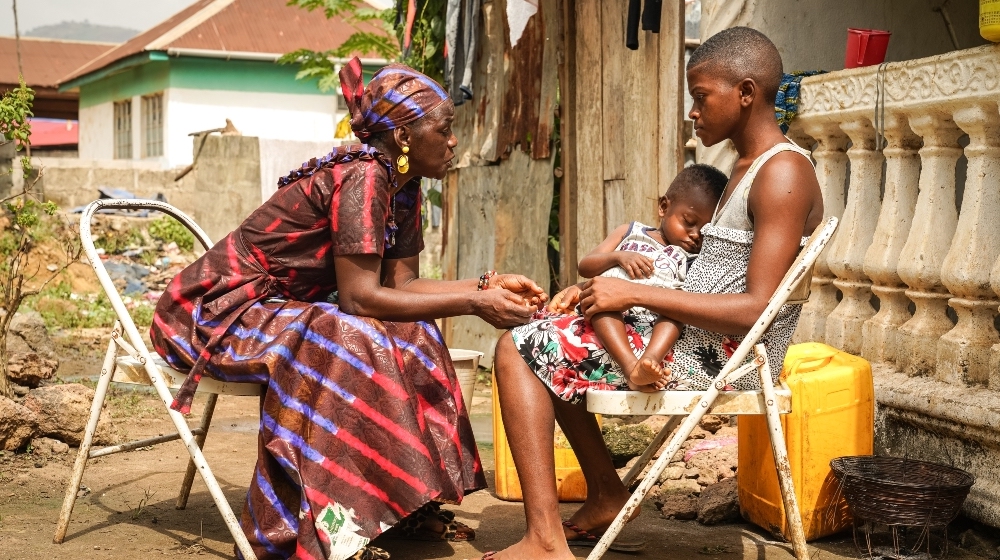
Image Credits: Michael Duff/ UNFPA.
Combat the infodemic in health information and support health policy reporting from the global South. Our growing network of journalists in Africa, Asia, Geneva and New York connect the dots between regional realities and the big global debates, with evidence-based, open access news and analysis. To make a personal or organisational contribution click the donate button below.