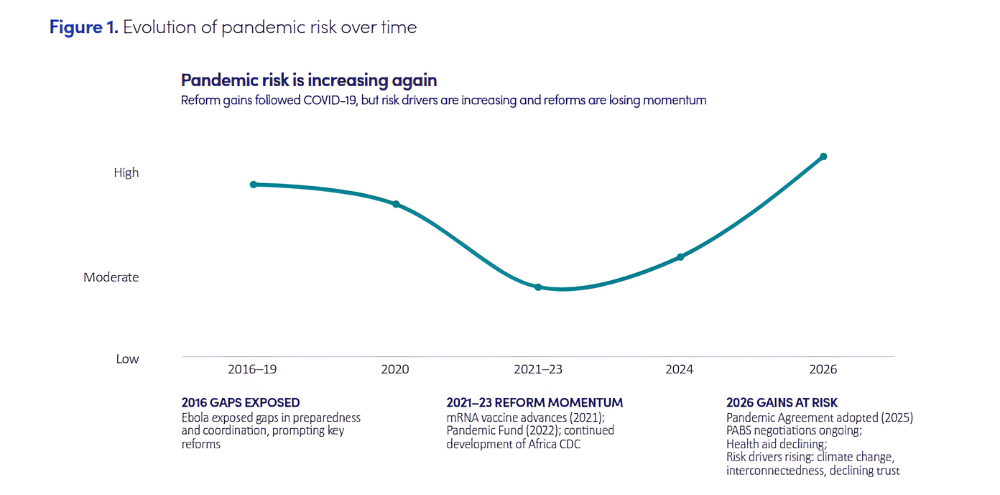
Escalating pandemic risks are outpacing international readiness as the Global Preparedness Monitoring Board (GPMB) completes its eight-year mandate. The board demands an urgent shift from technical fixes to sustained political commitment and independent oversight, laying out a five-pillar blueprint to translate technical evidence into intergovernmental action.
BERLIN – A comprehensive review of global health reforms by the Global Preparedness Monitoring Board (GPMB) presented at the World Health Summit on Monday (12 October) reveals that nearly 70% of recommendations designed to safeguard the world have stalled or progressed too slowly.
The capstone report “Getting ahead of pandemic risk,” finds that out of 32 core recommendations issued by the independent panel since 2018, governments and international institutions have fully achieved only two. While 59 percent of technical implementation measures remain on track, 87% of political commitment initiatives have stalled – with pandemic risks increasing.
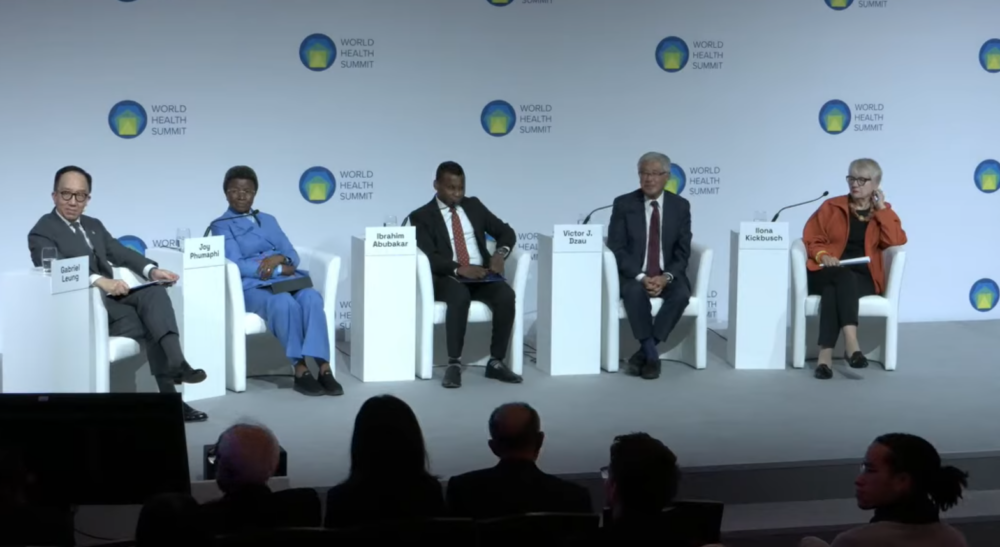
“The GPMB’s monitoring shows that the interconnected drivers of pandemic risk are actually intensifying,” warned Ibrahim Abubakar, professor of infectious disease epidemiology at University College London (UCL) and GPMB board member.
Co-convened by the World Health Organisation (WHO) and the World Bank Group, the independent board is co-chaired by Joy Phumaphi, former Minister of Health of Botswana, and Kolinda Grabar-Kitarović, former President of Croatia.
Key drivers accelerating global vulnerability include climate change, environmental degradation, and growing social mistrust, according to the report. To guide future global surveillance, the board outlined five foundational insights, emphasising political pathways, multisectoral One Health integration, continuous tracking across the risk continuum, artificial intelligence, and independent oversight.
Transitioning oversight to Health Assembly
Crucially, the report demands clear, reliable pathways into political leadership structures to ensure technical evidence translates directly into sustained accountability and decision-making moving forward. Key to this is the proposed global pandemic risk monitoring mechanism that is designed to be formally mandated and established by member states through the World Health Assembly (WHA), securing a direct reporting line to the UN General Assembly (UNGA).
To convert technical evidence into concrete political accountability, its assessments will feed directly into key intergovernmental governance structures, including the States Parties Committee for the Implementation of the International Health Regulations (IHR) and the future Conference of the Parties (COP) under the WHO Pandemic Agreement, the report’s authors note.
The framework will rank the overall severity of pandemic risks, establishing clear triggers where elevated risk levels mandate immediate political review, resource mobilisation, and collective international action. Beyond health governance, the mechanism will align its reporting cycles with broader political and economic bodies – such as the G20, BRICS+, African Union, ASEAN, the World Bank, and the IMF.
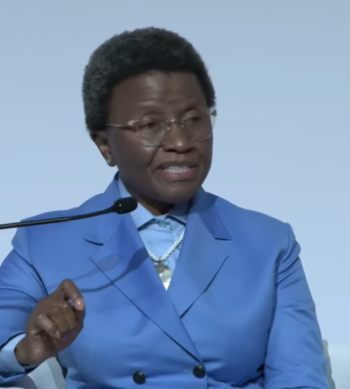
“Evidence alone is not enough,” said Phumaphi at the WHS event. “It must be anchored in the political processes that can generate action.”
Connecting political action to One Health
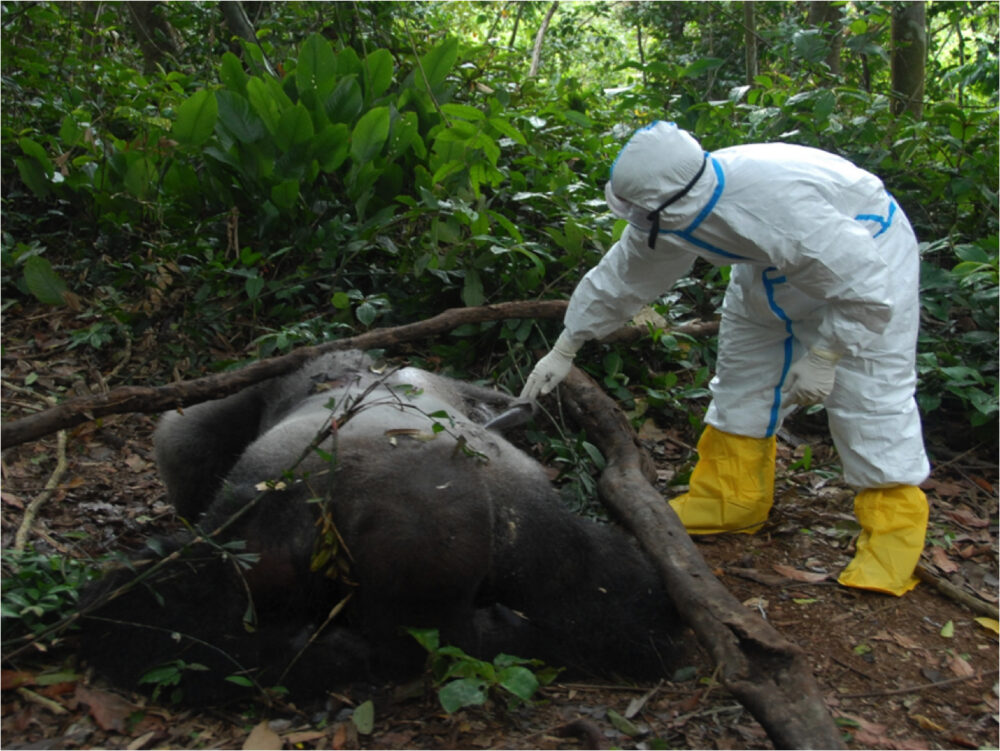
Translating political commitment into effective prevention requires confronting where pandemic threats actually originate – at the interface of human, animal, and environmental systems. Yet, while over 70% of emerging infectious diseases originate in animals, the GPMB’s maturity audit reveals that 75% of its One Health recommendations and 90% of multisectoral engagement initiatives have stalled or progressed too slowly.
To close these governance gaps, the board calls for formally integrating non-health agencies – such as the Food and Agriculture Organization (FAO), the World Organisation for Animal Health (WOAH), and the UN Environment Programme (UNEP) – into global monitoring structures alongside WHO.
However, global institutional reforms must align with frontline realities. For example, studies in Central Africa show top-down environmental restrictions fail because 78% of local forest communities rely directly on surrounding ecosystems for food and livelihoods.
“Mistrust has repeatedly emerged as a source of vulnerability affecting how people interpret information, how institutions work together, and how effectively societies respond during health emergencies,” said Phumaphi.
Public health leaders emphasise that establishing mutual trust between institutions and local communities is essential for long-term stewardship and sustainable spillover prevention. Future One Health monitoring must therefore maintain an independent analytical layer and total transparency to guarantee equitable access to data, tools, and medical countermeasures.
Integrating fragmented data across the risk continuum
To synthesise vast amounts of fragmented global data into actionable intelligence, the report calls for harnessing artificial intelligence and digital technology through a federated model.
Crucially, this digital network must track the complete pathway of risk – from upstream drivers and emerging threats through to political commitments, resources, implementation, and real-world impacts.
Tracking the full spectrum provides decision-makers with a dynamic picture of trajectory rather than static snapshots, revealing precisely where the chain from early warning to political action breaks down.
“This is not about building yet another parallel system in an already fragmented global health architecture,” underscored Professor Ilona Kickbusch, founder of the Geneva Global Health Centre and GPMB board member. “We want a connected system that connects what already exists.”
Overcoming the pandemic financing disconnect
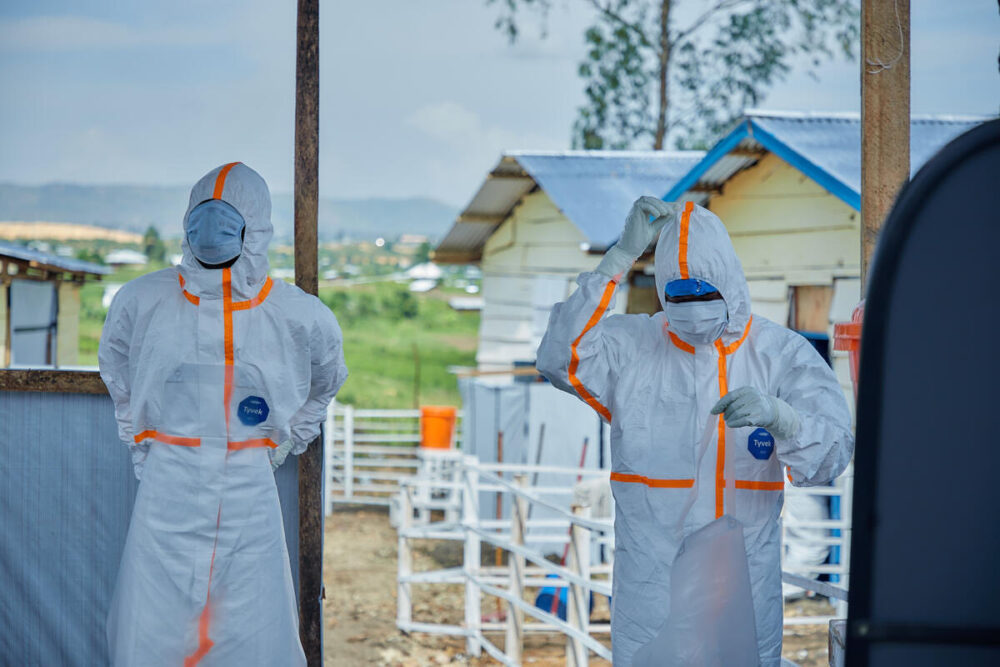
Financing reforms remain among the most severely bottlenecked areas of global preparedness, with the GPMB report revealing that nearly three-quarters of its financial recommendations have stalled or progressed too slowly. The board identifies unpredictable political commitment as the primary barrier preventing high-level pledges from translating into sustained funding architecture.
This funding disconnect creates severe operational impairments on the ground during active crises, such as the Ebola outbreak in the Democratic Republic of Congo (DRC). Highlighting this gap during a WHS panel session on pandemic preparedness financing, Africa CDC Director-General Dr Jean Kaseya noted that while international donors reported disbursing $700 million, local authorities in the DRC were aware of only $160 million reaching the front lines.
To eliminate these blind spots, the GPMB stresses that future monitoring must track financing across the entire risk continuum – following funds from initial donor commitments down to actual resource allocation and frontline impact.
To bridge these gaps and break the historical “cycle of panic and neglect,” multilateral platforms like the World Bank-hosted Pandemic Fund, a core structural reform championed by the GPMB, use grant aid to leverage broader co-financing. Operating across 128 low- and middle-income countries, the fund yields a 1-to-7 catalytic effect, where every $1 in grant aid unlocks $4 from development banks and $3 in domestic co-financing.
While catalytic grants aim to maximise international aid, African nations are increasingly asserting financial ownership, with 28 countries recently mobilising over $130 million in domestic funds for continental outbreak responses.
Global health leaders have echoed the GPMB’s call to treat pandemic preparedness as an essential global public good, pointing to African-led frameworks like the Accra Reset and the Lusaka Agenda as the path to genuine health sovereignty and country-led coordination.
A sense of déjà vu
Despite advancements, experts voiced mixed feelings regarding the panel’s recommendations, warning against repeating familiar cycles of complacency.
Pointing to earlier monitoring efforts, Hajime Inoue, professor at the International University of Health and Welfare in Japan, cautioned that nearly identical warnings followed the H5N1 avian influenza outbreak two decades ago and the West African Ebola crisis 10 years ago.
“Life is 5% planning and 95% implementation,” he said. “We are hearing this recommendation again because we failed to implement the recommendations that we heard before.”
Major political hurdles remain
Beyond implementation fatigue, political hurdles remain in intergovernmental negotiations, where member states must conclude the Pathogen Access and Benefit-Sharing (PABS) system before ratifying the broader WHO Pandemic Agreement, with the UN Political Declaration on Pandemic Prevention, Preparedness and Response providing crucial momentum to this process.
Taking the stage, WHO Director-General Dr Tedros Adhanom Ghebreyesus urged member states to convert high-level political momentum into legally binding commitments by swiftly concluding the pathogen access and benefit-sharing (PABS) annex.
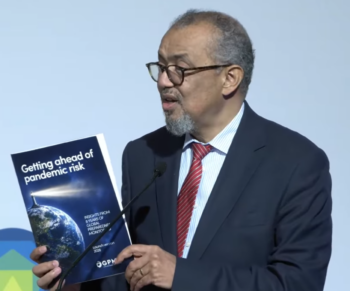
“The world can only be better prepared when we implement all the initiatives,” said Tedros, thanking the board. “It should be everybody’s business to conclude this agreement, so the world is better prepared before the next pandemic.”
Establishing reliable pathways into political decision-making remains the critical test to ensure future warnings trigger immediate global action. As the GPMB’s original mandate concludes in December 2026, Tedros asked board members to extend their service voluntarily to guarantee a smooth transition while member states translate the panel’s blueprint into a permanent oversight structure.
See related story:
With Only Three ‘No’ Votes, UN Adopts Political Declaration on Pandemic Preparedness
Image Credits: Felix Sassmannshausen/WHS, GPMB Report, Felix Sassmannshausen, Wildlife Conservation Society Congo, X/Tedros Adhanom Ghebreyesus.
Combat the infodemic in health information and support health policy reporting from the global South. Our growing network of journalists in Africa, Asia, Geneva and New York connect the dots between regional realities and the big global debates, with evidence-based, open access news and analysis. To make a personal or organisational contribution click the donate button below.