Historic declines in Official Development Assistance (ODA) have set international aid back a decade, prompting civil society warnings that the ODA cuts will further devastate funding for global health, education and social protection.
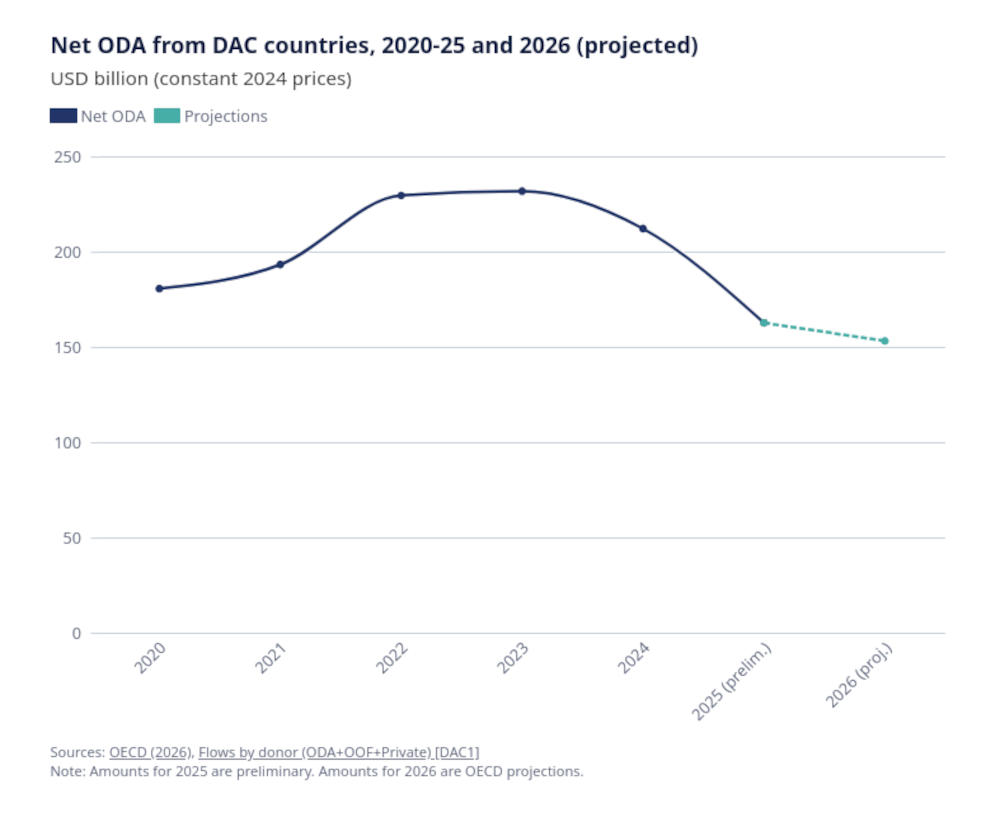
The Organisation for Economic Co-operation and Development (OECD) released preliminary data showing total global aid fell by 23.1% in real terms during 2025, marking the most severe single-year contraction ever recorded.
“It’s deeply concerning to see this huge drop in ODA in 2025, due to dramatic cuts among the very top donors,” Carsten Staur, chair of the OECD Development Assistance Committee (DAC), said in a press statement.
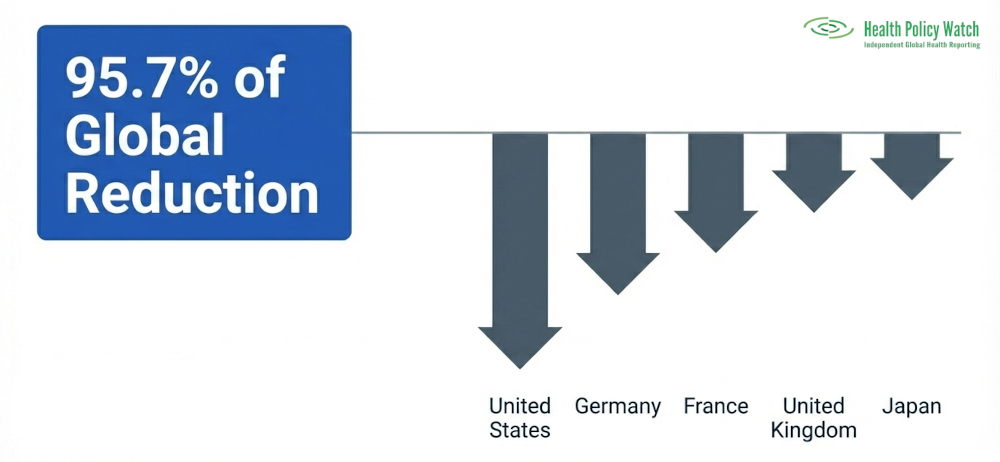
While a few countries exceed the United Nations target of allocating 0.7% of their gross national income to foreign aid, the world’s major economic powers have abruptly withdrawn their support. This collective retreat was highly concentrated, with five top nations driving 95.7% of the total global reduction.

The United States alone accounted for three-quarters of the overall drop after slashing its budget by nearly 57%. Germany, France, the United Kingdom and Japan all reported significant decreases alongside the US, marking the first time these top providers simultaneously shrank their budgets.
This collective retreat resulted in Germany becoming the single largest global provider for the very first time, despite reducing its own overall aid by over 17%.
“Despite painful cuts, we stand by our international responsibility,” Reem Alabali Radovan, Germany’s development minister, said. “This is existential for millions of people in light of extreme global challenges, crises and wars.”
Core development and humanitarian aid slashed
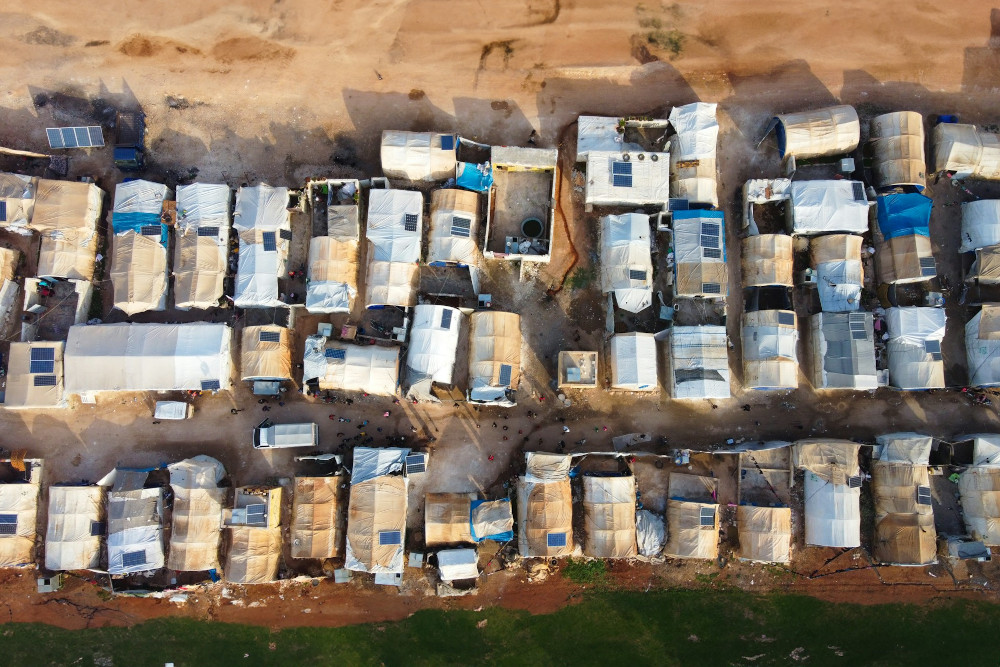
Beneath the headline figures, the OECD data highlights severe structural shifts that are draining funds from vulnerable countries precisely when their economic burdens are mounting.
“Fiscal pressures on developing countries are growing, and the ongoing conflict in the Middle East represents a significant risk for global growth and food security,” OECD Secretary-General Mathias Cormann said during the data launch.
According to the OECD data, vital humanitarian aid plunged by almost 36%, accelerating the reversal of a five-year growth trend, while bilateral assistance to sub-Saharan Africa fell by 26.3%. Core development programming also suffered its largest historical contraction, dropping by over 26%.
Multilateral contributions similarly faced severe constraints, declining by 12.7% overall across the international landscape. Core funding to the United Nations (UN) system experienced a 27% decline, marking the largest annual drop on record for the global body.
Global health advocates warn these broader funding contractions arrive just as major initiatives, including the Global Fund to Fight AIDS, Tuberculosis and Malaria and Gavi, the Vaccine Alliance, face critical cuts.
Geostrategic and economic pivot reshapes aid
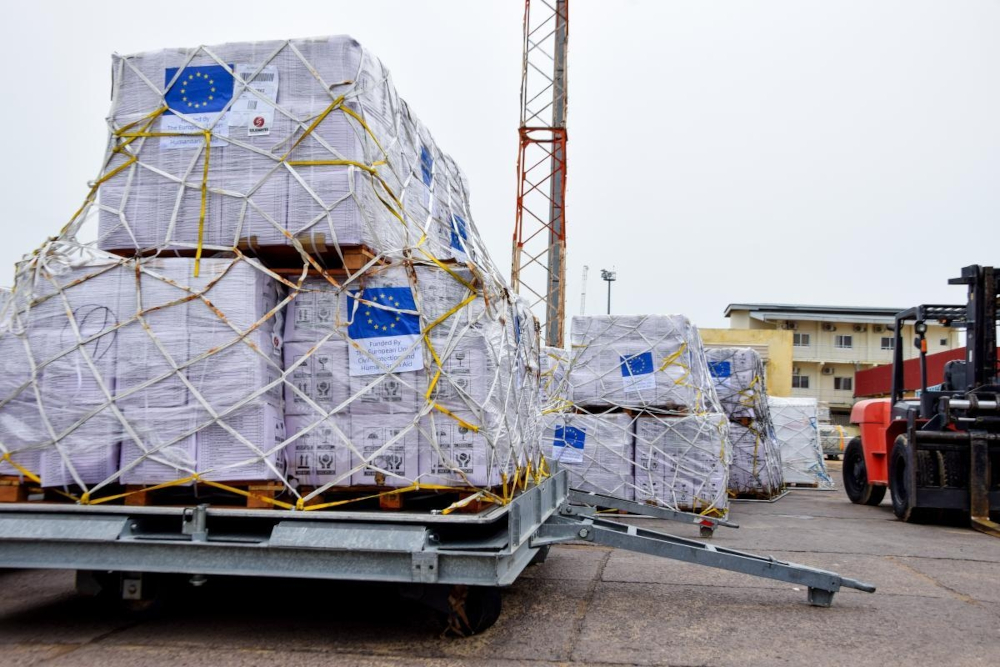
The recent ODA cuts expose a stark geostrategic pivot, as major donors increasingly prioritise immediate regional security and domestic economic interests over broad human development. Beyond the massive volume drops from individual nations, European Union (EU) institutions accelerated this downward trajectory by reducing their overall assistance by 13.8%.
Adding to the shifting landscape, bilateral funding to Ukraine fell by 38.2%, yet when including EU institutional funds, total assistance to the nation still exceeded the combined aid given to all Least Developed Countries.
Civil society organisations warn that these institutional funding choices will inflict direct damage on fragile communities and dilute the core purpose of international cooperation.
“Though framed as part of the ‘paradigm shift’, EU Institutions and EU Member States have already been cutting grants to those who need them the most,” Mafalda Infante from Plataforma Portuguesa das ONGD said in a joint press release by Concord, a European confederation of development NGOs.
Critics argue this controversial policy shift toward mutual interests heavily disadvantages vulnerable states by increasingly designing cooperation to benefit European companies.
“In order to support the reduction of poverty and inequalities the EU should dedicate more ODA to sectors like health, education and social protection, but today’s figures show another path being taken,” the NGOs stated.
Projections remain grim
Despite the gloomy overarching narrative, several nations have demonstrated a steadfast commitment to sustaining international development. Eight member countries actually increased their assistance in 2025, resisting the broader fiscal pressures that drove the global reductions.
Notably, Denmark, Luxembourg, Norway and Sweden continued to exceed the UN target of allocating 0.7% of their gross national income to foreign aid. Additionally, 12 non-DAC countries increased their collective development finance by 4.5% to reach $13.3 billion.
However, these non-DAC providers shifted their direct funding from multilateral contributions to country-to-country assistance. Nations like Qatar and the United Arab Emirates drove this growth, with the UAE specifically directing its bilateral funds to immediate regional development and humanitarian crises in the West Bank and Gaza Strip.
Looking ahead, the OECD projects an additional 5.8% decline in global aid for 2026, raising alarms over the international community’s ability to respond to future shocks.
“I can only plead that DAC donors reverse this negative trend and start again to increase their ODA,” DAC Chair Staur said.
Image Credits: Salah Darwish via Unsplash, Felix Sassmannshausen/HPW, Bundesregierung/Steffen Kugler, European Union, OECD.
Combat the infodemic in health information and support health policy reporting from the global South. Our growing network of journalists in Africa, Asia, Geneva and New York connect the dots between regional realities and the big global debates, with evidence-based, open access news and analysis. To make a personal or organisational contribution click the donate button below.