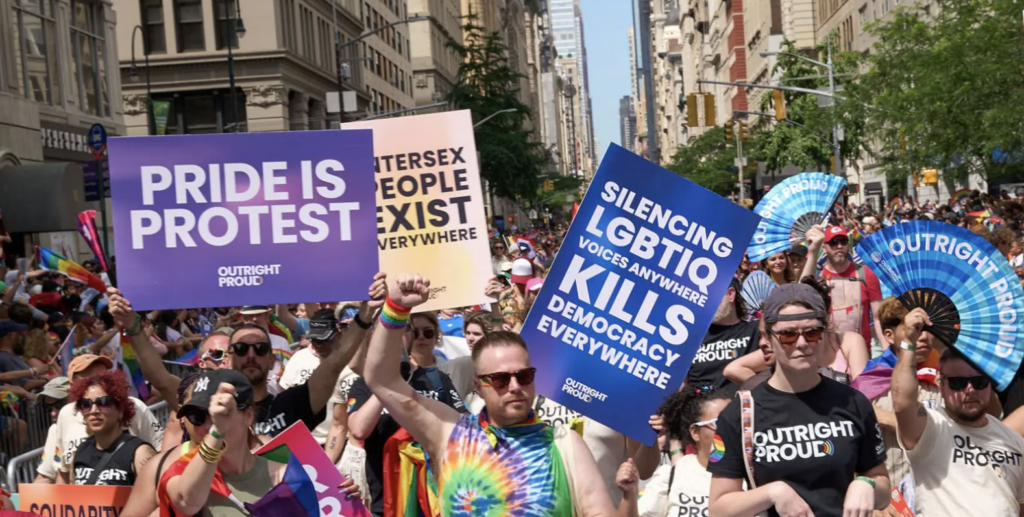
HIV services, mental health and harm reduction programmes have been severely affected by the huge funding cuts to organisations providing services for lesbian, gay, bisexual, transgender, intersex and queer (LGBTIQ) people over the past 18 months.
Perversely, organisations in countries with the most repressive conditions for LGBTIQ people have been worst affected by cuts, according to a report released on Thursday by Outright, the international LGBTIQ human rights group.
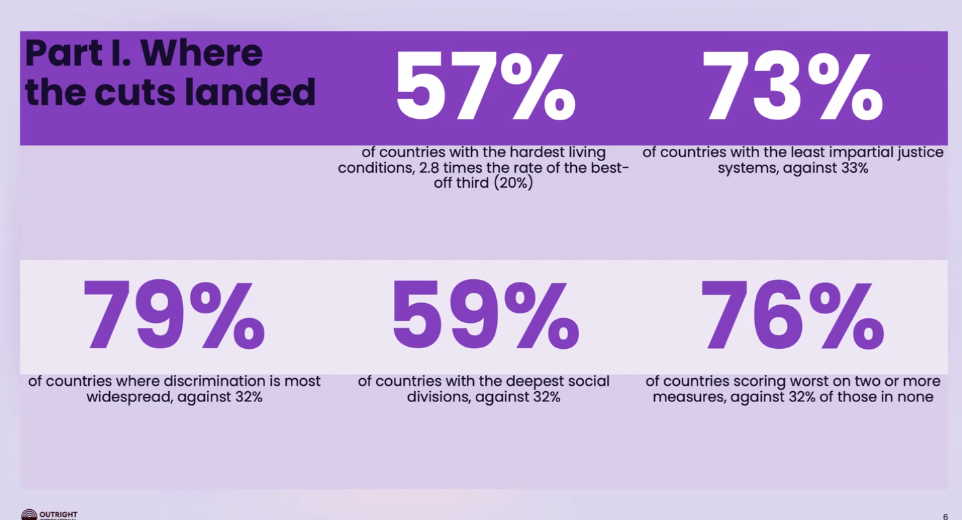
“Organisations in countries with the harshest living conditions, the least impartial justice systems, the most widespread discrimination, and the deepest divisions between social groups were roughly two to three times more likely to have been affected by the cuts than those in countries at the other end of each measure,” according to the report.
In Ghana and Uganda, the cuts have coincided with draconian laws increasing punishment for same-sex activity – resulting in a spike in attacks on LGBTIQ people and a greater need for support services.
Budgets cut by 50-75%
Of the 229 LGBTIQ organisations from 94 countries that responded to Outright, 203 lost funding after Donald Trump became president of the United States in January 2025.
The funding cuts have been fast and dramatic, with almost half of the affected organisations losing 50% of their budget, and three-quarters losing at least a quarter.
“The losses concentrate among small, community-rooted groups: 73% operate on annual budgets under $250,000, leaving no reserves to absorb a shortfall of this size.”
After Trump assumed power, the US cut funds for HIV programmes aimed at “key populations” most at risk of infection, including men who have sex with men (MSM) and trans women.
The US State Department also terminated the Global Equality Fund, the public-private partnership launched in 2011 that has distributed over $100 million to LGBTIQ organisations.
Life-saving services stopped
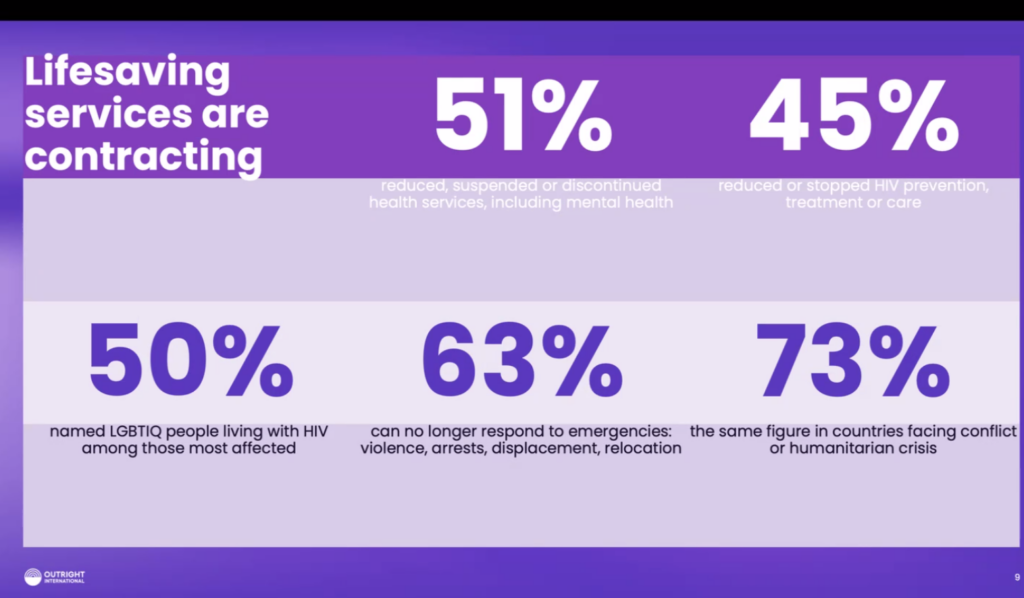
“Half of the affected organisations have cut health services, including mental healthcare. On HIV specifically, 45% have reduced or discontinued prevention, treatment, or care, and 50% named LGBTIQ people living with HIV among the constituencies most affected by the reductions they made,” according to the report.
“The cuts strike directly into lifesaving and dignity-affirming services: HIV testing, treatment adherence support, PrEP information, STI [sexually transmitted infection] prevention, mental health counselling, psychosocial support, harm reduction tools, reproductive health services, health referrals, and safe community-based care.”
The Global Black Gay Men Connect network has also documented significant disruptions to HIV services for key populations, with 77% of the key population organisations it surveyed reported interruptions to the supply of antiretrovirals, pre-exposure prophylaxis (PrEP) and condoms.
In many places, the health services were effective because they were “delivered by trusted organisations that understand the specific risks faced by LGBTIQ people and can help them navigate stigma, discrimination, criminalisation, and fear of exposure”, the report notes.
“The money was pulled out of the places where queer organisations were doing the work that no one else is doing,” Outright’s Alberto de Belaunde told a webinar to launch the report on Thursday.
“The places with the least capacity to absorb the loss are exactly where it is highest.”
Deaths, retrenchments
For security reasons, several organisations cited in the report aren’t named, while the countries of a few are withheld. However, the report documents tragic stories from countries as far apart as Nepal and Zimbabwe.
“We are unable to refill medication for our constituents, which has led to defaulting and the death of two of the people who defaulted,” reported a Zimbabwean organisation that provided HIV services for MSM and trans women.
“Funding cuts hit us hard at the community level,” said Kenya’s Mamboleo Peer Empowerment Group. “We had to let go of 100 peer educators, caregivers, outreach workers, and paralegals, the people who were not just staff but trusted faces within the LGBTQ community.
“These were the individuals who checked in on clients, supported them to stay on HIV treatment, responded to GBV [gender-based violence] cases, and ensured no one felt alone. With their absence, outreach activities stopped almost overnight. Safe spaces went quiet, food support was disrupted, and emergency shelter and evacuation assistance became difficult to sustain.”
Aid workers turn to sex work
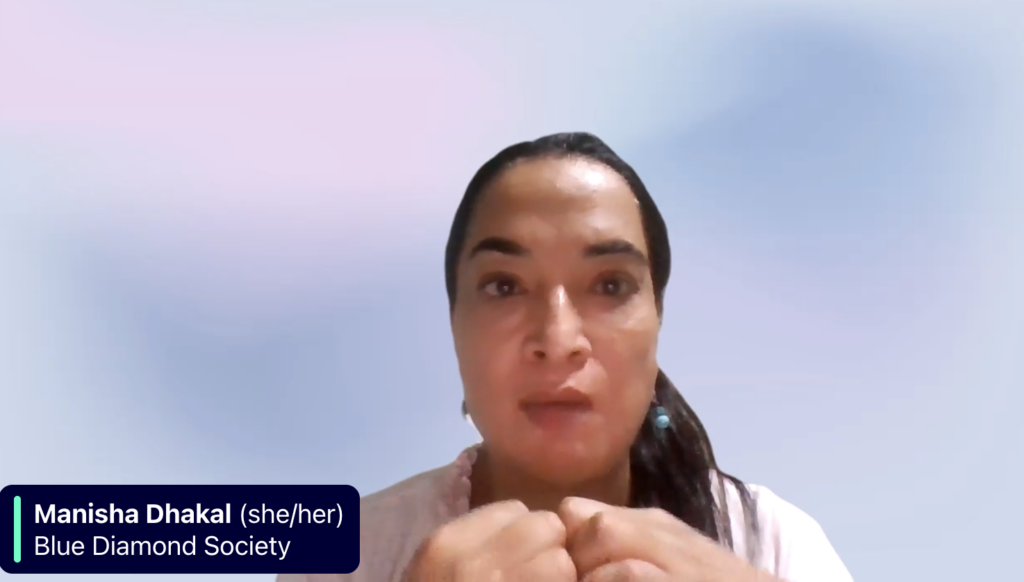
Manisha Dhakal, a trans activist from the Blue Diamond Society in Nepal, told the launch that her organisation lost 85% of its funding for an HIV service delivery programme that provided services in 21 districts at 24 service sites.
Nepal’s HIV epidemic is concentrated in key populations, and the clinics were important to reach these groups. But Blue Diamond has been forced to close clinics and retrench staff.
“Some [Blue Diamond employees] have even been pushed towards the sex work profession because we don’t have a stable income,” said Dhakal.
An estimated 35,000 aid workers lost their jobs in Nepal after the US aid cuts, and for trans people there are few job opportunities other than sex work, according to AP.
Spike in distress calls
“Community need for emergency shelter and protection exploded in the wake of the Anti-Homosexuality Act and state-driven hostilities surrounding our general elections,” said John Grace, the coordinator of the Uganda Minority Shelters Consortium (UMSC).
“UMSC logged a 283% spike in distress calls to our national crisis hotlines. But over 60 to 70% of the financial support sustaining our protection network vanished overnight,” said Grace.
The impact on UMSC’s work has been significant: “For every 10 emergency relocation and protection requests that we receive weekly from youth that are escaping mob violence or police raids or family rejection, we possess the resources to feed, to house, and protect only about three.”
A significant proportion of the young people UMSC helps are living with HIV, said Grace.
“The desperation is so severe that we have even documented some of the youth trading portions of their life-saving HIV medication on the informal market just for a single meal.”
An organisation in Malawi has closed its mobile clinics that offered HIV testing and referrals that were “critical in reaching MSM and transgender individuals who face stigma in public health facilities”.
Türkiye’s Kaos GL reported that the UN Refugee Agency (UNHCR) had withdrawn from a “collaborative project for LGBTI+ refugees in 2025, causing the organisation to “shut down the refugee rights program office, lay off staff members and reduce the program activities by 85%.”
A queer-led organisation in Jordan reported that it has a limited stock of harm reduction tools and kits to minimise the negative health effects of drug use, “which increases the risk of contracting HIV and other STIs”.
No protection for intersex babies
There has always been virtually no funding for intersex people, who are born with reproductive or sexual anatomy, chromosomes, or hormones that do not fit the typical definitions of female or male.
“In many countries, intersex infants and children are subjected to medically unnecessary surgeries and other interventions on their sex characteristics, without their consent,” the report notes.
“The organisations working to end these practices are among the most under-resourced in the global LGBTIQ movement, and several report that funding cuts have forced them to suspend their work documenting cases of medical violence, educating health providers, and supporting intersex children’s families as they navigate medical bureaucracies.”
This means that there is no one “standing between a child and an unwanted, harmful surgery”, the report notes.
Minuscule funding
Donor government funding for LGBTI communities has always been “minuscule”, amounting to four cents of every $100 in official development assistance in 2023–2024, according to De Belaunde.
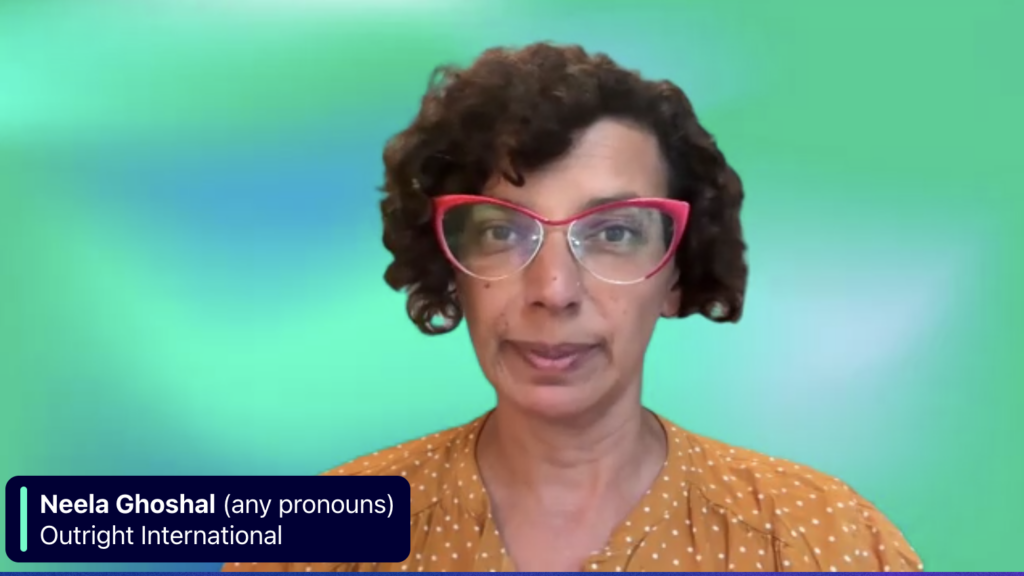
“The US has not been the only funder to walk away from or reduce its support for LGBTIQ movements during this period,” said Neela Ghoshal, Outright’s director of law, policy, and research.
“Some other governments, corporations, and foundations have also pulled back. At the same time, organisations are working in a context of growing anti-gender organising, where the gains that we’ve achieved over the last several decades, which were already fragile, are increasingly at risk.”
To address the crisis, the Outright report appeals to potential donors to act immediately, outside standard grant cycles; provide multi-year, flexible funding; restore community-led health services; fund protection for LGBTIQ people, and “direct resources to those bearing the heaviest impacts”.
Image Credits: Outright International.
Combat the infodemic in health information and support health policy reporting from the global South. Our growing network of journalists in Africa, Asia, Geneva and New York connect the dots between regional realities and the big global debates, with evidence-based, open access news and analysis. To make a personal or organisational contribution click the donate button below.