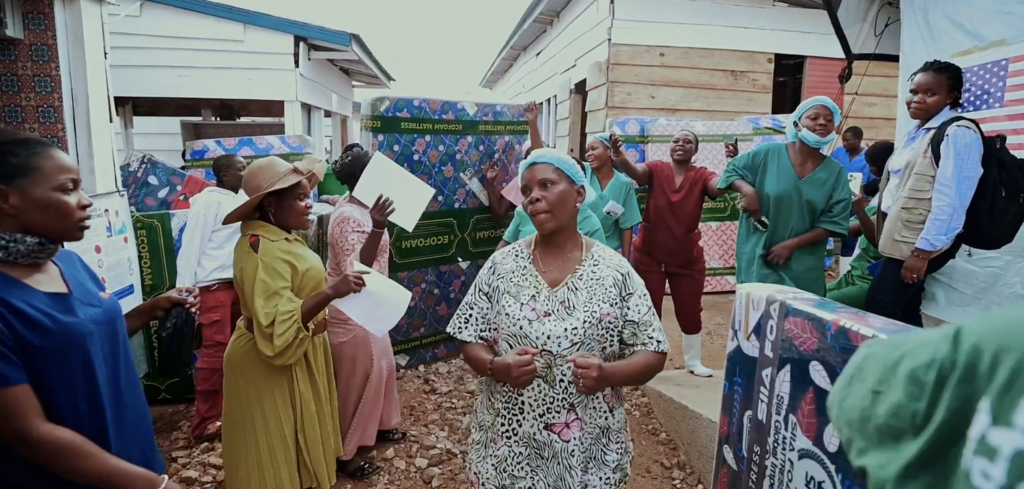
The Democratic Republic of Congo (DRC)’s Ebola outbreak passed the 100-day mark on Monday with over 5,515 confirmed cases and 2,642 deaths – and health experts warn that the response needs to be accelerated to bring the world’s fastest Ebola outbreak under control.
While the case fatality rate is almost 48%, the DRC’s Ministry of Health reported that 1,200 people have been cured and that hospital stays are now between five and 10 days compared with the 18 to 21 days earlier in the outbreak, thanks to “improvements in technical equipment and diagnostics”.
“Laboratory capacity has expanded from one testing site to 19 laboratories capable of processing more than 3,000 samples a day,” according to the World Health Organization (WHO) Africa region.
Meanwhile, over 1,300 beds are available and over 900 health facilities have received infection prevention and control support.
New recommendations
The WHO issued a raft of new and modified recommendations on Monday to address the outbreak, following last week’s meeting of the Emergency Committee on the International Health Regulations (IHR).
The IHR are the global rules that kick in during notifiable disease outbreaks to protect all people from the international spread of disease.
Recommendations include security corridors to allow responders to reach affected communities in conflict areas; expedited customs clearance for goods needed to address the outbreak; and preventing bodies of those suspected of dying from Ebola from crossing international borders.
Dr Tedros Adhanom Ghebreyesus, WHO Director-General, called for “scaled-up action in affected communities that is led by national, provincial and local leaders and the affected communities, sustained by needed resources and backed by committed collaboration by all partners in DRC and beyond.”
WHO Africa regional director Dr Mohamed Janabi noted that “incremental gains will not be enough. We now need to significantly step up the response: moving faster to detect cases, reaching communities sooner and strengthening operations where they are needed most”.
In the past six weeks, 60% of deaths have taken place outside Ebola treatment centres, highlighting “the persistent challenges in early detection, referral and access to treatment, while mortality among patients reaching treatment facilities may reflect late admission and severe stage of the disease”, according to a statement from WHO Africa.
Trust continues to be a barrier, with several attacks on Ebola treatment centres and health workers. The International Red Cross and Red Crescent Movement said on Monday that 12 volunteers have been injured and an ambulance set on fire in 11 violent incidents during the past 100 days.
The WHO called for the response to be “rapidly ramped up and adapted to local transmission patterns and operational gaps”, while the Africa Centres for Disease Control and Prevention has stressed a village-based approach to the outbreak to build local trust and address misinformation.
Dramatic scale-up needed
“One hundred days ago the world was warned of the Ebola Bundibugyo emergency. One hundred days later it is the fastest-growing Ebola outbreak ever recorded. Ending this emergency requires a dramatic increase in the scale and speed of the response and follow-through to put the necessary resources and tools in the hands of those on the front lines,” said Helen Clark, Co-Chair of The Independent Panel for Pandemic Preparedness and Response.
The Independent Panel noted that response efforts are being challenged by “insecurity, significant unmet humanitarian needs, the absence of basic health services, nonpayment of health workers, and low community trust”.
“We must urgently secure enough testing, build enough treatment centres to save as many people as possible, and ensure safe and dignified burials for every person who has died,” said Dr Joanne Liu, a member of The Independent Panel and former head of Médecins Sans Frontières (MSF).
“We need enough trained people to help engage with every community at risk and continued essential health services for all. If we don’t achieve this, this crisis will continue to expand,” she added.
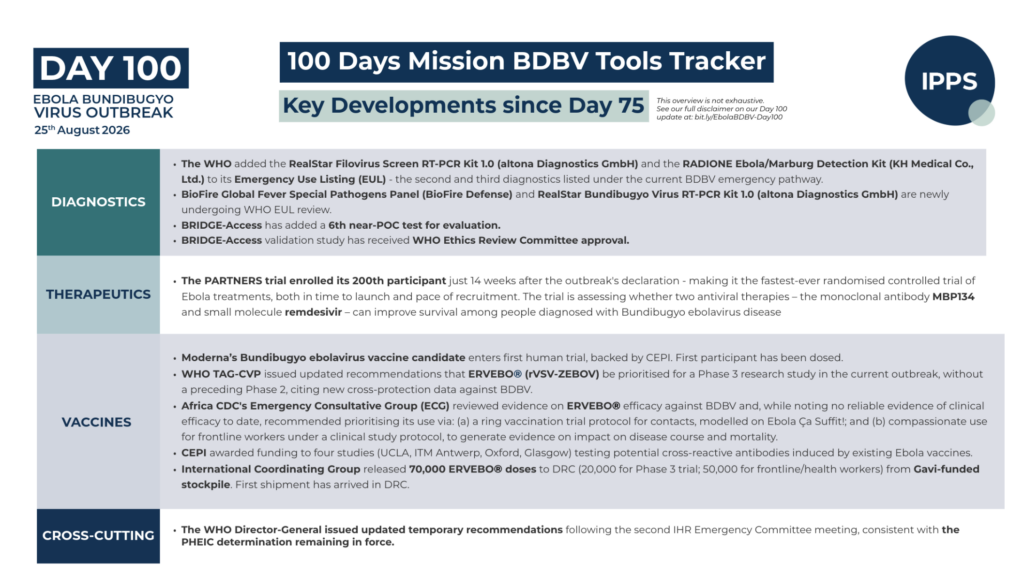
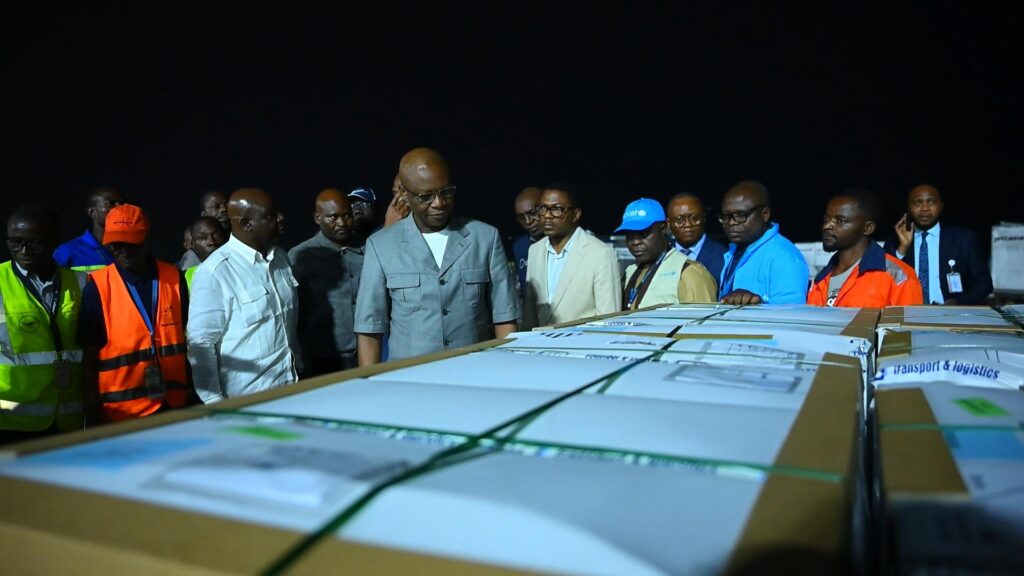
Since the outbreak was reported, three vaccine trials for the Bundibugyo strain have started. Over the weekend, Ervebo vaccine doses arrived – both for a phase 3 trial and for emergency use for DRC health workers.
The vaccine works against Ebola Zaire, but its effect against Bundibugyo is unknown. However, as 160 healthcare workers have been infected with Ebola and 43 have died, the DRC has been given the go-ahead to vaccinate its healthworkers with Ervebo.
Two Bundibugyo-specific tests have been given emergency use listing, and several others are undergoing trials, according to the Independent Pandemic Preparedness Secretariat (IPPS) tracker.
The PARTNERS trial is testing the efficacy of two therapeutics for Ebola Bundibugyo –MBP134 and remdesivir – and enrolled 200 participants over 14 weeks.
Medical innovation
David Reddy, Director General of the International Federation of Pharmaceutical Producers and Manufacturers and Associations (IFPMA) said that “it is clearer than ever that pandemic preparedness depends on sustained medical innovation.
“This relies on strong partnerships, rapid access to pathogens and data, and practical solutions to the real barriers that slow outbreak response – from regulatory readiness and clinical trial capacity to financing, procurement, manufacturing, and delivery. These principles should remain at the centre of the ongoing [pathogen access and benefit-sharing] negotiations, which form a central part of the WHO Pandemic Agreement.”
Phyllis Arthur, chief of global health at the Biotechnology Innovation Organization (BIO), said that “the first 100 days of this outbreak have shown what can be possible when biotech innovators have the tools and certainty they need.”
Arthur added that “It also serves as a warning not to squander the gains made through the investment, innovation, and public-private collaboration that keep us prepared to respond to the next public health emergency.
“Leaders negotiating the PABS system must build on this progress by establishing conditions that encourage more companies to invest in pandemic preparedness, innovation, and collaboration.”
However, the Independent Panel said that those producing medical countermeasures need to guarantee that, should the trials prove successful, these products are “widely available to those who need them in this outbreak and in future”.
“We have learned to develop vaccines and treatments at extraordinary speed. We have not learned to guarantee they reach the people who need them. A roadmap will tell us how to make the link between a product that exists and a product that arrives,” said The Independent Panel’s Professor Michel Kazatchkine.
Image Credits: DRC Health Ministry, DRC Health Ministry, International Pandemic Preparedness Secretariat.
Combat the infodemic in health information and support health policy reporting from the global South. Our growing network of journalists in Africa, Asia, Geneva and New York connect the dots between regional realities and the big global debates, with evidence-based, open access news and analysis. To make a personal or organisational contribution click the donate button below.