The World Health Organization (WHO) declared mpox a public health emergency of international concern (PHEIC), its highest alarm level, twice within two years, in 2022 and 2024.
But “preventable health emergencies are a sign of failure”, said Helen Clark, co-chair of the Independent Panel for Pandemic Preparedness and Response. “They happen when community health care is neglected, signals are missed, and pathogens are allowed to spread beyond their original habitats.
The mpox virus had been circulating for over 50 years, causing sporadic outbreaks in poor West African communities – but neglect enabled it to evolve into a global public health risk affecting 82 countries, according to a new report by the Independent Panel published on Friday.
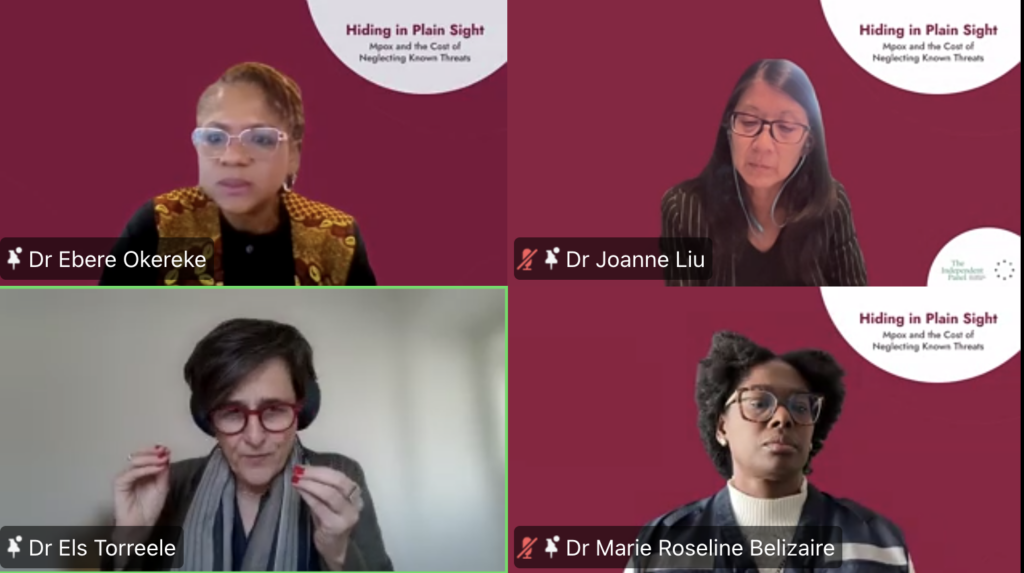
“Mpox was not new at all. It was actually known for decades, yet had received little attention because it was affecting neglected communities in faraway regions in Central and West Africa,” report author Dr Els Torreele told a media briefing on Friday.
“Decades of neglect allowed the virus to mutate into more easily transmissible variants, in particular, transmissible among humans through sexual contact, and spread outside of the original habitat, leading to this first [WHO] public health emergency declaration.”
Yet even after the 2022 PHEI declaration, neglect continued in places where it was first endemic. Vaccines were rolled out in wealthy affected countries, yet they were not available in the Democratic Republic of Congo (DRC), the epicentre.
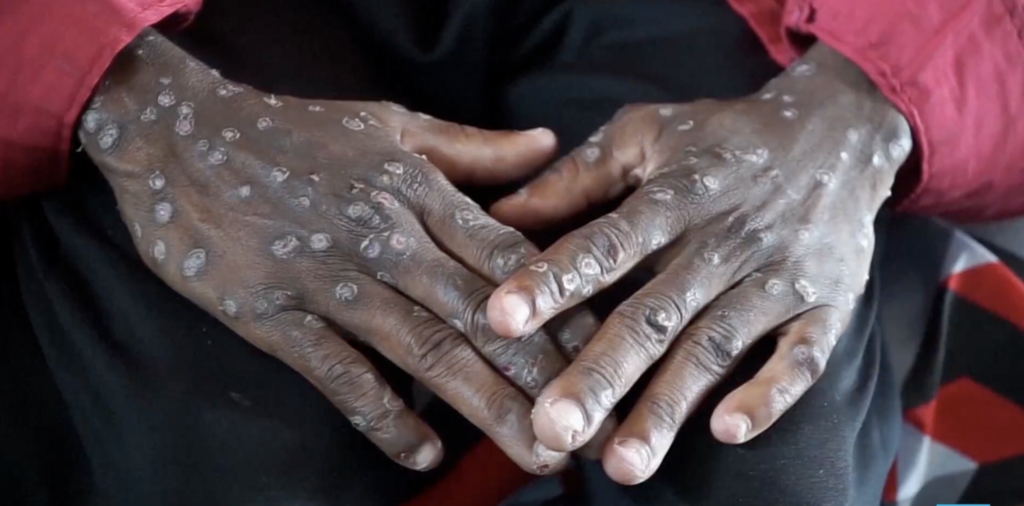
By 2023, “there were signals that the numbers of cases were increasing, that the patterns of transmission were changing, that actually a new variant had arisen that also was transmittable through sexual contacts,” Torreele said. “A lot of alarm bells were ringing, but nobody was really listening until August 2024.”
That was when the WHO and Africa CDC declared mpox a public health emergency for the second time, mobilising resources to address it.
The recent media hype about one potential case of plague in Russia ignored the fact that the plague virus “is circulating in animal reservoirs in many different countries with sporadic spillovers and infection of humans, including in countries of known fragility”, said Torreele.
“We need to shift from repeatedly responding to crises to sustained investment in preparedness before they occur,” Clark told the briefing.
“Instead of scrambling to respond, how could we stop outbreaks where and when they occur? How could we prevent them?” she asked. “Once a public health emergency is declared, it means we’re already acting too late for so many people.”
Community readiness

Clark and Torreele argue that investment in communities and primary healthcare are the best ways to prevent outbreaks from becoming public health emergencies.
“One answer is to stop treating communities as beneficiaries in a crisis, and instead invest in them as ongoing partners who can help detect and report risks to their communities,” urged Clark.
“It’s often said that outbreaks begin and end in communities, yet so rarely have we invested as though we believe that, and we must ask: What other diseases are we neglecting in plain sight?”
Torreele called for immediate investment in country-led research into neglected diseases, “looking at the pathogens that cause them, and their habitats, and design context-relevant control measures, including those that can really be adopted at community level, that actually can help us avoid further outbreaks becoming epidemics”.
She described the declaration of a health emergency as “a failure” to stop an outbreak when and where it occurs.
“Of course, it remains important to call out when an outbreak is out of control. But it is wasteful and expensive to do it so late.”
“We have to learn the lesson that we should not treat communities as just consumers of outcomes of our health interventions, but people who can really help us produce better outcomes and support health intelligence that can help us manage these disease outbreaks,” said Aggrey Aluso, executive director of Resilience Action Network Africa (RANA).
Ebola Bundibugyo outbreak
Aluso said that, like mpox, detection of the Ebola Bundibugyo outbreak in the DRC had taken too long, and “we are paying the price for that”.
Dr Marie Roseline Belizaire, WHO Africa regional director of emergency preparedness and response, outlined some of the hurdles hampering the Bundibugyo response, including diagnostic delays as samples had to be transported to labs hundreds of kilometres, gaps in staff training, fuel shortages, the lack of isolation facilities and local funding.
Referring to “invisible transmission”, Belizaire said cases needed to be detected earlier, and patients needed to be treated earlier.
“That means we need to strengthen surveillance and contact tracing.”
Independent Panel member Dr Joanne Liu noted that the cost of effective annual pandemic preparedness and response is $15 billion, but only about $2 billion had been raised annually.
She also called for fund recipients to have stronger accountability: ‘We need to up our game on this accountability. It’s not enough to have a tracking tool. We need to have real accountability processes and mechanisms, and then we need to make sure that it gets dispersed to the frontline health workers.”
What is success?
“True mpox readiness in areas of fragility would require significantly cheaper, unregistered vaccines available in regional or national stockpiles, hand in hand with easy-to-use diagnostics that can differentiate it from chickenpox and measles,” said Torreele.
“Emergency response success should not just be measured by a decrease in the numbers of cases and countries affected, but the number of medical countermeasures rolled out,” she added.
“[We] should also measure success by the capacity to leave behind communities and health systems, especially in fragile areas, that are more able, more resilient, more able to monitor and respond to future outbreaks, including by having the needed diagnostic capacity and potential regional stockpiles of countermeasures close to where outbreaks might occur.”
Image Credits: WHO, Katson Maliro/ WHO.
Combat the infodemic in health information and support health policy reporting from the global South. Our growing network of journalists in Africa, Asia, Geneva and New York connect the dots between regional realities and the big global debates, with evidence-based, open access news and analysis. To make a personal or organisational contribution click the donate button below.