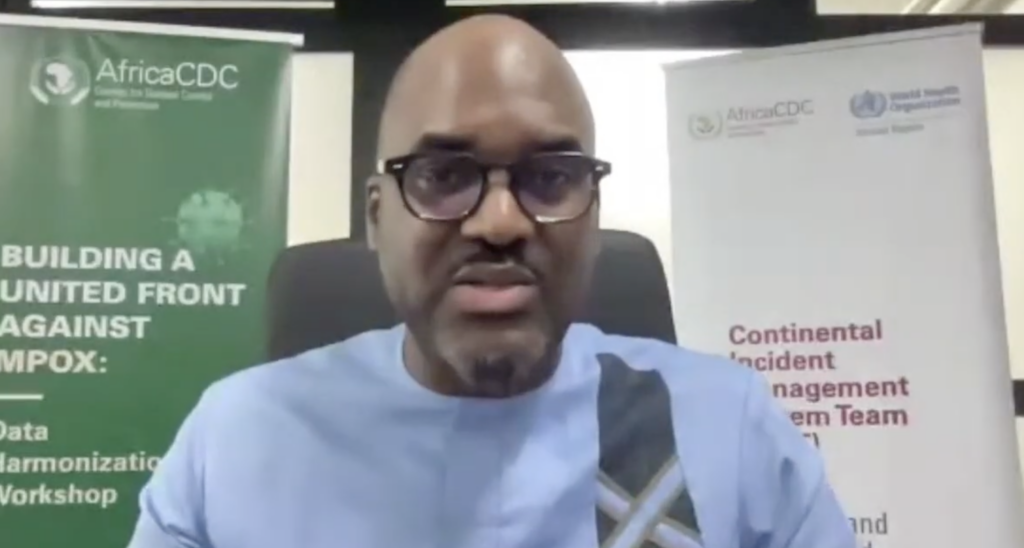
A controversial clinical trial on the effects of the hepatitis B vaccine on babies in Guinea-Bissau has been “cancelled”, according to Dr Yap Boum of Africa Centres for Disease Control and Prevention (CDC).
However, this has been contested by the US Department of Health and Human Services (HHS), which is funding a Danish group to conduct the study, according to CIDRAP.
An HHS official told CIDRAP that researchers are still working on the study protocol, the official said, adding, “we are proceeding as planned.”
But Boum told a media briefing on Thursday that there were “ethical challenges” with the trial design, and Africa CDC had engaged with the health ministry of Guinea-Bissau about it.
“Our information is that the study has been cancelled,” said Boum, who added that while the continent needs research about vaccines, including hepatitis B, “this has to be done within the norms, so we are glad that at this point, the study has been cancelled”.
Boum, Africa CDC’s deputy incident manager for mpox who often stands in for the Africa CDC Director-General at media briefings, added that there would be “more engagement” with Guinea-Bissau.
The US Centers for Disease Control and Prevention (CDC) awarded Bandim Health Project at the University of Southern Denmark a $1,6 million five-year grant to study the “optimal timing and delivery of monovalent hepatitis B vaccinations on newborns in Guinea-Bissau”, according to the US HHS federal register.
The trial aimed to enrol 14,000 newborns in a “randomized controlled trial to assess the effects of neonatal Hepatitis B vaccination on early-life mortality, morbidity, and long-term developmental outcomes”, according to HHS register.
Half the babies would be vaccinated at birth, while the other half would get vaccinated six weeks later – which has raised ethical questions from researchers across the globe.
However, the World Health Organisation (WHO) has recommended universal birth hepatitis B vaccinations since 2009. Hepatitis B vaccination usually involves a series of three or four injections, and clinical trials have already established the best intervals for the vaccinations.
‘Non-specific effects’ of vaccines
One of the leaders of the Bandim Health Project at the University of Southern Denmark, Dr Christine Stabell Benn, is an adviser to the US Advisory Committee on Immunization Practices (ACIP), which recently resolved to stop recommending hepatitis B vaccines to US newborns.
Stabell Benn’s research has focused on the “non-specific effects” (NSE) of vaccines. They have conducted trials involving thousands of children in Guinea-Bissau and Denmark, and assert that all vaccines should also be tested for NSEs.
The journal Vaccine recently published a scathing comprehensive review of 13 trials conducted by Bandim, which showed that their trials have been unable to show non-specific effects for measles, tuberculosis, diphtheria, tetanus, and whooping cough vaccines.
“We were surprised to find several instances of questionable research practices, such as unpublished primary outcomes, outcome switching, reinterpretation of trials based on statistically fragile subgroup analyses, and frequent promotion of cherry-picked secondary findings as causal, even when primary outcomes yielded null results,” according to the review, which was headed by Dr Henrik Støvring of the Department of Biomedicine, at Aarhus University in Denmark.
Study ‘manipulation’
Meanwhile, several high-profile health experts condemned the trial.
“[Robert F Kennedy Jr], the Secretary of Health and Human Services, will soon conduct his own Tuskegee experiment,” US paediatrician Dr Paul Offit, co-inventor of a rotavirus vaccine, wrote on his Substack platform.
“He has chosen the resource-poor nation of Guinea-Bissau, West Africa, to do it. Guinea-Bissau is currently overwhelmed by hepatitis B virus. About 18% of the population is infected,” added Offit, director of the Vaccine Education Center and an attending physician at Children’s Hospital of Philadelphia and a professor of both Paediatrics and Vaccinology at the University of Pennsylvania.
“RFK Jr. has manipulated the study to support his unsupportable, science-resistant beliefs about harms caused by the hepatitis B vaccine,” added Offit, who noted that as the study is single-blinded, researchers will know which children received a birth dose of the vaccine.
“This allows for investigator bias, where the investigator might find vague neurodevelopmental problems in the birth-dose group but not the six-week group,” he added.
Professor Gavin Yamey, director of the Center for Policy Impact in Global Health at Duke University, argues that “it is unethical to do a randomized controlled trial in which you withhold a proven, life-saving vaccine from newborn babies”.
Currently, babies in Guinea-Bissau only receive the hepatitis B vaccination from six weeks’ old. But some 11% of children in the country are already infected with hepatitis B by the age of 18 months, so the government has resolved to introduce vaccination at birth from 2027, as recommended by the WHO.
Bandim says its trial will stop enrolling participants when the government rollout of the hepatitis B vaccine to newborns starts. They will follow their cohort for five years, primarily to compare “overall mortality and hospitalisations,” and “secondary outcomes”, looking at “atopic dermatitis and neurodevelopment”, according to a Bandim media release.
Combat the infodemic in health information and support health policy reporting from the global South. Our growing network of journalists in Africa, Asia, Geneva and New York connect the dots between regional realities and the big global debates, with evidence-based, open access news and analysis. To make a personal or organisational contribution click the donate button below.