Artificial intelligence promises huge efficiency gains for strained health systems, but algorithmic surveillance in long-term care systems also introduces profound ethical dilemmas. In response, the World Health Organization (WHO) has unveiled a comprehensive consultation draft on global long-term care standards to ensure digital innovation is balanced with fundamental human rights.
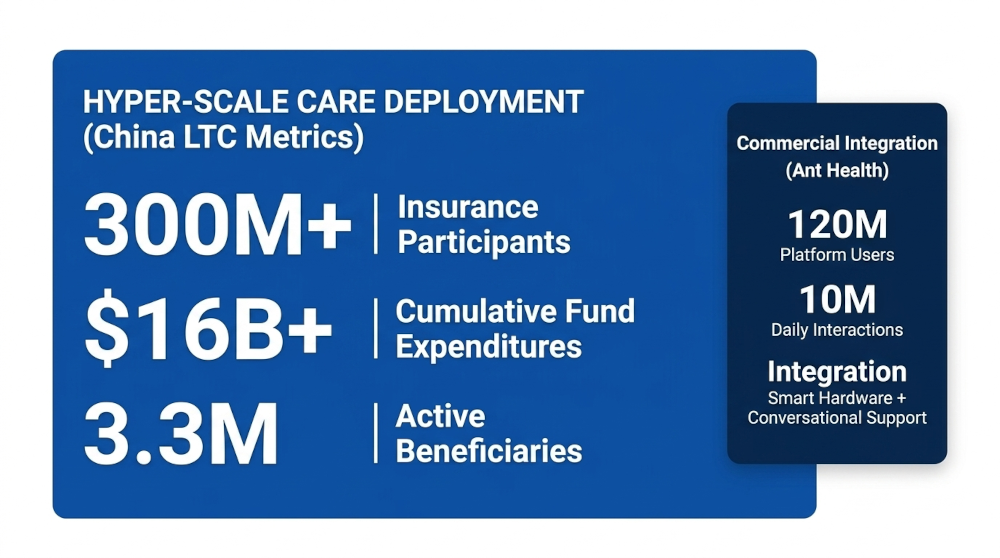
Across the world, countries are racing to build digital safety nets for their rapidly ageing populations amid overburdened healthcare systems. China is massively scaling up AI-driven long-term care insurance, with the system now covering over 300 million inhabitants, utilising big data platforms to disperse benefits. Over $16 billion has been distributed to support 3.3 million of those in need since pilot programmes began in 2016.
At the corporate level, Zhang Junjie, president of China’s major digital corporation, Ant Health Business Group, notes that their AI platform serves 120 million users and processes 10 million daily interactions. Demonstrating the technology’s reach into vulnerable demographics, Zhang highlighted that 65% of the platform’s users are located in third-tier cities or below, and 35% are adults aged 55 and older.
The tech giant’s healthcare arm operates an AI application integrating smart hardware and public health services to provide personalised health management, emergency assistance, and conversational support.

This unprecedented corporatised and public scale AI implementation in long-term healthcare, and the profound technical and ethical questions it raises, anchored an exclusive 79th World Health Assembly side event hosted by the Huazhong University of Science and Technology, the Geneva Health Forum, and the University of Geneva, with support from the WHO and China’s National Healthcare Security Administration.
Alongside Zhang, a list of 24 high-profile speakers navigating this frontier included Dr Ritu Sadana, WHO unit head for the UN Decade of Healthy Ageing; Li Mingzhu, a Chinese National Health Commission commissioner; Ricardo Baptista Leite, CEO of Health AI; and Philippe Guinot, COO of the Union for International Cancer Control (UICC).
“What makes China especially important in this discussion is scale and diversity. China is not experimenting with long-term care reform in a single city or one type of population. It is building and testing approaches across provinces with very different economic conditions, demographic realities, workforce capacities and digital infrastructures,” WHO’s Sadana said.
Algorithmic surveillance sustains care systems

As Chinese experts and researchers explained, China’s monumental insurance system is sustained through continuous algorithmic surveillance. Technicians place millimetre-wave radar in applicants’ bedrooms for several days to monitor vital signs and determine eligibility, while thermal imaging provides real-time safety monitoring once care begins. This localised Internet of Things (IoT) network feeds directly into a centralised medical insurance cloud to build dynamic profiles and precisely match care plans.
Arguing that it prevents fraud and guarantees care hours are fulfilled, the state strictly binds workers’ facial recognition to specific coordinates and timestamps, while they document care on Personal Digital Assistants (PDAs).
Surveillance also extends to patients. In Shandong province, for example, supervisors cross-reference recipients’ public transit and taxi logs to automatically flag suspicious mobility patterns.
These intelligent systems also streamline bureaucratic bottlenecks. Nationally, a new information system has completely digitised assessment applications and expense settlements. Locally, Chongqing municipality uses deep-learning human skeleton recognition to evaluate disabilities, compressing 15-day manual assessments into just five days.
Similarly, AI models in Shanghai’s Changning district generate automated care plans, drastically reducing manual workloads and improving traceability.
Efficiency gains drive systemic adoption

In the face of ageing populations and severe workforce shortages worldwide, efficiency gains like these are potent drivers for the rapid implementation of AI in healthcare, not only in China.
According to a 2026 report by the WHO Regional Office for Europe, 96% of European Union member states cite reducing workforce pressure as a primary motivation for AI adoption, with 59% already using intelligent systems to automate logistical and administrative tasks.
At the University of Geneva’s Stroke Center in Switzerland, for example, clinicians have successfully deployed AI models across an integrated registry of 2,700 patients to accurately predict three-month clinical outcomes.
“AI needs to be used as an integrator for data extraction and unification of patient records to avoid fragmentation and ensure continuity of information,” said Professor Emmanuel Carrera, director of the centre.
In low- and middle-income countries facing infrastructure and specialist shortages, AI offers significant potential to bypass deficiencies. Cloud-based machine learning algorithms analyse health data remotely over basic cellular networks to reach isolated rural clinics, and mobile applications paired with deep-learning algorithms successfully detect health risks.
Experts emphasise need for ethical guardrails

But global health experts caution that technology is not a “magic bullet” that automatically solves all systemic problems. UICC’s Guinot emphasised that establishing strict data sovereignty remains an “essential element” for emerging markets to avoid relying entirely on foreign-owned solutions.
To build societal trust, Guinot stressed that health systems, governments, and civil society must validate AI solutions, ensure transparent models, and aggressively address biases through robust governance.

Sophia Achab, co-chair of the Geneva Health Forum (GHF), added that ethical AI is a “non-negotiable priority”, demanding strict human oversight to prevent technological over-reliance and ensure equitable access regardless of socioeconomic status.
Similarly, WHO’s Sadana warned that innovation must remain rights-based and human-centred to avoid deepening social exclusion, stressing that older people must be actively included in the design and governance of AI systems.
This need for governance is especially relevant given the severe privacy dangers of biometric tracking.
Wang Hongbo, deputy director general of China’s Shandong Healthcare Security Administration, conceded that maintaining the privacy of a care setting inherently conflicts with the state’s requirement to visibly supervise these services.
Fractured approaches fail to address privacy problems
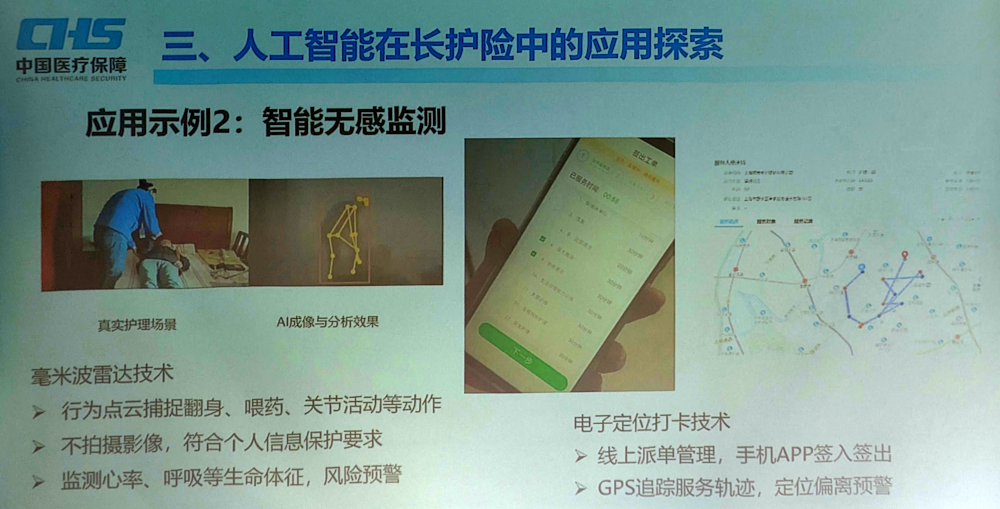
To theoretically mitigate the severe privacy implications of this continuous visual oversight, local governments engineer technical workarounds. Officials in Nantong, for example, evaluate the quality of at-home care by translating raw monitoring footage of a care worker’s movements into anonymised stick figures before the service data reaches state supervisors, ensuring operational compliance while protecting the patient’s dignity.

However, fractured national regulations and local workarounds without broader provision endanger vulnerable populations.
While existing global health governance frameworks – such as the 2024 WHO guidance on the ethics of large multi-modal models – stress that failing to preserve privacy undermines societal trust, these advisory guidelines lack the binding enforcement mechanisms needed to standardise protections globally.
Addressing the inadequacy of current overarching provisions at the Geneva forum, Health AI executive Leite deliberately quoted Chinese President Xi Jinping to underscore the shared international stakes: “Global AI governance is needed to ensure the technology is beneficial, safe, fair”.
WHO unveils path to long-term care standards
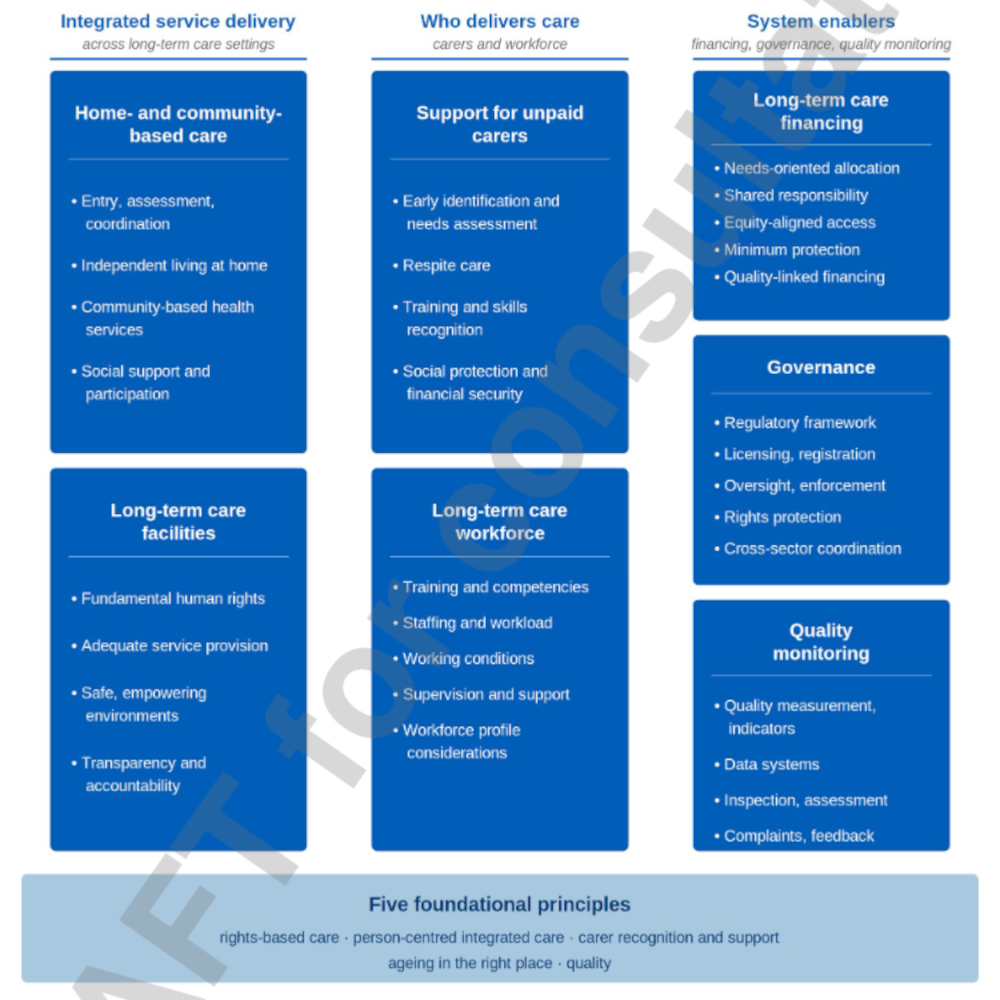
While the 2024 WHO guidance offered broad ethical guardrails for AI, the organisation has now unveiled a consultation draft providing the first operational blueprint tailored specifically to long-term care. This normative framework attempts to harmonise the planning, clinical delivery and quality monitoring of care systems – and digital interventions – across diverse global economies.
To ensure digital innovation remains human-centred, equitable and firmly rooted in protecting individual rights without deepening social exclusion, the draft establishes standards across eight chapters. These provide detailed operational benchmarks for definitions and principles, home- and facility-based care, unpaid carers, the workforce, financing, governance and quality monitoring.

Crucially, WHO avoids prescribing a rigid, single model. Recognising that legally binding mandates often fail globally, the framework instead advocates for “progressive realisation,” allowing nations to flexibly adapt standards based on their economic resources and care system maturity.
The standards explicitly interconnect five foundational principles, prioritising rights-based, person-centred delivery to ensure older adults retain autonomy and support to safely “age in place”.
Clarifying the framework’s intent, WHO Medical Officer Dr Hyobum Jang noted that “these standards might not be precise targets or numbers, but they’re more like expectations, agreed principles… and contracts between providers, governments and people who receive long-term care but also including family members.”
‘Technology should serve humanity’
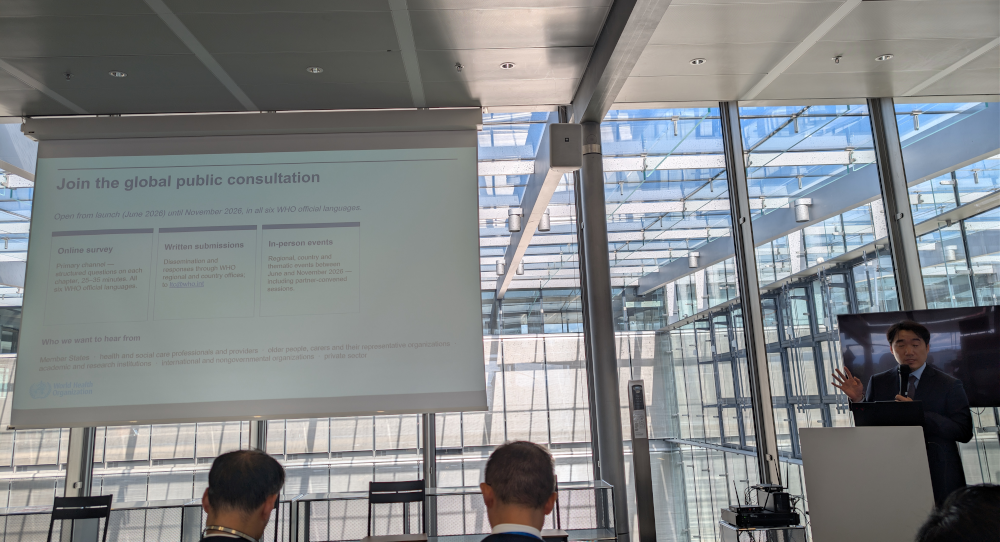

Recognising China’s massive AI scale-up in long-term care, WHO officials urged the Chinese government representatives at the summit to actively participate in the global public consultation, requesting that they contribute their vast, real-world regulatory experiences to shape the final international framework.
“These are the first international normative standards of their kind, and they belong to the whole global community,” emphasised Sadana.
National Health Commission official Li confirmed that China is prepared to help establish international guardrails.
“China has accumulated a rich experience in elderly care management and disability prevention. We stand ready to work with other countries to strengthen joint standard setting, knowledge sharing, talent exchange and mutual learning through pilot programmes, especially in areas such as data governance, algorithmic ethics, and product regulation so as to avoid a new digital divide,” Li said.
With countries like China pushing ahead and major health corporations implementing AI into their business models in long-term care, there is an urgency to establish global standards. Massive data collection is already creating new operational realities on the ground, leading to technological advancement consistently outpacing regulation.
Addressing these profound systemic shifts and ethical concerns at the side event, GHF’s co-chair Achab cautioned that digital innovations must be governed intentionally. “Technology should serve humanity, not the other way around,” Achab said.
Image Credits: Jo Lin via Unsplash, Felix Sassmannshausen/HPW, Geneva Health Forum, WHO.
Combat the infodemic in health information and support health policy reporting from the global South. Our growing network of journalists in Africa, Asia, Geneva and New York connect the dots between regional realities and the big global debates, with evidence-based, open access news and analysis. To make a personal or organisational contribution click the donate button below.