The Pan-American Health Organization (PAHO) will soon unveil a new Roadmap on Air Quality and Health, following on from a meeting with countries and other stakeholders in February in Mexico. The PAHO strategy dovetails with an ambitious new regional action plan by the UN Environment Programme – which supports the work of environment ministries.
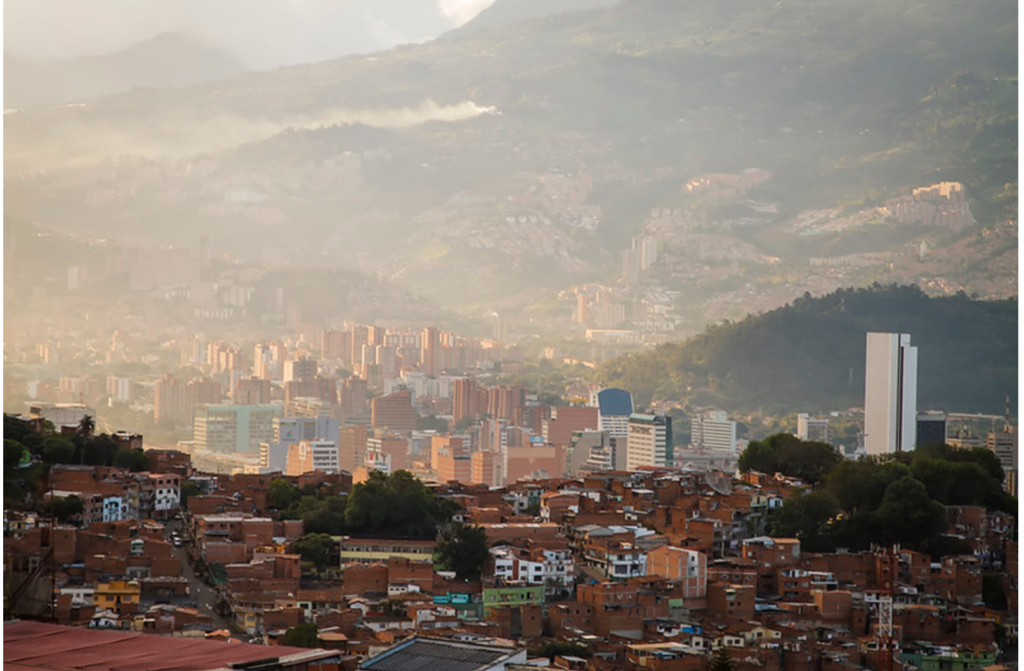
While the high mountains of the Andes might be associated in popular imagination with crystal clear air, in fact, these 4000+ meter high mountains also trap air pollution, smothering cities nestled in their towering ranges. It is visual testimony to the health impacts of an air pollution problem that kills some 370,000 people annually across Latin America and the Caribbean.
But Latin American and Caribbean countries are at a “unique moment” in terms of opportunities to improve air quality, marking a critical pivot toward treating air pollution not merely as an environmental byproduct, but as a top-tier public health emergency, according to Juan J Castillo who leads the air quality team at PAHO, the World Health Organization’s (WHO) regional office for the Americas.
“We see this action plan as an opportunity to send a strong message to the region, to the ministers of health and the environment, that there is a clear case for health in improving air quality,” said Juan Castillo.
His team has been leading the plan’s development while also working to bolster collaboration across Latin America, connecting ministries of the environment and health, and closing the air pollution monitoring gap.
Meeting the WHO goal to halve deaths from air pollution by 2040
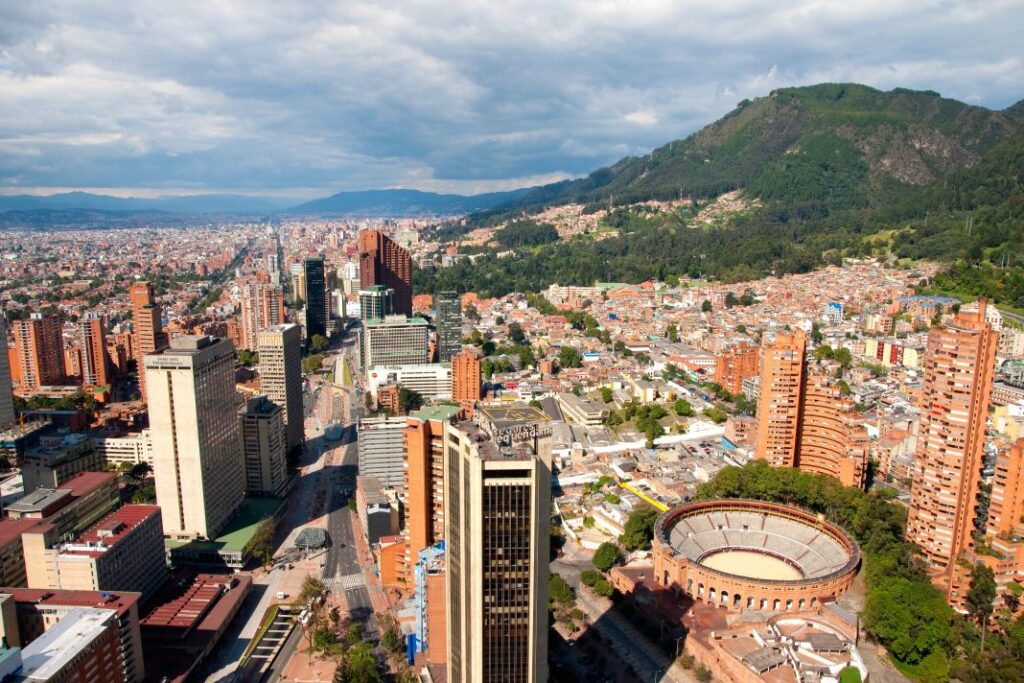
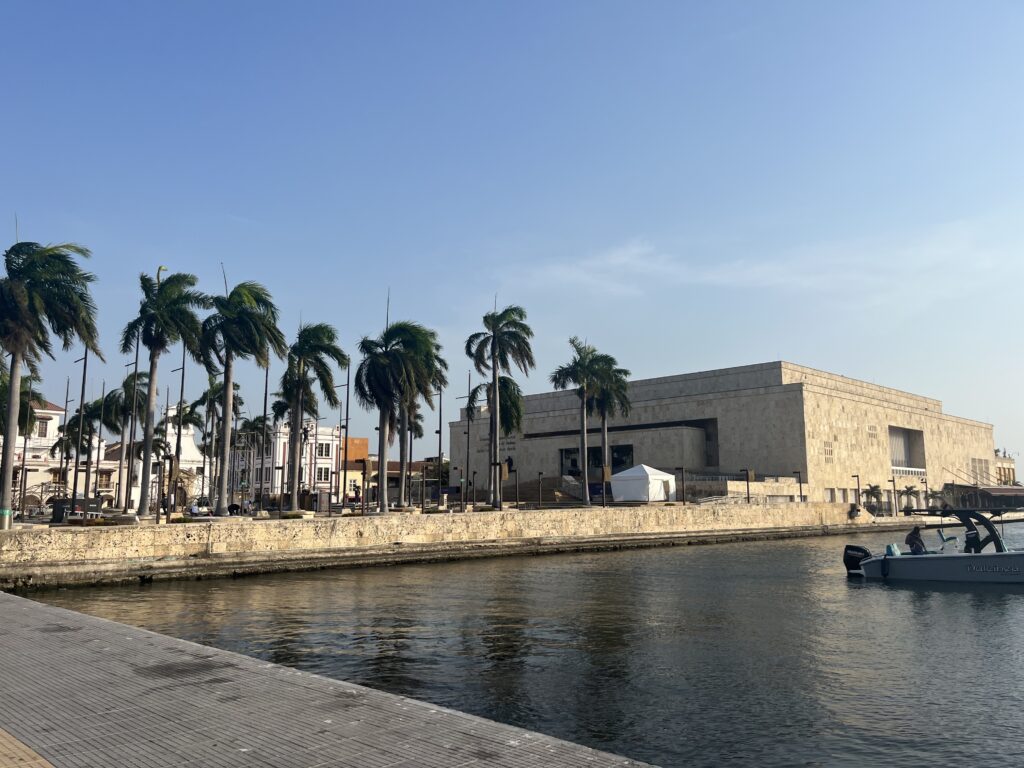
The action plan comes a year after the World Health Organization’s second conference on Air pollution and health, hosted in Cartagena, Colombia.
A core aim of the plan is to create a pathway for meeting the WHO target set out at the Cartagena meeting of halving deaths from air pollution by 2040. At the conference, some 20 countries, including many from the Latin American region, made related pledges. But the action plan aims to mainstream the goal into the plans of health ministries.
“This is truly a pivotal point,” Castillo said. “Latin America requires solutions that respond to the specific needs of the region. This is why it is charting its own path towards cleaner air- and one that could inspire other lower- and middle-income nations, fostering further South-South cooperation.”
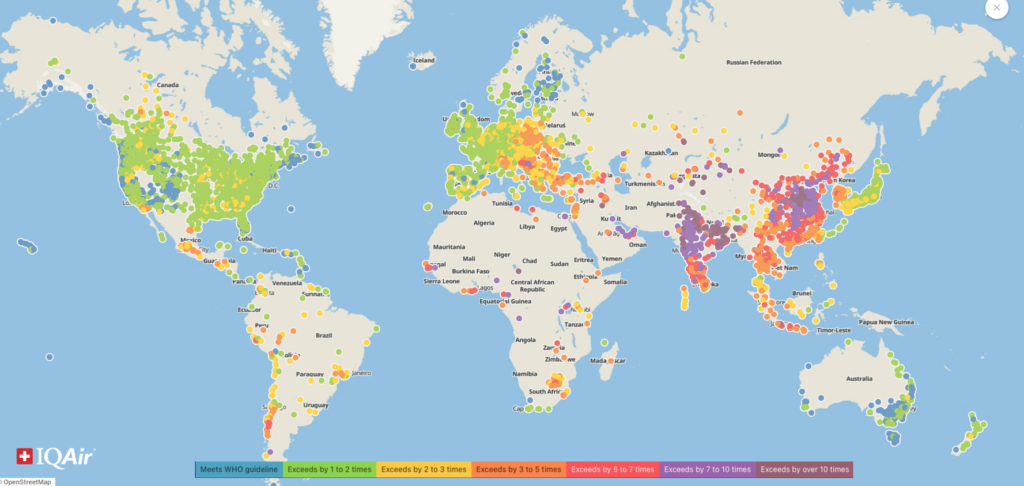
Latin America and the Caribbean already have cleaner air, on average, than hot spots like South East Asia, there is still a long way to go to achieve the World Health Organization quality goals.
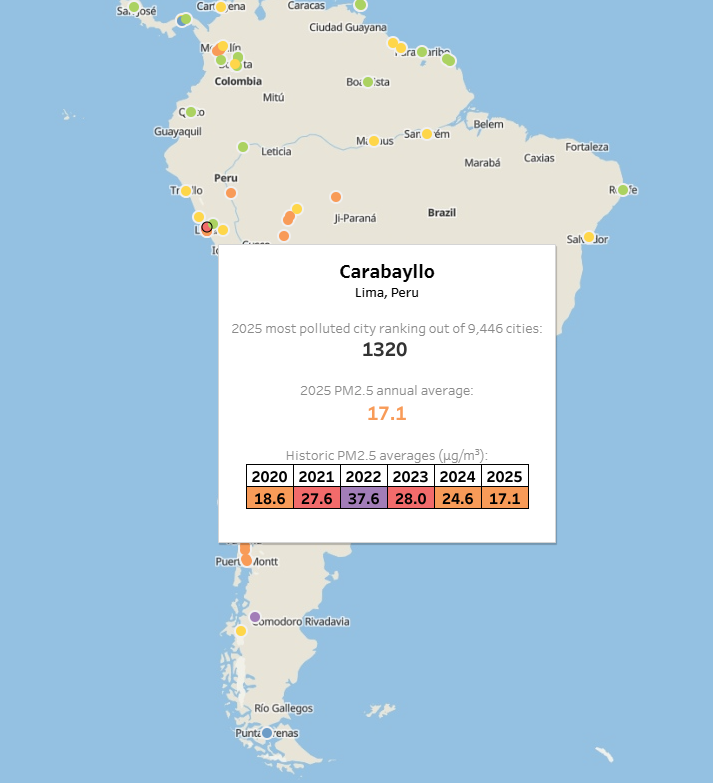
Some cities in the region actually meet WHO air quality guidelines for particulate matter (PM2.5) and others exceed them “only” by one to two times. However, a number of cities in Chile, Brazil, Bolivia and Peru, have average annual PM2.5 concentrations reaching 3-5 times above WHO guidelines, according to the 2025 report of the Swiss-based monitoring firm, IQ-Air. Lima, Peru is one noteworthy example.
The health argument for cleaner skies
“The evidence shows that there is a huge burden of disease linked to air pollution in the region,” said Castillo. “Air pollution is one of the leading causes of non-communicable diseases and also for all kinds of morbidity, such as asthma attacks, respiratory infections and impaired cognitive development. So we’re focused on using the evidence to help countries make the best decision to achieve their public health goals.”
Many countries in Latin America have implemented steps to reduce greenhouse gas emissions, but these climate policies often neglect to consider the health benefits of tackling climate pollutants.
These health impact assessments of climate mitigation are crucial and are included in the Organization’s Air Quality and Health Plan for Latin America and the Caribbean, said Castillo.
“We need to understand the health gains to bolster the argument for environmental policies and to help with the strategic importance of these policies.”
Integrating air quality action on climate change “can be particularly beneficial, as it broadens access to funding and delivers greater public health benefits,” notes a December 2025 regional action strategy by the UNEP-hosted Climate and Clean Air Coalition.
Action needed beyond the health sector
The CCAC strategy is targeted to ministries of the environment, while the PAHO roadmap focuses on ministries of health. But the two aim to work in tandem to build political will for systemic changes that reduce air pollution. Such changes typically require action on finance, transport, building and household energy systems, urban design and waste management – well beyond the traditional domain of health ministries.
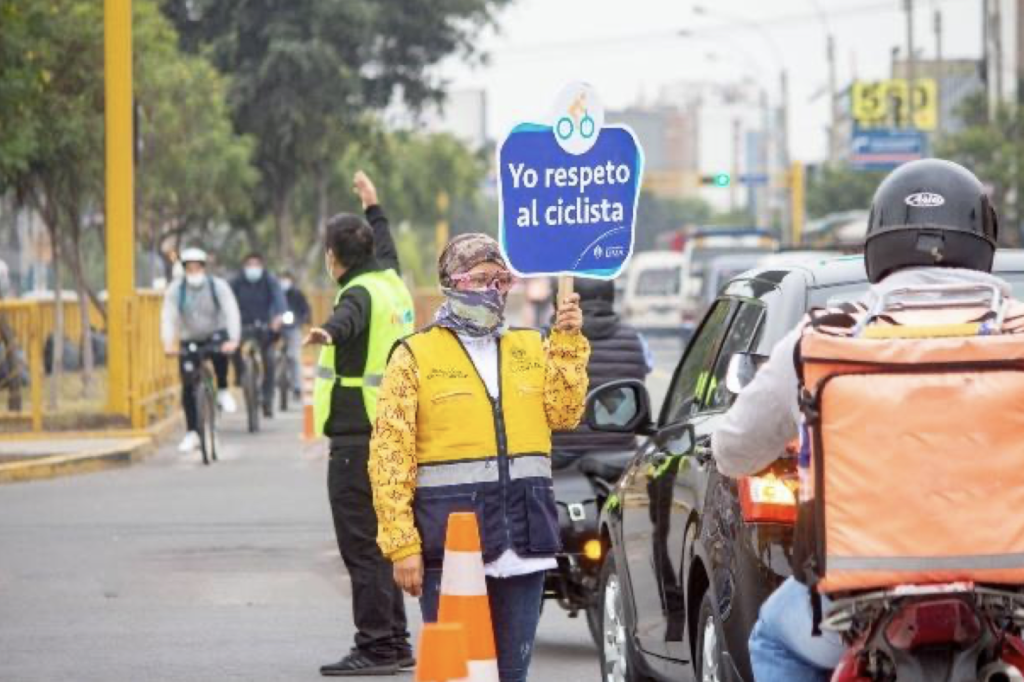
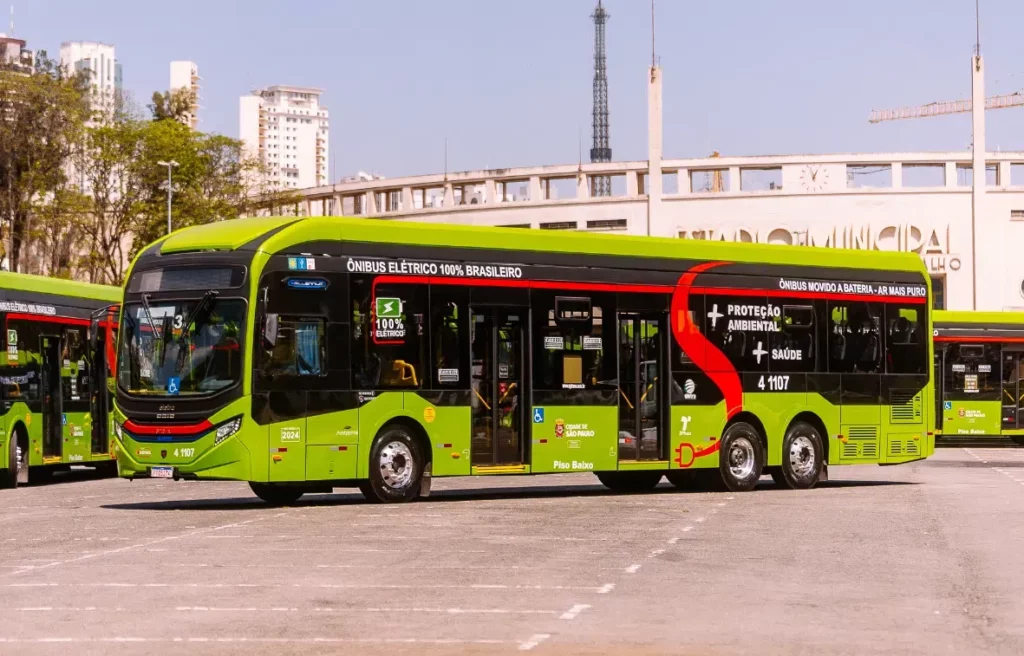
In terms of transport, a major air pollution factor, Latin America historically has had stronger public transport systems than many other developing regions, and cities such as Curitiba and Bogota became pioneers in developing Bus Rapid Transit (BRT) as well as cycle networks, which helped reduce emissions from private automobiles.
But too often, BRT systems in the region have remained too dependent on dirty diesel – where cleaner electric systems are needed to really clean up the air further.
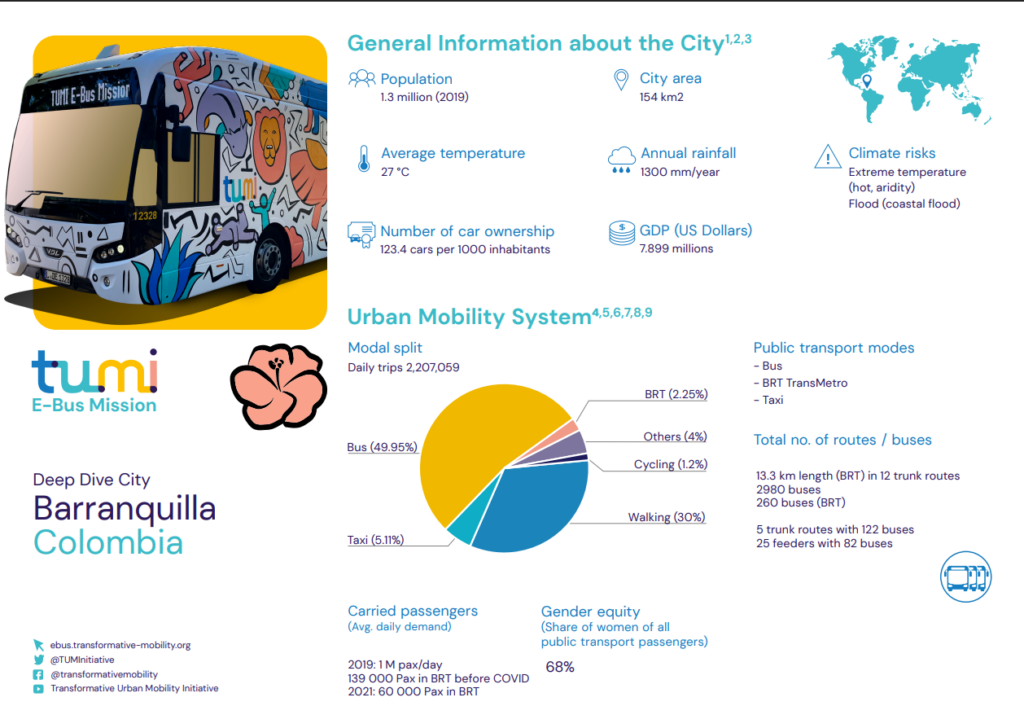
Now, there is a move to electrify BRT systems in key Latin American cities such as Brasilia, Brazil and Barranquilla, Colombia, supported partly by German development assistance as well as local initiatives.
Barranquilla, Colombia, has undergone a massive urban renewal effort with the aim of shifting to a 50% electric bus fleet by 2034. Public transport is being integrated with cycle networks and pedestrian-friendly streets – about 30% of travel is on foot – supporting healthier, more active, and low-emissions mobility. PAHO hopes that more cities can see the health benefits of urban design – and use climate funding for greener cities that foster public health.
Closing the monitoring and data gap
Tracking air quality progress has been a challenge for the region.
Less than 40% of countries have a government standard for chronic exposure to the most dangerous form of particulate pollution, PM2.5. Without these standards, governments cannot chart further regulation to clean up polluted skies.
The region has also struggled with tracking air quality. Only a third of cities in the region have active reference monitoring stations- or local inventories of criteria pollutant emissions, active air management programs, or government-published health impact assessments, according to the most recent regional action plan. And only seven cities have air quality forecasting systems.
The data that is available raises several concerns. Of the 58 cities with PM2.5 data, only one city complies with the WHO guideline values.
“Many cities lack key tools, or those that exist are not operational, up to date, or in use, while their populations remain exposed to harmful pollution levels,” says CCAC in its 2025 regional strategy.
A consortium of South American researchers echoed that, in a 2025 review that stated: “South America would greatly benefit from expanded monitoring networks, improved air quality modeling, and detailed health data to better understand exposure–health relationships and multipollutant interactions.”
Grassroots organizers like Ana Badillo, a co-founder of the Ecuador-based advocacy group Pacha Ayllu, have also championed access to real-time air quality data through the expanded use by “citizen-scientists” of low-cost air pollution sensors in the capital city of Quito.
“This citizen-led monitoring network is designed to empower individuals and communities to better understand the quality of the air they breathe and make informed decisions to protect their health and that of their loved ones,” said Badillo in a recent post.
The democratization of data is also central to the new CCAC strategy, which is promoting its AQMx Platform, a digital hub designed to support air quality management exchange and integrate conventional air quality monitoring with low-cost sensor networks, relying more on civil society groups like Pacha Ayllu.
Collaborating across sectors
With funding an “obvious” challenge for cleaning up Latin America’s air, PAHO and its partners have emphasized the health gains of environmental interventions to help governments understand the strategic importance of such changes.
In relation to that, collaboration across the energy and environmental sectors is key, says Castillo, whose office is also working closely with the UNEP-hosted CCAC. Tapping into energy sector investments also means cleaner, more affordable, and reliable energy.
The new CCAC strategy targets not only air pollution, but a “triple planetary crisis” – climate change, biodiversity loss, and pollution – by focusing on the reduction of “super pollutants” like black carbon and methane a precursor of ground level ozone (O3), as well as a powerful climate pollutant. But black carbon and methane do not remain long in the atmosphere, reductions can yield rapid gains for health as well as climate.
By making air quality projects “bankable” for multilateral giants like the World Bank and the Inter-American Development Bank (IDB), the plan seeks to move beyond sporadic grants toward a flexible financing architecture that includes green bonds and blended finance.
Mexico City: a story of success
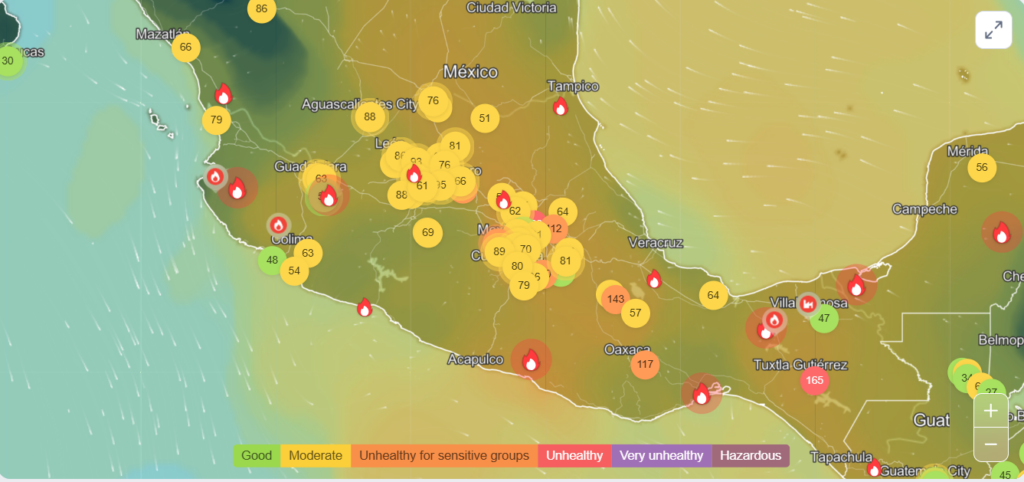
Castillo pointed to the example of Mexico City, which once had some of the most polluted air in the Americas, or even the world, as a story of success.
It was grassroots organizations that agitated for clean air protections.
“They demanded action,” Castillo said. “And many other places are following suit.”
Mexico City has developed a robust air quality monitoring system, NowCast – and one of the most ambitious goals for reducing short-lived climate pollutants in the region.
“It has helped enormously in terms of health protection, because we can now warn people much sooner, telling them not to go outside, not to exercise outdoors and to avoid inhaling highly polluted air,” said Sergio Zirath, Mexico’s director general of Industry, Clean Energy and Air Quality Management in an interview with the United Nations Environment Programme (UNEP).
Mexico has now stepped in to provide technical advice to other countries across the region on clean air solutions.
Although this is an effort being led by PAHO, an organization that also includes Canada and the United States, by definition as a strategy for Latin America and the Caribbean, neither are part of this new strategy.
“PAHO respects every country’s decision on how they want to manage their policy. Our focus is based on evidence, action and available data,” said Castillo, when asked about the absence of the US from regional clean air activities since the Trump administration took over in January 2025.
But in the end, Castillo hopes this strategic plan – an undertaking that still includes 21 countries, civil society, and PAHO – will be more than “just another document.” Instead, he hopes it will provide countries with an opportunity to capitalize on changes already happening in the region – ones that might even clean up the air in the region’s worst-polluted cities suffering from smog buffered by the high Andes.
Image Credits: Municipality of Bethlehem, S. Samantaroy/HPW, Partnerships for Health Cities, TUMI, IQAir, IQAir, WHO/PAHO/Karina Zambrana .
Combat the infodemic in health information and support health policy reporting from the global South. Our growing network of journalists in Africa, Asia, Geneva and New York connect the dots between regional realities and the big global debates, with evidence-based, open access news and analysis. To make a personal or organisational contribution click the donate button below.