Although the World Health Organization (WHO) recognises comprehensive abortion care as an essential health service, countries all over the world are tightening access, inspired by the United States. But all this means is worse outcomes for women’s health
There is a persistent myth that restricting abortion stops it from happening. What restrictions really do – predictably and tragically – is make abortion unsafe. The WHO reports that around 73 million abortions occur worldwide each year, of which – remarkably – 45% are unsafe.
The 2017 WHO–Guttmacher report found that 97% of unsafe abortions occurred in developing countries, particularly in Africa, Asia and Latin America, and WHO’s 2022 abortion care guideline notes that around seven million women in developing countries are treated for complications of unsafe abortion every year. Those are only the women who make it to care. Many do not.
A preventable cause of maternal mortality
The mortality gap between safe and unsafe abortion is stark. In settings where abortion is safe and legal, deaths are rare; where it is unsafe, the risks rise dramatically because the procedure is carried out by unskilled people or in environments that do not meet minimum medical standards, or both.
Maternal deaths due to unsafe abortion are often misclassified and under-reported. A review encompassing the period 2009–20 found that 8% of maternal deaths globally were linked to abortion. In low- and middle-income countries, the impact of unsafe abortion is compounded by weak primary care systems, provider shortages, long travel distances, punitive laws, and stigma. The result is delay, secrecy, shame, and complications that could have been prevented.
Put simply: when states fail to provide access to safe care, women do not stop seeking abortions. Rather, they are placed in unnecessary danger, with serious health, social and economic consequences.
Safe abortion is a basic human right
Access to safe abortion is grounded in international human rights law, including the Universal Declaration of Human Rights, the International Covenant on Economic, Social and Cultural Rights, and the Convention on the Elimination of All Forms of Discrimination against Women. In Africa, the Maputo Protocol provides an especially important regional anchor for women’s reproductive rights.
Many human rights bodies and mechanisms agree that lack of access to quality abortion care risks violating the rights of women and girls, including the right to life; the right to the highest attainable standard of physical and mental health; the right to benefit from scientific progress and its realisation; the right to decide freely and responsibly on the number, spacing and timing of children; rights to privacy and to freedom from discrimination, and the right to be free from torture, cruel, inhuman and degrading treatment and punishment.
Human rights bodies have also noted that restrictions on access to abortion affect some women disproportionately.
The UN Working Group on Discrimination Against Women in Law and in Practice has observed that “in countries where induced termination of pregnancy is restricted by law and/or otherwise unavailable, safe termination of pregnancy is a privilege of the rich, while women with limited resources have little choice but to resort to unsafe providers.”
The Committee on the Elimination of Discrimination Against Women has expressed particular concern that “rural women are more likely to resort to unsafe abortion than their urban counterparts”.
The same is true for adolescents, who frequently lack information. The Committee on the Rights of the Child has urged States “to decriminalise abortion to ensure that girls have access to safe abortion and postabortion services, review legislation with a view to guaranteeing the best interests of pregnant adolescents and ensure that their views are always heard and respected in abortion-related decisions.”
Comprehensive abortion care is more than medicines
The practical case for ensuring access to abortion services is also strong because the tools already exist. WHO’s 2023 clinical guidance and self-care recommendations recognise medical abortion with mifepristone and misoprostol as a safe and effective option, and these medicines are included on the WHO Essential Medicines List.
The WHO guideline also states that medical abortion can be self-managed using mifepristone plus misoprostol or misoprostol alone where people have accurate information and access to a trained health worker if needed. In resource-constrained settings, that matters enormously. Medication abortion can reduce dependence on scarce specialist infrastructure, make earlier care more feasible, and expand access to rural and other underserved women.
But medicines alone are not enough. Women also need quality-assured products, clear information, referral pathways, pain management, and emergency backup if needed. A tablet without a system to support its use is not access.
Comprehensive abortion care also includes contraception, counselling and information, timely diagnosis, medical or surgical abortion where appropriate, and post-abortion care for complications after miscarriage or unsafe abortion. Post-abortion care is not an optional extra.
Abortion access is shaped by many other policies and practices: access to contraception, laws on marital consent, approaches to gender-based violence, access to adoption services, affordability, provider bias, supply chains, transport, privacy and digital information, religious views, and whether women trust the health system enough to use it. If someone must travel for hours, pay out of pocket, or be shamed and harassed for seeking care, she does not have real access.
What governments and donors must do:
- Reform laws and regulations that criminalise or unduly restrict abortion care. Criminalisation of abortion must end. Punitive laws on women and service providers drive delay, secrecy and unsafe methods.
- Make mifepristone and misoprostol reliably available and affordable. Registration, procurement, quality assurance and distribution are essential policy choices.
- Integrate abortion into primary health care and universal health coverage packages. Abortion should not be separate from routine sexual, reproductive and maternal health services.
- Expand provider training and task-sharing. WHO guidance supports community service models, which are crucial in workforce-constrained settings.
- Guarantee access to post-abortion care. Even in restrictive settings, treating complications is an absolute minimum standard.
- Invest in information, privacy and building trust. Women need accurate information and safe pathways into care, with compassion, and without stigma.
The choice is political
The impact of unsafe abortion on maternal mortality is indisputable. The medicines and standards of care for safe abortion are well established. The rights framework is clear. What remains is a political choice – whether governments, donors and multilateral institutions will treat safe abortion as basic health care or continue to support a hierarchy in which women suffer indignity and die of preventable causes while others pass judgement.
Above all, let’s start from this simple premise: women and girls are not vessels for state or religious ideology. They are rights-holders. If governments are serious about realising the right to health and reducing maternal mortality, then safe abortion access must be part of the plan – explicitly, urgently, and at scale.
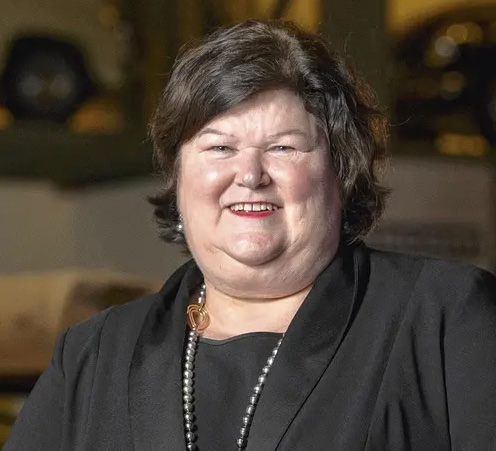
Maggie De Block served as Belgium’s Minister of Social Affairs and Health from 2014 to 2020. She is a medical doctor and a member of the Belgian Chamber of Representatives.
Image Credits: Center for Reproductive Rights.
Combat the infodemic in health information and support health policy reporting from the global South. Our growing network of journalists in Africa, Asia, Geneva and New York connect the dots between regional realities and the big global debates, with evidence-based, open access news and analysis. To make a personal or organisational contribution click the donate button below.