
Fragmented enforcement and uncoordinated policies fail to stem the illegal tobacco trade in Europe, a new report by the EU Court of Auditors finds. The surge of unregulated novel nicotine products and a shift toward illegal manufacturing sites expose significant regulatory gaps. The auditors demand that Brussels take a more active role to establish a unified strategic framework and standardise market monitoring by 2029.
Nearly one in 10 cigarettes on the European Union (EU) market were produced illegally or smuggled in 2023, and Europe is losing an estimated €13 billion in public revenue annually to the illicit tobacco trade. Regulatory and data gaps hinder the EU in mapping out a coherent strategy to curb the problem, warns a special report by the European Court of Auditors (ECA), released on Tuesday.
“Criminals are succeeding because gaps remain in coordination, information, and enforcement,” said Petri Sarvamaa, leader of the audit, at the press briefing to release the report.
The regulatory and data vacuum directly undermines the WHO Framework Convention on Tobacco Control (FCTC) Protocol to Eliminate Illicit Trade in Tobacco Products. This legally binding global treaty is designed to protect public health by securing supply chains against illegal tobacco, mandating strict controls and independent tracking systems.
Fragmented policies divide EU enforcement

However, the EU’s fragmented approach prevents the unified enforcement of these international standards. Finance and health ministries across different countries split the responsibility for implementing the FCTC protocol, locking customs and enforcement agencies out of vital policy dialogues, for example. This administrative division deprives officials of operational insight, undermining coordinated enforcement across the single market, the auditors criticise.
Furthermore, enforcement is deeply fractured because member states apply vastly different legal sanctions and investigative powers to combat illegal tobacco. While national customs agencies in Belgium and Poland possess advanced police powers and warrantless search capabilities to raid illicit factories, but countries such as Romania are constrained to administrative enquiries.
This lack of harmonised penalties encourages criminal organisations to move their activities to nations with more lenient sanctions, the auditors warn.
To close these loopholes, they urge the European Commission to establish a unified strategic direction across the bloc. They recommend that EU officials improve independent data gathering by 2029 to regularly estimate the size of the black market, and promote compliance with strict transparency and integrity rules for any interaction with tobacco manufacturers by 2028.
Surge in illegal tobacco production sites
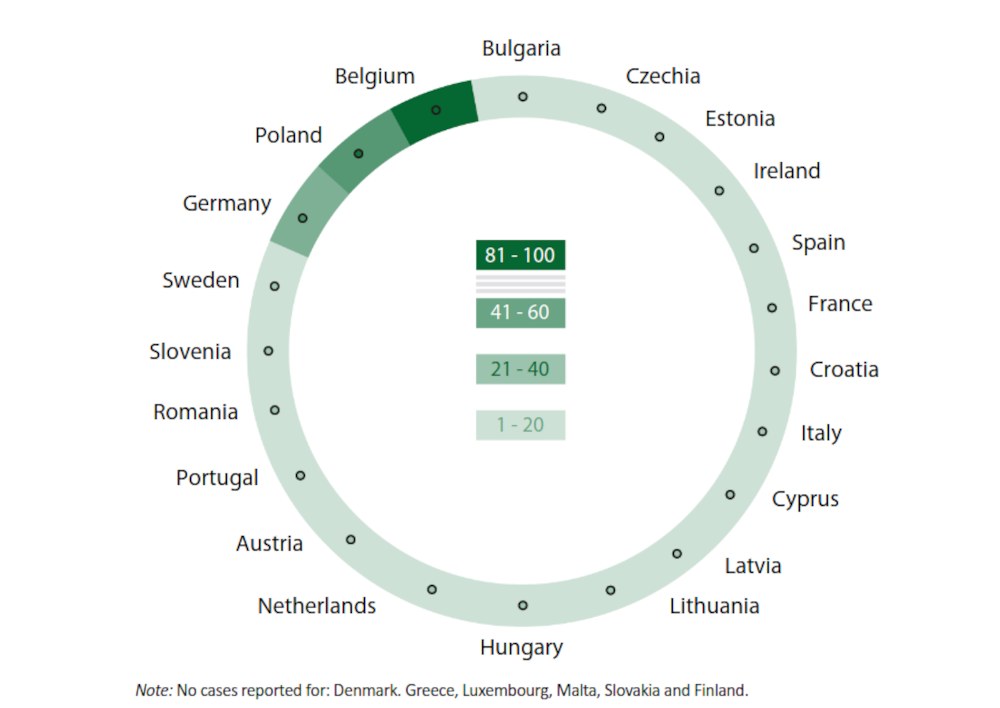
Although smuggling from non-EU countries persists, the auditors noted a systemic shift as production is moving inside the EU. This relocation from non-EU Eastern European nations like Ukraine and Belarus to locations across the single market enables syndicates to shorten supply chains, operate closer to lucrative consumer markets, and evade external customs controls.
“Illegal production sites have been detected in almost every member state,” said Sarvamaa. “They are really mushrooming across the bloc.”
Criminal enterprises exploit differences in national laws and enforcement capabilities to establish operations where the legal risks are lowest. These clandestine facilities bypass all public health regulations, exposing consumers and workers to severe physical and chemical hazards.
While illicit cigarette factories process bulk raw tobacco leaves in unhygienic environments, illegal facilities producing novel products handle highly hazardous chemical compounds. Many of these black-market substitutes also fail basic safety and composition standards, with some illicit e-cigarettes containing excessive, unregulated nicotine concentrations.
New illicit nicotine products target youth
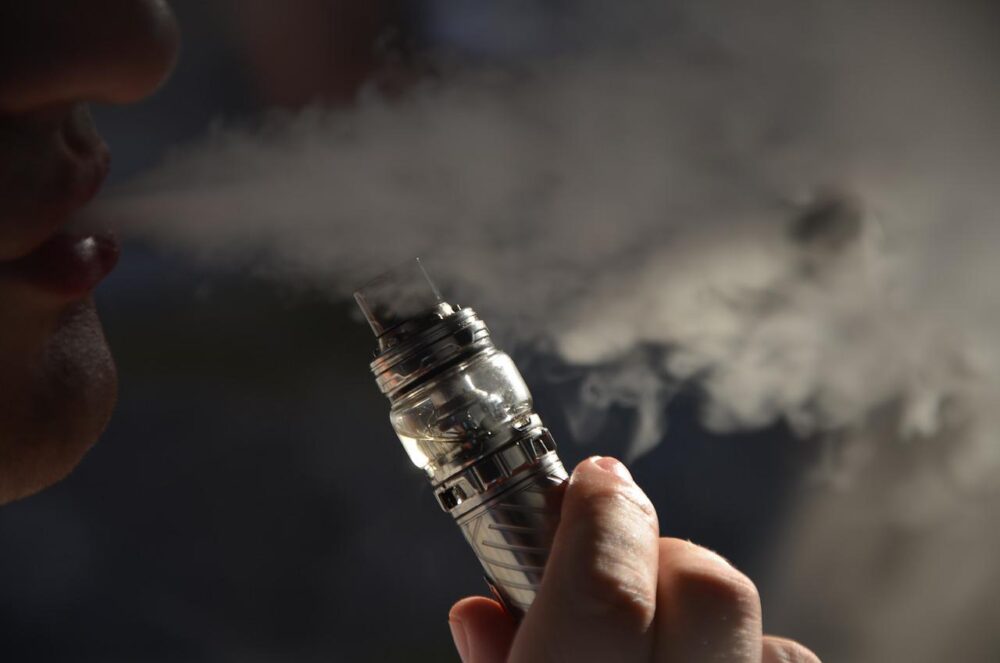
The current exclusion of tobacco-free nicotine products – such as nicotine pouches – from the EU’s tobacco control framework has also created massive regulatory gaps across the single market. Additionally, because e-cigarettes and heated tobacco products lack harmonised EU tax definitions, member states apply widely divergent excise rates to a rapidly growing market that now accounts for an estimated 13% of the tobacco products market value sold in the EU.
This regulatory and fiscal fragmentation has fuelled a parallel black market, the scale of which was recently exposed by a joint customs initiative across 30 countries. Led by the European Anti-Fraud Office (OLAF), the operation resulted in the seizure of over 94 million pieces and over 2,500 kg/l of tobacco products, e-cigarettes, and related devices.
Beyond lost tax revenue, these black-market activities carry severe health consequences. Investigators warned that consumers who turn to these unregulated substitutes risk inhaling harmful, substandard, and potentially toxic chemical substances produced entirely outside controlled supply chains.
Opaque manufacturer agreements
To help track illicit trade and verify the authenticity of seized products, approximately half of all EU member states maintain voluntary, confidential Memorandums of Understanding (MoUs) with major tobacco manufacturers. First established in 1999 between Philip Morris International and Italy, these bilateral pacts are designed to facilitate operational cooperation, such as sharing market intelligence and helping customs verify counterfeit machinery or cigarettes.
However, the auditors have strongly criticised these agreements, warning that they risk compromising the strict independence required for national tracking systems. Because these MoUs are not publicly accessible and lack transparency, it is impossible to assess whether they comply with international guidelines on preventing industry interference.
While the auditors emphasised that operational cooperation can offer practical benefits like technical training and counterfeit machine verification, severe conflict of interest risks remain under global health rules laid out in the FCTC protocol.
“The interaction should be transparent, limited and also should comply with international standards … at [the] World Health Organization,” ECA task leader Esther Torrente Heras told the press briefing.
Letting the industry control or influence traceability solutions directly violates the protocol, which strictly prohibits the delegation of supply chain control authority to tobacco firms.
EU regulation lags shifting market
While the European Commission proposed a crucial recast of the Tobacco Taxation Directive last year to modernise fiscal rules and curb the black market, progress has stalled within the divided council. Tax matters require unanimous agreement from all 27 Member States under a special legislative procedure.
This legislative delay leaves raw tobacco – the primary input for illegal manufacturing – without unified EU-wide oversight. The absence of harmonised EU control rules means that cross-border movements cannot be effectively monitored or tracked because most member states only maintain national notification systems.
Under current rules, bulk tobacco leaves can easily circulate across borders without standard EU customs tracking because they are not classified as manufactured tobacco products. Organised crime groups exploit these regulatory gaps to transport raw tobacco and advanced manufacturing machinery between jurisdictions with minimal detection risks.
To close this loophole, the proposed reform would subject raw tobacco to the Excise Movement and Control System (EMCS), a real-time digital monitoring network requiring commercial traders to register shipments and report cross-border movements electronically (although raw tobacco growers performing only drying or curing would remain exempt).
Stalled tax initiatives
Also regarding minimum tobacco excise rates, the EU is currently experiencing a policy stalemate. This legislative deadlock prevents rates from acting as a public health deterrent or reducing market distortions.
While the auditors recommend a comprehensive set of enforcement measures to ramp up the fight against illegal tobacco in the bloc, they fail to call for higher excise taxes on tobacco products. Indeed, the ECA’s special report states that high tax rates simply create a financial incentive for tax avoidance.
Asked on this issue by Health Policy Watch, lead auditor Sarvamaa explained that the court lacked the empirical data to analyse how tax levels drive smuggling. “We do not have the grounds for starting to analyse how much the tax level is a factor in this problem,” he said.
However, the WHO explicitly advocates higher excise taxes as an effective intervention to reduce tobacco consumption. According to the organisation’s technical manual on tobacco tax policy, high-tax nations with strong governance experience much lower smuggling rates than low-tax jurisdictions.
Furthermore, a fully harmonised tax regime across the bloc would effectively eliminate the price differentials that drive cross-border tax arbitrage. Instead of keeping taxes low to prevent smuggling, the WHO found that the most effective way to eliminate black market sales is to strengthen tax administration and secure supply chains.
Ball in Commission court
To close these data and regulation gaps, the EU auditors asserted that the Commission must take a far more assertive, leading role in coordinating cross-border enforcement efforts. With the current framework deemed not robust enough, Brussels faces an immense workload to establish reliable, independent market size estimations by the recommended 2029 deadline.
To successfully outmanoeuvre illicit trade, the bloc must transition from its current fragmented, state-by-state approach to a singular, binding policy framework. This requires dismantling national administrative silos and encouraging member states to prioritise strict international treaty compliance and transparency over domestic industry interests.
“The criminals have a good strategy obviously, and I think that we need one too,” said Sarvamaa “Tackling the illegal tobacco trade is about much more than recovering lost tax revenue.”
Only by closing these critical regulatory gaps can the European Union protect the public health of its citizens, and safeguard public finances.
See related story:
Image Credits: Mark Stebnicki via Pexels, European Union, European Court of Auditors, pixabay, Paws and Prints via unsplash.
Combat the infodemic in health information and support health policy reporting from the global South. Our growing network of journalists in Africa, Asia, Geneva and New York connect the dots between regional realities and the big global debates, with evidence-based, open access news and analysis. To make a personal or organisational contribution click the donate button below.