Maternal And Primary Health Leader, Beijing Veteran – And a Test Case for Post-US Multilateralism?
The formal nomination of Dr Song Li expands the WHO Director-General race to seven candidates, following an initially guarded rollout by Beijing. Her bid introduces a physician-scientist and veteran administrator whose two decades at China’s National Health Commission (NHC) centred on scaling primary care, maternal and child health, and integrated disease prevention.
Announcing her candidacy, China’s Ministry of Foreign Affairs framed her bid around reinforcing multilateralism and building a “global community of health for all.” In a written statement to Health Policy Watch, China’s Permanent Mission in Geneva highlighted her executive execution: “She has a strong track record of translating policies into concrete actions, with demonstrated capabilities in strategic leadership, policy development, programme implementation, organizational management and cross-sectoral coordination.”
Yet her nomination reshuffles the race amid escalating superpower friction – a political reality underscored by her position on the Secretariat of the Communist Party-led All-China Women’s Federation (ACWF).
Four Pillars for WHO Reform

Under the banner of “One WHO, Maximum Value,” Song’s platform outlines a four-pillar framework designed to refocus WHO on core constitutional mandates while reinforcing frontline delivery:
- A More Efficient WHO: Song pledges to focus WHO strictly on core functions – global norm-setting, disease surveillance, emergency coordination, and technical leadership. It emphasizes streamlined 3-level governance linking headquarters to regional and country offices, merit-based workforce management, zero tolerance for misconduct, and member-state-led governance reform.
- Ready Before the Crisis: While China’s Permanent Mission in Geneva initially declined to address specific inquiries regarding her governance strategy – her released platform explicitly commits her candidacy to implementing the updated International Health Regulations (IHR) and the Pandemic Agreement, complete with a binding Pathogen Access and Benefit-Sharing (PABS) mechanism. Operationally, she proposes establishing regional health emergency workforces for rapid deployment and regional diagnostic advisory groups to coordinate cross-border outbreak testing.
- Universal Health Coverage: She positions Primary Health Care (PHC) as the central vehicle for UHC, integrating immunization, maternal-child health, NCDs, and healthy ageing. Her platform advocates expanding local biomanufacturing hubs to ensure regional supply security, alongside technical support for LMICs and Small Island Developing States (SIDS) to build climate-resilient health systems.
- Harnessing Innovation: Song champions digital transformation by integrating AI into frontline primary care and health workforce training, while establishing global ethical, privacy, and interoperability standards for healthcare AI.
From clinical care to national public health

Born in 1974, Song began in clinical medicine, earning a Master’s in Obstetrics and Gynaecology from Shandong Medical University (1997-2000) and practising in gynaecologic oncology. Seeking population-level impact, she joined the Ministry of Health (now the NHC) in 2002 as a programme officer in women’s health.
Crisis response and technical training quickly marked her early trajectory. During the 2003 SARS outbreak, she served in the national Emergency Operations Center, and following the 2008 Wenchuan earthquake, led medical teams directing post-disaster maternal health reconstruction. While advancing through the ministry, she completed a PhD at Peking University (2006-2010) and a global health fellowship at Harvard University in 2010.
After two decades at the NHC – culminating as Director-General for Women and Child Health (2021-2023) – Song became secretary of the Secretariat of the All-China Women’s Federation in 2023. In this executive role, she guides national family health strategies and oversees China’s two largest philanthropic health foundations, mobilising nearly RMB 1 billion ($140-$150 million) annually for public health and emergency relief.
Her multilateral portfolio bridges that domestic track record with Geneva governance. From 2020-2023, she served on WHO’s Strategic and Technical Advisory Group of Experts on Maternal, Newborn, Child and Adolescent Health and Nutrition (STAGE), and currently sits on the agency’s MoNITOR advisory panel on maternal metrics. Song also co-chaired the Lancet Commission on RMNCAH in China and founded the Global Digital Empowerment Center for Women’s Development in 2025.
Building maternal care and national programmes

Beyond acute emergencies, Song’s domestic legacy rests on turning targeted health interventions into permanent primary care infrastructure. Her signature initiative directed hospital delivery subsidies to 100 million rural pregnant women.
According to official statistics, the programme lifted rural hospital birth rates from under 50% to over 99%, driving national maternal mortality down to 13.4 per 100,000 live births (from 15.7 in 2022) – well ahead of the UN Sustainable Development Goal 3.1 target of 70, though geographic disparities persist between affluent eastern provinces and remote western regions.
Her technical work also targeted vertical disease elimination. In 2002, Song helped establish China’s first pilot to prevent mother-to-child transmission (PMTCT) of HIV, syphilis, and hepatitis B in Henan Province, later scaling it to nearly 3,000 counties nationwide. By replacing 14-day lab turnarounds with 30-minute rapid diagnostic tests, the national prevention package helped slash mother-to-child HIV transmission from 34.8% to 1.2%.
Song sustained these initiatives by anchoring maternal targets directly into China’s Five-Year Plans, leveraging the State Council’s Working Committee for Women and Children to secure cross-ministerial financing from the Ministry of Finance and the National Development and Reform Commission.
Financial and political weight of an emerging superpower

Song’s nomination coincides with a major realignment in global health governance following the declared withdrawal of the United States from WHO. Beijing has stepped into this funding landscape with substantial capital, backed by $320.1 million in projected biennial contributions for 2026-2027. This includes $275.7 million in mandatory assessed dues, making China the largest active state contributor in assessed funding, though it ranks fourth overall behind major non-state and multilateral donors like the Gates Foundation, the European Commission, and the World Bank.
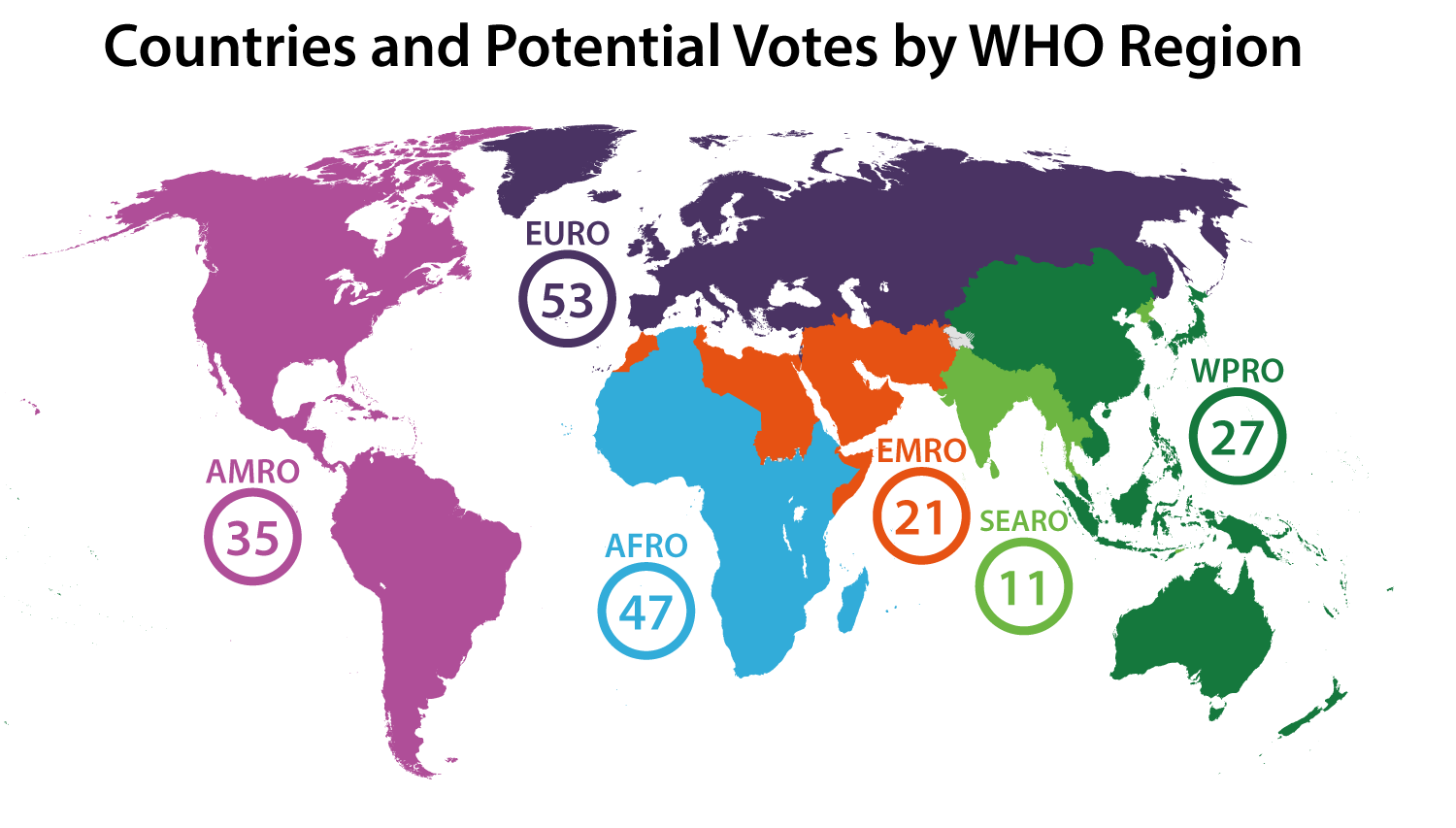
Politically, China secured a seat on the 34-member WHO Executive Board starting in May 2026, positioning Beijing as an insider during the critical candidate screening in January 2027. Under WHO election procedures, contenders must first clear a 10% threshold of members present and voting to make a shortlist of up to five, followed by a simple majority vote to secure one of up to three nominations forwarded to the World Health Assembly.
This institutional leverage mirrors China’s broader 20-year transition from international health aid recipient to major multilateral donor. Song’s career trajectory – spanning World Bank-backed rural health initiatives to Belt and Road health cooperation – embodies that transformation from domestic capacity-building to projecting global influence, drawing sharp scrutiny from traditional Western donors.
Geopolitical scrutiny and institutional obstacles

Despite her technical credentials, Song faces formidable diplomatic headwinds in Western capitals wary of China’s expanding multilateral footprint. Global health analysts note that her nomination sharpens geopolitical tensions in Geneva, drawing bipartisan resistance in Washington and complicating prospects for eventual US re-engagement with WHO.
That political friction is compounded by unresolved sensitivities surrounding COVID-19 transparency. WHO’s independent Scientific Advisory Group for the Origins of Novel Pathogens (SAGO) concluded that origin studies remain incomplete due to withheld baseline data – including raw epidemiological files, Wuhan laboratory audit logs, and testing records from upstream animal farms. While available peer-reviewed evidence favours a natural zoonotic spillover, SAGO stressed that neither the exact transmission route nor a research-related incident can be verified or ruled out without those records.
China’s Permanent Mission in Geneva initially deferred specific enquiries from Health Policy Watch regarding Song’s strategy for safeguarding scientific independence and resolving core budget shortfalls, noting that detailed materials would follow “in due course.” While her platform now outlines broad commitments, establishing concrete mechanisms for independent scientific oversight and sustainable financing remains a primary test for member states.
Institutional concentration and human rights scrutiny

Member states also face institutional hesitation over leadership concentration. China already held WHO’s top office for a decade under Dr Margaret Chan (2007-2017). With Chinese national Qu Dongyu directing the Food and Agriculture Organization (FAO) through July 2027, his concurrent tenure throughout the 2026-2027 campaign reinforces resistance in several capitals against placing a second major UN specialised agency under Beijing’s leadership.
Those reservations have been compounded by controversy surrounding Qu’s leadership style. At an FAO assembly in Rome, Qu drew international criticism after warning delegates that “we’re not allowing you to play the game here of human rights,” insisting rights debates belong strictly in Geneva.
The episode has sharpened broader diplomatic anxieties over how Chinese executive leadership manages cross-cutting UN mandates, particularly given Beijing’s tendency to prioritise state-led development over universal human rights frameworks.
A test of technical authority in disruptive times

Song presents member states with a distinctive, technically grounded candidacy: a physician-administrator whose domestic career offers a proven template for primary care delivery, maternal survival, and South-South health cooperation.
Yet her path to Geneva requires convincing sceptical capitals that an official tied to Beijing’s central apparatus can govern with genuine normative independence.
Ultimately, her bid forces Member States to weigh two competing paths for WHO’s post-US era: electing an administrator focused on frontline primary care and Global South self-reliance, or backing a profile positioned to restore Western donor confidence and insulate the agency from superpower crossfire.
Note: This profile has been updated on November 9, 2026 to incorporate Song’s released campaign platform, administrative timeline, executive leadership roles, and WHO advisory terms. Profiles will continue to be updated as the campaign progresses; stay tuned on the microsite.
Image Credits: Shandong University, WHO, WHO/HPW, CGTN, WHO / Pierre Albouy, African Union.